အမျိုးအစား: Briefing & Periodic Updates

  • What is happening in Ah Nyar? July 2026

    What is happening in Ah Nyar? July 2026

    What is Happening in Ah Nyar? July, 2026 [Issue 7/2026]


    နိုင်ငံရေးကဏ္ဍ

    During July 2026, political developments in Central Burma were characterised by continued progress in resistance governance and institution-building, particularly in Sagaing and Magway. The Sagaing Federal Unit Parliament enacted the Interim Defence and Security Council Law, which subsequently drew criticism from the Civil Disobedience Movement Council, a representative bloc within the Sagaing Federal Unit Government. The CDM Council argued that the law was inconsistent with federal democratic principles and the interim constitutional framework. During the same period, the parliament confirmed the appointment of the Chief Justice and judges. This marked a further step in establishing the federal unit’s judicial institutions, while the division of authority between the Ministry of Justice of the NUG and the Sagaing Federal Unit Government is gaining momentum. NUG’s justice minister U Thein Oo held a meeting with key political stakeholders from Sagaing on the transition.

    The Deputy Chief Minister of the Sagaing Federal Unit Interim Government conducted a field visit to Khin-U Township, where he met with the Township People’s Administration Team, Township MP Dr Win Aung and sectoral administrative leaders. Although the government did not disclose details of the discussions, the meeting reflected ongoing coordination between the federal unit government and township-level governance structures. In addition, the National League for Democracy convened a working coordination meeting of executive committee members from its township and regional branches across the Sagaing Federal Unit.

    At the political dialogue level, both the Sagaing and Mandalay Federal Units endorsed the first draft of the Common Political Agreement (CPA) of the National Unity Consultative Council.

    In Magway, the interim government expanded its defence structures by establishing additional temporary military columns in response to intensified military offensives. During July, the Magway Federal Unit Government added five new military columns to its existing four. According to official statements, the sub-national government consolidated local defence forces across Magway into military columns under the leadership of former Pa Ka Pha (locally acronym for People’s Security Team of the NUG) leader Bo Let Yar of Myaing Township.

    Meanwhile, the NLD reiterated that Daw Aung San Suu Kyi’s participation remains indispensable to any political resolution in Burma. In a separate joint statement marking her 81st birthday, political stakeholders from Central Burma urged ASEAN and the international community not to legitimise or prematurely engage with the military junta, warning that such actions would prolong Myanmar’s political crisis and armed conflict. The statement also called for the unconditional release of Daw Aung San Suu Kyi and all political prisoners as a prerequisite for an inclusive and peaceful political settlement.

    Security

    This month, major battles were reported across north-western Magway (Myaing, Pauk, Saw and Tilin Townships), the Kalay–Kabaw area of Sagaing (Kalay and Tamu Townships) and upper Sagaing (Mingin, Kantbalu, Kawlin and Katha Townships). Meanwhile, frequent aerial bombardments by the Tatmadaw and guerrilla attacks by resistance forces were reported across southern Mandalay (Natogyi, Myingyan and Taungtha Townships), as well as several townships in Sagaing and Magway.

    In north-western Magway, the Tatmadaw infantry columns comprising LID 101 and LID 99, supported by Pyu-Saw-Htee (locally acronym for the paramilitary wing of the Myanmar military), intensified ground offensives in Myaing and Pauk Townships. Several media reports confirmed that at least 26 villagers were killed by the columns during their raids. At least 25 villages were displaced. Resistance forces claimed that a military column became encircled in western Myaing Township, prompting the Tatmadaw to launch more than 120 airstrikes within four days in an apparent effort to support its ground troops. Fighting also intensified around the Myaing oil fields, where resistance groups warned that the military was attempting to destroy oil infrastructure if it could not regain control of the area.

    The Yaw region (of western Magway) remained another major theatre of conflict. Resistance forces, including the Arakan Army, reportedly coordinated with local resistance groups to repel Tatmadaw offensives in Saw Township. The Magway Regional Military Command of the People’s Defence Force reported capturing nine Tatmadaw soldiers and seizing weapons during the fighting. At the same time, the Tatmadaw relied increasingly on aerial logistics, using transport aircraft to airdrop weapons, ammunition and supplies to forward-deployed troops in Saw and Tilin Townships while conducting aerial reconnaissance over strategic locations.

    In the Kalay–Kabaw corridor, clashes intensified along the Asian Highway linking Kalay and Tamu, prompting resistance authorities to warn civilians to relocate temporarily to safer areas. The Tatmadaw also announced that it had recaptured Kanan Village near Khampat. The contestation continued over strategically important transport routes along the India–Myanmar border.

    Elsewhere, resistance forces continued guerrilla operations targeting military bases, police stations, checkpoints and military convoys across Magway and Mandalay Regions. The attacks were reported in Natmauk township, Chauk township, Min-bu township, Sinbaungwe township, Magway townshipAunglan township of Magway region and Mahlaing township, Madaya township, Nyaung-U township, Natogyi township of Mandalay region. Several attacks reportedly resulted in casualties among Tatmadaw personnel, the seizure of weapons and ammunition, and the temporary capture or destruction of military and police outposts. In southern Mandalay, resistance forces also targeted military facilities supporting air operations, while clashes continued around Madaya and Malaing Townships.

    Across Sagaing, the Tatmadaw maintained extensive aerial operations and artillery attacks against civilian-populated areas while continuing efforts to regain territory in upper Sagaing. Airstrikes in Sagaing Township, Wetlet Township and other areas reportedly killed civilians and damaged homes, schools and other civilian infrastructure. Simultaneously, the military claimed to have re-established control over several villages in Indaw Township, which reflected ongoing efforts to secure key transport corridors linking Sagaing with Kachin State.

    Human Rights

    The human rights situation in Central Burma has deteriorated further, while civilian casualties and displacement figures have increased due to repeated airstrikes by the Tatmadaw against single targets, in Pauk, Myaing townships among others. It was obvious after the political transition to a new military commander, Ye Win Oo, according to the ACELD report, on 27 July 2026. From mid-June to late July, the diversification strategy of Tatmadaw forces involved using multiple airstrikes and continuous raids in north-western villages of Myaing township resulting in massacres of civilians and torture to death, while five bodies were burnt alive in Baw Ton village.

    In addition to physical violence, military operations continued to rely on tactics intended to terrorise civilian populations, including burning homes, looting civilian properties, as well as destruction of historical religious sites. The attack is no longer confined to active frontlines but increasingly affects civilians in their homes, farms, and public spaces. That was reported in the incident where an elderly man was killed while herding cattle after artillery attacks struck Hta Naung Kaing Lay village, Khin U township, Sagaing, on 30 July.

    Alongside such conventional tools, Tatmadaw continued to expand its use of drones during military operations for aerial surveillance and reconnaissance to monitor the movements of resistance forces and support ground offensives before the forces entered villages. In July, military drone activity was reported in Singu, Chauk, and Saw townships, including drone-delivered attacks. The growing use of drones has increased the risk of civilian casualties, including the death of a three-year-old boy.

    Furthermore, in urban areas controlled by Tatmadaw forces, since 21 July, digital surveillance through the Person Scrutinisation and Monitoring System (PSMS) has been used to verify the identities of persons linked to the Civil Disobedience Movement (CDM), political activists, and those eligible for compulsory military service, thereby restricting freedom of movement. In some cases, local authorities under Tatmadaw engaged in extortion by manipulating conscription lists and demanding payments at checkpoints in Magway further increasing the financial burden of civilians.


  • An Emerging Bill of Rights? Human Rights in Ah Nyar’s Federal Units

    An Emerging Bill of Rights? Human Rights in Ah Nyar’s Federal Units

    An Emerging Bill of Rights? Human Rights in Ah Nyar’s Federal Units

    Briefing Paper on Federal Unit Politics of Central Burma (Part 3)

    This analysis is Part (III) of the Briefing Paper on Federal Unit Politics of Central Burma. While Part I examined the structural formation of federal units and Part II analysed their internal power structures, this section focuses on the human rights frameworks embedded within the interim constitutional arrangements of three federal units in Ah Nyar. In the context of ongoing armed conflict and evolving governance arrangements, these interim constitutional frameworks represent early attempts to articulate commitments to fundamental rights, freedoms, and protections for people from war zones. This section, therefore, examines the scope of rights recognised in these interim constitutions and assesses the institutional mechanisms provided for their protection.

    Before examining the human rights frameworks, it is important to understand the nature of the interim political arrangements adopted by the three federal units in Ah Nyar. These arrangements are neither purely legal nor purely political; rather, they represent a hybrid arrangement that combines legal foundations with the practical necessities of interim governance amid the revolutionary context in central Burma. The terminology used in these documents itself reflects different approaches to the legality and political nature of the arrangements. Sagaing refers to its document as a “constitution”, Magway adopts the term “arrangement law”, while Mandalay uses “interim arrangement.” These distinctions are not merely semantic. They reflect attempts to balance legal legitimacy with the need for flexibility in governance under conditions of conflict and political transition. Moreover, the authority and process through which these documents were adopted have also influenced the terminology used in each case. Nevertheless, these interim political arrangements function as the supreme legal frameworks during the interim period (Art. 18 of the Magway Interim Arrangement Law, Art.11 of the Mandalay Interim Arrangement, and Art. 2 of the Sagaing Interim Constitution).

    Human Rights Responsibilities of the State

    Over decades of civil war, Burma has long experienced different forms of sub-national governance and political arrangements, particularly among ethnic liberation movements such as the Karen, Wa, and Kachin. They are driven by liberation and self-determination. These structures have largely been shaped by wartime necessity. What is different in the emerging federal units in central Burma is the deliberate division of power across the three branches of government – legislative, executive and judicial. The state constitutions set out clear boundaries between these branches (Art. 7 of Mandalay Interim Arrangement, Art. 12 of Magway Interim Arrangement and Arti 6 of Sagaing constitution). These institutions are expected to exercise checks and balances. On human rights, these interim constitutional arrangements provide legal foundations to guarantee fundamental rights and freedoms of citizens.

    International human rights law establishes that the primary responsibility for protecting and promoting human rights lies with the state. The UDHR affirms that individuals are entitled to effective remedies for violations of their rights (Art. 8) and to the realisation of economic, social, and cultural rights necessary for human dignity (Art. 22). These principles are further codified in the two major international covenants (ICCPR and ICESCR). Together, these instruments require states to respect, protect and fulfil human rights by establishing legal frameworks to ensure human rights responsibilities of the state, including taking appropriate measures to realise social, economic and cultural rights progressively.

    Burma is not a State Party to the International Covenant on Civil and Political Rights. However, it is a State Party to several other core international human rights treaties, including the International Covenant on Economic, Social and Cultural Rights, the Convention on the Elimination of All Forms of Discrimination against Women, the Convention on the Rights of the Child, and the Convention on the Rights of Persons with Disabilities. In the absence of a federal constitutional framework, sub-national constitutions re-affirm commitments to state responsibilities under international law (Art. 177 of the Magway Interim Arrangement Law; Art. 191 of the Sagaing Interim Constitution; with no corresponding provision in the Mandalay Interim Arrangement).

    Fundamental Rights and Freedom

    The three constitutional frameworks demonstrate a clear commitment to the protection of fundamental freedoms and human rights. In doing so, they broadly reflect core international human rights standards, particularly in relation to civil and political rights, across all three federal units. While these provisions are articulated within interim constitutional arrangements, they indicate a deliberate effort to align with established human rights norms.

    At the core, a set of fundamental rights and freedoms is consistently recognised across all three frameworks. These include:

    1. Right to Life
    2. Right to legal recognition as a person, and the right to acquire respect and protection for her/his human dignity
    3. Right to equality before the law.
    4. Right to freely express, write, publish, and have access to and disseminate information.
    5. Right to freedom of thought, belief, religion and the freedom to observe and practice customs and traditions.
    6. Right to freedom of assembly and peaceful demonstration.
    7. Right to freely form and participate in associations.
    8. Right to trade and work
    9. No one shall be subjected to forced labour, torture, enslavement, sexual abuse, and degrading treatment.

    Civil and Political Rights

    The civil and political rights provisions across the three constitutional frameworks show a partial but meaningful alignment with the standards set out in the International Covenant on Civil and Political Rights. Core protections are broadly recognised across Sagaing, Magway and Mandalay. These include the right to life, protection from torture and forced labour, liberty and security of the person, equality before the law, and fundamental freedoms such as freedom of expression, religion and association. Other core civil and political rights are also widely listed in all three constitutional frameworks across Sagaing, Magway and Mandalay. These include

    1. Equal rights of men and women to the enjoyment of civil and political rights
    2. Fair trial rights
    3. Right to recognition (as a person) before the law
    4. Right to be free from arbitrary or unlawful interference with one’s privacy, family, home or correspondence, and from unlawful attacks on one’s honour and reputation.
    5. Freedom of thought, conscience and religion
    6. Right to hold opinions without interference
    7. Right to marriage
    8. Minority rights (to enjoy their culture, religion, etc.)

    At the same time, the comparison highlights notable gaps and inconsistencies when assessed against international human rights law. Certain foundational rights under the ICCPR, such as the right to an effective remedy and the prohibition of propaganda for war, are absent across all three frameworks. Other core rights, including the right to self-determination, freedom of movement, political participation, and child protection, are unevenly recognised, appearing in some constitutions but not others. In Sagaing, the right to self-determination, particularly for ethnic minorities, is generally recognised under Articles 153 and 47 of the constitution. However, this right is not explicitly provided for in Mandalay and Magway.

    Meanwhile, certain rights are not constitutionally entrenched but are instead left to be addressed through specific legislation to be enacted by the interim parliaments, including the Child Rights Law in the Magway Federal Unit. Rights to participate in public affairs, to vote, and to be elected are not constitutionalised in Sagaing and Mandalay, but are recognised in Magway under Article 25 of the Interim Arrangement Law.

    Economic, Social and Cultural Rights

    The economic, social and cultural rights across the three constitutional frameworks show an uneven and selective level of development when compared to civil and political rights. While all three recognise certain core labour-related rights such as the right to work, just and favourable conditions of work and the right to form trade unions, this reflects only a partial alignment with the standards set out in the International Covenant on Economic, Social and Cultural Rights. The principle of equal rights of men and women in the enjoyment of these rights is also consistently recognised.

    However, other key ESCR protections remain limited. The right to social security is only provided in Sagaing, while absent in both Magway and Mandalay. Similarly, the right to education is fully recognised in Sagaing but only partially addressed in Mandalay and not explicitly provided in Magway. Broader rights, such as the right to an adequate standard of living and the right to mental health, are largely absent across all three frameworks.

    At the same time, each framework goes beyond the ICESCR in its own way. This is not incidental. It reflects the lived realities and priorities of each federal unit in central Burma. In Sagaing, for example, the constitution brings in environmental rights, guarantees healthcare access without discrimination, and recognises protections for youth, women, and persons with disabilities. These are not abstract commitments. They respond directly to conditions on the ground. Taken together, they point to an emerging effort to shape a broader, more responsive social policy framework, even within the limits of interim governance. Mandalay, meanwhile, includes provisions on primary healthcare, targeted healthcare for vulnerable groups, farmers’ rights, and cultural promotion.

    Sub-national protection mechanisms

    The sub-national protection mechanisms for human rights across three federal units remain varied. They are still evolving. A key question is whether protection is institutionalised through an independent mechanism or embedded within existing governance structures. The central issue, however, is whether a coherent human rights protection system is taking shape across Sagaing, Magway and Mandalay under the current constitutional frameworks. That said, what have we seen now?

    All three federal units provide for a “free and fair judiciary system” (Art. 6 in Sagaing, Art. 7 in Mandalay and Art. 12 (a and b) in Magway). This matters. It places the judiciary at the centre of rights protection. At the same time, interim parliaments and governments are mandated to establish independent commissions, including for human rights protection (Art. 61 in Sagaing, Art. 46 in Mandalay, and 72(l) in Magway). These are still openings rather than fully operational institutions. But they point to a direction where more structured protection mechanisms could emerge as they create space.

    Sagaing goes further in setting out constitutional protection. Article 42 (a) provides

    “The right to apply to the Office of the Supreme Court of Sagaing Federal Unit when seeking constitutional protection”.

    This right is non-derogable (Art. 42 (b)). In addition, Article 41 (a) states “The right to receive legal protection by filing a complaint to the Unit’s Human Rights Commission in cases of human rights violations.”

    More broadly, there is also a baseline expectation that the state provides protection. Article 24 of the Sagaing Constitution states that “Every citizen residing in Sagaing Federal Unit has a right to receive protection from the Sagaing Federal Unit Government in accordance with the law.” A similar provision appears in Article 51 of the Magway Constitution. Taken together, these provisions indicate that responsibility for protection is recognised. But how this responsibility is exercised and coordinated across institutions remains an open question.

    At the same time, it should be noted that discussions on the Division of Competencies (DoC) are still ongoing. It is not yet clear how these federal units will cooperate with the Human Rights Commission or the Ministry of Human Rights of the National Unity Government. As these arrangements continue to take shape, a key question remains: will these emerging mechanisms evolve into a coherent system of protection, or remain fragmented across different levels of governance?

    Conclusion

    These constitutions are not only framed as rights-based documents; they also reflect this in their structure and emphasis. A significant portion of their content is dedicated to human rights and protection—23 per cent in Sagaing, 22 per cent in Magway, and 18 per cent in Mandalay. While the differences are not substantial, they suggest a relatively consistent prioritisation of rights across the three frameworks, with Sagaing showing a slightly stronger emphasis. They set out a foundation of fundamental rights and freedoms that, in many ways, function as an emerging Bill of Rights across the federal units. Some specific rights are also set to be defined through separate legislation, such as the Farmers’ Rights Law in Sagaing and the Minority and Child Rights Laws in Magway. There is also a clear effort to draw from and respect international human rights law. This matters. It shows that these frameworks are not being built in isolation. That said, this is a meaningful starting point. The foundations are there.

    Cite this article: Centre for Ah Nyar Studies. (2026, April 11). An Emerging Bill of Rights? Human Rights in Ah Nyar’s Federal Units [Briefing paper]. Centre for Ah Nyar Studies. https://ah-nyarstudies.org/an-emerging-bill-of-rights-human-rights-in-ah-nyars-federal-units/

  • Analysis of the Evolving Power Structure of Federal Units in Central Burma

    Analysis of the Evolving Power Structure of Federal Units in Central Burma

    Analysis of the Evolving Power Structure of Federal Units in Central Burma

    Photo: People of Sagaing Show Their Support for Operation 1027 and Ethnic Revolutionary Organisations (Photo: Sagaing Region Strike Forces’ Facebook Page)

    Briefing Paper on Federal Unit Politics of Central Burma (part 2)

    The emergence of federal units in central Burma marks a major shift in the country’s revolutionary politics, shaped by the political dynamics of the Spring Revolution. Although this development has been influenced to some extent by the federal principles articulated by actors involved in the NCA process before the coup, as well as by the longstanding principles of ethnic revolutionary groups, the formation of federal units has been driven primarily by the latest discussions after the coup. In the meantime, central Burma has become a testing ground for revolutionary governance, shaped by various armed and political actors working towards a common goal.

    While Part (1) of this series traced the origins and formation of these federal units, Part II examines the power structures within the three units. The analysis aims to uncover how central authority is organised, distributed, and contested, and to offer insights into the political struggles at the regional (federal unit) level amid growing calls for NUG reform.

    Constituent Base of Power

    The power structure of the federal units is shaped by three overlapping sources of legitimacy: electoral, revolutionary, and civil. These cores altogether create a hybrid political order that is neither traditionally parliamentary nor purely revolutionary. This hybrid nature is still a new concept in the political history of Burma.

    Sources of Legitimacy

    Electoral legitimacy derives from the 2020 elected MPs who constitute the unit parliaments. The 2020 General Elections were an electoral process established under the military-drafted 2008 Constitution. Under that Constitution, the terms of the parliaments were set at five years (see Sections 119, 151 and 168[1]). However, the Constitution was completely abolished by the Committee Representing the Pyidaungsu Hluttaw on 31 March 2021[2]. Since then, the new terms of the unit parliaments have been defined as lasting until the emergence of new parliaments under a permanent constitution developed for each region (see Section 58 of the Magway Interim Arrangements; Section 65 of the Mandalay Interim Arrangements; and Section 51 of the Sagaing Constitution).

    Unit parliaments have very limited capacity to exercise territorial authority due to displacement, weak administrative structures, and the complex dynamics of post-coup actors. Nevertheless, their presence provides continuity with pre-coup democratic mandates and offers both local and international legitimacy. The unit parliaments also confer legality on the interim arrangements and serve as the principal bodies for legislative oversight during wartime.

    Revolutionary legitimacy arises from resistance groups that have gained authority through territorial control or influence within the units. These groups include the “3-Ps” (People’s Defence Team, People’s Administration Team, and People’s Security Team) of NUG and the Local People’s Defence Forces (LPDF). Their legitimacy is grounded in the practical authority they exercise through on-the-ground governance and the provision of security. A closer look at the leadership and the composition of resistance groups, four broad community clusters can be identified: youth groups, political parties (primarily the NLD), students’ unions, and local labour and peasant communities. Youth groups involved in national and regional youth policy processes between 2015 and 2020 now form the core of youth-led resistance groups in the region, while the NLD youth wings in the three regions (now federal units) and other democratic political parties have also joined the armed resistance. In central Burma, the Myay-Latt and upper Burma divisions of the All Burma Federation of Students’ Unions, along with several university students’ unions, joined various armed organisations after the coup. In addition, local labour and peasant communities also stepped forward to take up arms and fight against the military junta following the coup.

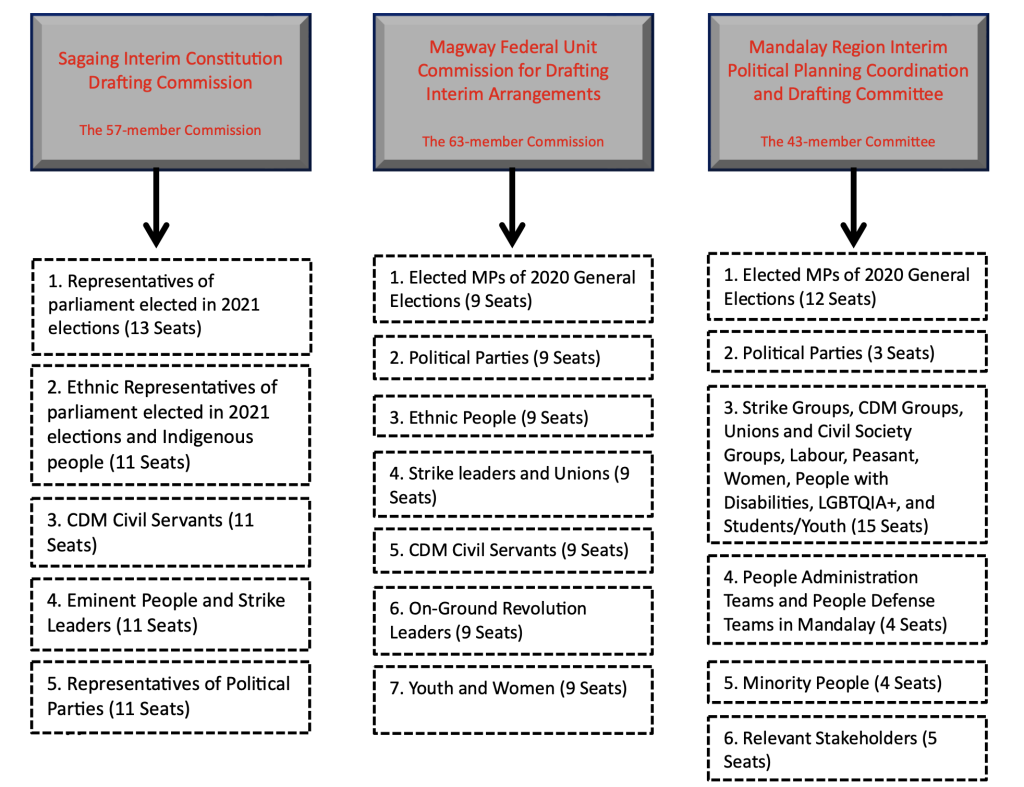
    Despite differing levels of participation in the political process surrounding the interim arrangements, no direct involvement of resistance groups was found in Sagaing, whereas such involvement was evident in Magway and Mandalay (as reflected in categories 6 and 4 of their respective drafting bodies). In Magway, 14% of the members of the drafting commission were representatives of armed resistance groups, compared with 9% in Mandalay.

    Civic–stakeholder legitimacy comes from women’s organisations, labour groups, peasants, ethnic/minority groups, students’ unions, strike groups, youth networks, and CDM civil servants. Although this category represents very diverse organs, three major groups significantly influence this layer: ethnic minorities, CDM participants, and strike groups. These three groups have demonstrated a relatively higher level of dominance over the political process, beginning with the drafting phase and continuing to the current stage of executive formation. Local bodies representing each group have emerged alongside the drafting process. These include the Sagaing Region Strike Forces[3], formed by strike groups in the Sagaing Region; the Sagaing Federal Unit CDM Civil Servants Council[4] and the Chin Ethnic Groups[5] of the Magway Federal Unit.

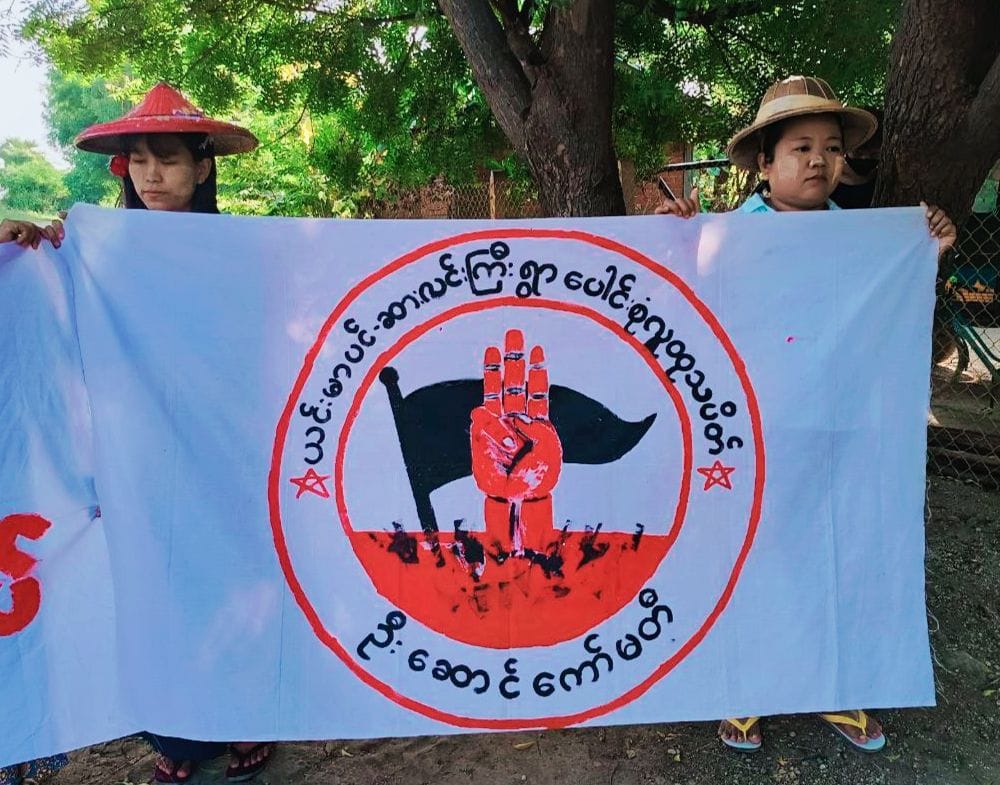
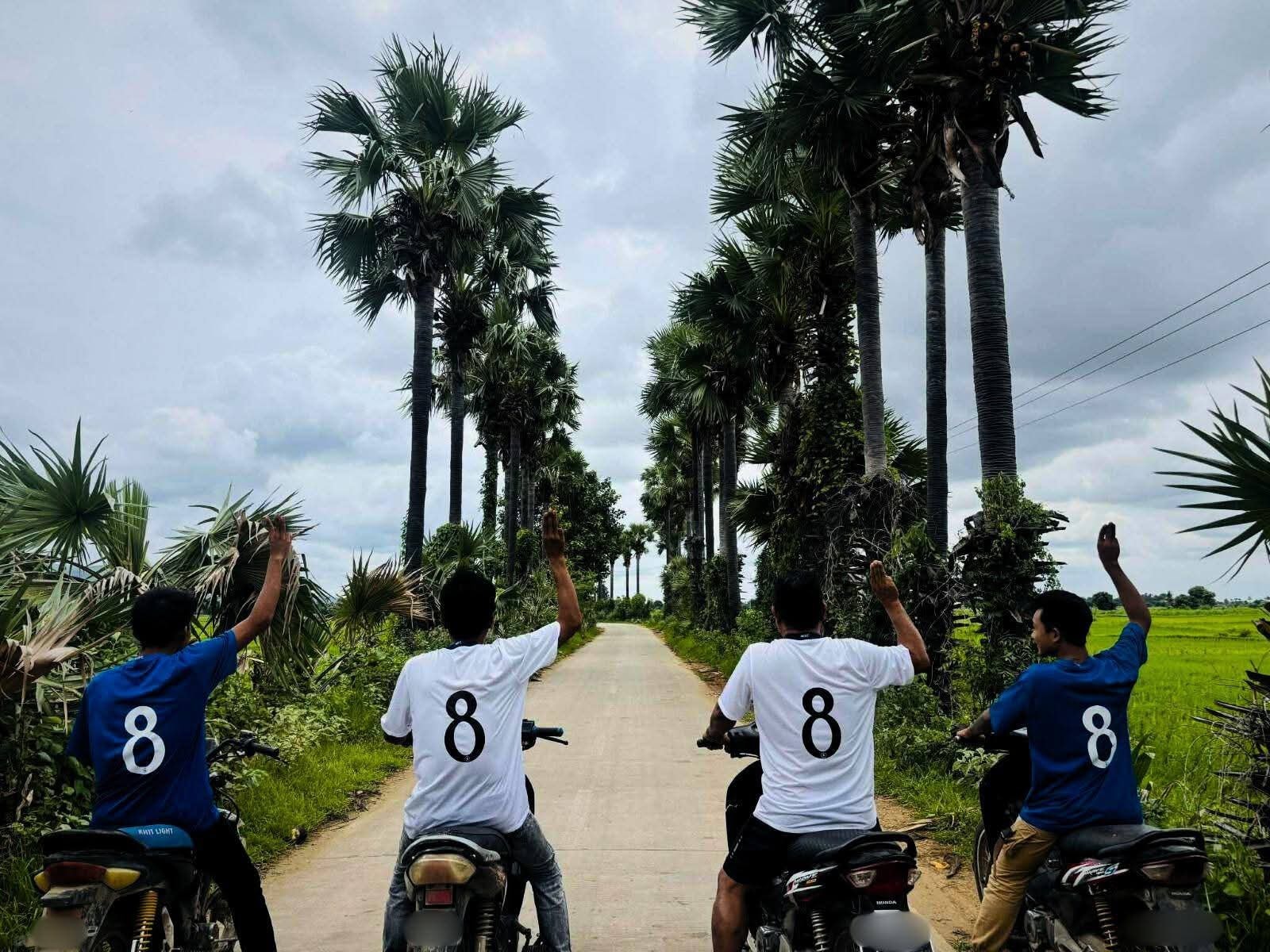
    Yinmarbin-Salingyi Strike of Sagaing Region Strike Forces [6]

    This inclusion reflects the social character of the Spring Revolution and broadens political participation beyond armed actors and elected officials. However, their roles often lack a clear constituency and accountability mechanisms, leading to overlapping mandates and the potential duplication of functions.

    These sources of legitimacy combine and create a power structure characterised by negotiation, decentralisation, and collective decision-making. Clearly, the term “consensus” is frequently described in the interim arrangements (in Sagaing, it is the constitution) of three units.

    Varied Models of Executive Power

    The three units share common goals and similar political origins, but they adopt different models of executive power to adapt to the need to balance local power and drive the resistance movement forward.

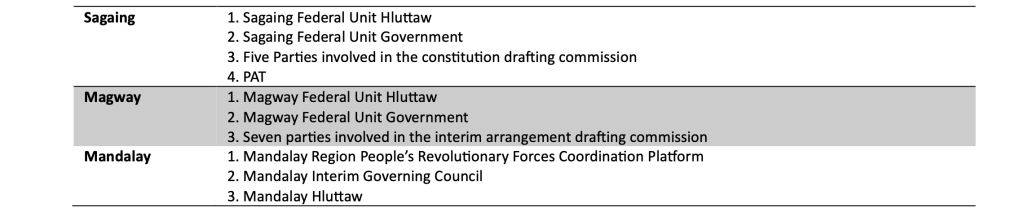
    Sagaing adopts a highly collectivised executive structure. The five groups responsible for drafting the Sagaing Constitution have significant influence over executive authority, as Section 67 empowers them to scrutinise and select members of the executive. Their influence is further reinforced by Section 66, which permits only individuals belonging to the representative groups involved in the constitution-drafting commission to serve as cabinet members. The Chief Minister has very limited unilateral power, and the government operates through consensus among representative blocs. The Chief Minister does not have the executive authority to appoint or remove any cabinet members, including the Chief Administrator of the Naga Self-Administered Zone. Nor does the Chief Minister have the power to restructure the executive body under the constitution.

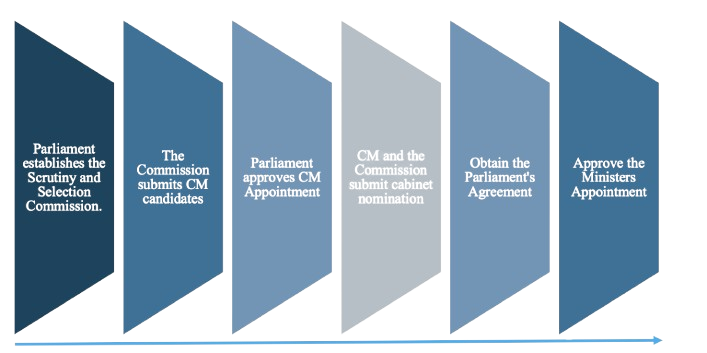
    Process Diagram of Cabinet Formation in Sagaing

    This model strictly prevents the concentration of power in any single actor but risks policy paralysis under collective leadership.

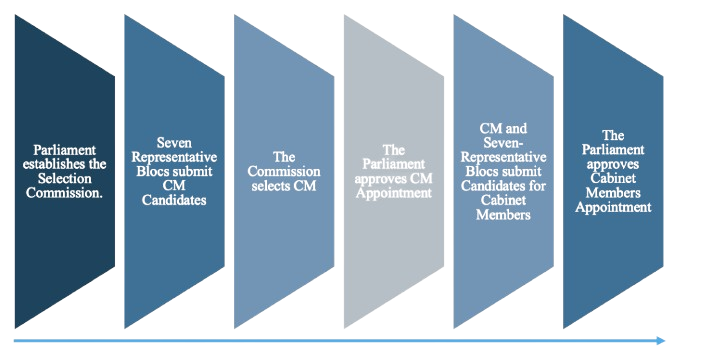
    Magway presents the most codified and legally formalised model of executive formation among the federal units. Law No. 1/2023 of the Federal Unit Parliament institutionalises the drafting commission as a body composed of seven representative blocs, and these blocs subsequently become embedded as core political actors within the executive architecture. Their influence is structurally established through Sections 12(d), 61–63, and 152–154 of the Magway Interim Arrangement.

    Process Diagram of Cabinet Formation in Magway

    Section 12(d) predetermines the composition of the cabinet by limiting eligibility to members of these seven blocs, effectively transforming the drafting commission into a gatekeeping mechanism for executive authority. Sections 61–63 further empower the blocs to constitute the Selection Commission responsible for appointing cabinet members, including the Chief Minister. Each bloc nominates one candidate for Chief Minister, and the Selection Commission—comprised of representatives from these same blocs under Sections 153 and 154 determines the executive leadership. Although the Chief Minister is nominally authorised to nominate ministers, cabinet formation remains contingent on the collective consent of the seven blocs and subsequent parliamentary approval. In effect, the Magway model reflects the Sagaing protocol: the Chief Minister lacks unilateral authority to appoint, dismiss, or restructure the cabinet. Executive authority is instead dispersed across the seven blocs and the parliament. Consequently, Magway’s executive structure operates as a hybrid parliamentary model in which executive leadership is balanced, and at times constrained, by institutionalised checks from both parliamentary institutions and civil–political groups.

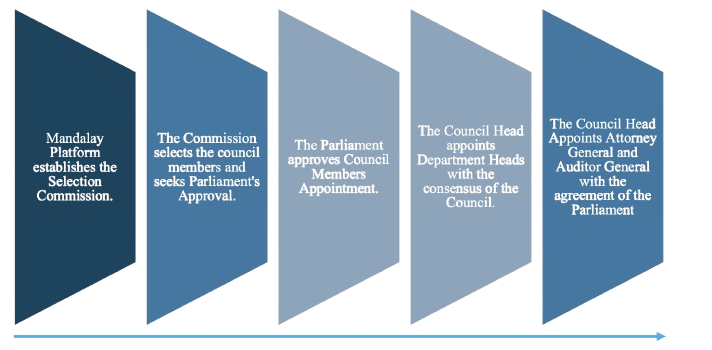
    Mandalay adopts the least formalised and most centralised model, built around the Coordination Platform of revolutionary forces (the Mandalay Platform). Its Interim Governing Council is selected by the 11–15 representative blocs from the Mandalay Platform, followed by parliamentary approval. Unlike Sagaing and Magway, the Mandalay Executive Head is authorised to appoint, dismiss, or restructure the cabinet.

    Process Diagram of Council Formation in Mandalay

    However, there are no provisions in the arrangement guiding the accountability mechanisms of executive members. It remains unclear whether executive members will be held accountable to the parliament or to the Mandalay Platform. Mandalay has not yet published the members of the Mandalay Platform. The absence of detailed legal provisions on accountability reflects the politically sensitive security environment, where coordination takes precedence over legal precision.

    Reference

    [1] Section 119. The term of the Pyithu Hluttaw is five years from the day of its first session. Section 151. The term of the Amyotha Hluttaw is the same as the term of the Pyithu Hluttaw. The term of the Amyotha Hluttaw expires on the day of the expiry of the Pyithu Hluttaw. Section 168. The term of the Region or State Hluttaw is the same as the term of the Pyithu Hluttaw. The term of the Region or State Hluttaw expires on the day of the expiry of the Pyithu Hluttaw.

    [2] CRPH, “Declaration on the Complete Abolition of the 2008 Constitution” [31 March 2021]. Available here: https://crphmyanmar.org/publications/statements/crph3103212/

    [3] https://www.facebook.com/Sggstrike

    [4] https://www.facebook.com/profile.php?id=100091451325717

    [5] https://www.facebook.com/profile.php?id=61580838481806

    [6] https://www.facebook.com/photo.php?fbid=122196780116063633&set=pb.61551909016018.-2207520000&type=3

    Read part (1) of the briefing paper here.


  • Understanding Federal Units in Central Burma (part 1)

    Understanding Federal Units in Central Burma (part 1)

    Understanding Federal Units in Central Burma

    Briefing Paper on Federal Unit Politics of Central Burma (part 1)

    Introduction


    The dry zone or Central Burma is locally known as Ah Nyar (or Anyar). The central plain where Burmese majority lives was once politically referred to as the heartland of the Myanmar military (or Tatmadaw). It could be due to some demographic and geographic strategy of the Tatmadaw. Firstly, Tatmadaw is the state military, and it is formed by the Burmese majority, and the founding father General Aung San is from Natmauk of Ah Nyar. On the second, and more importantly, the tactical formation of Tatmadaw was strategically built on fighting against its domestic enemies in the periphery states. Tatmadaw has been a central figure of the decade-long civil war with ethnic liberation movement, particularly Karen, Mon of southern Burma, Kachin of northern Burma, Shan of Eastern Burma and Rakhine and Chin of western Burma. In light of this peripheral warfare in the mountainous regions, its major supply bases were heavily located in the central plain areas of Ah Nyar, mostly in Magway region. Out of 25 Weapon Manufacturing Industries of Directorate of Defence Industries of Tatmadaw, 68% of industries manufacturing major weapon supplies are situated in Ah Nyar alone, while the remaining 32% are in Bago and Yangon. Additionally, its human resource pool has long been filled by unemployed young men from central Burma. It was not an unfounded hypothesis for the Tatmadaw’s military strategists to view Ah Nyar as a strategic and secure position from which to counter and contain its enemies in the peripheral states. Who would have imagined the rise of a revolutionary movement in Ah Nyar? Neither the Tatmadaw nor its opposition groups, including Burma’s ethnic revolutionary organisations, could have foreseen it.


    The 2021 military coup d’état became a miracle in the history of revolution in Burma. The people of Ah Nyar became a central figure of the prominent Spring Revolution in Burma since the early days of 2021. Despite the tragedies on the frontlines and the fragmented structure of the resistance groups, their guerrilla campaigns have, at times, demonstrated efforts to evolve into conventional warfare, most notably marked by the launch of Operation 1027. This has also led to re-framing revolutionary strategies in Ah Nyar.


    Nearly five years into the Spring Revolution, with Ah Nyar at its heart, the movement now confronts escalating threats from the Tatmadaw. This raises a critical question: what direction is the revolution in Ah Nyar now taking?


    Contextual origins


    Across central Burma, the emergence of federal units was not from the prior constitutional design but a response to the evolving dynamics of the Spring Revolution. As resistance forces gained territorial control across Sagaing, Magway and Mandalay alongside advances in northern Shan, Chin, Kachin and Rakhine, the need for structured governance became increasingly urgent. Beginning in early 2023, consultations among local revolutionary actors, 2020 elected representatives and community networks led to the creation of drafting bodies for interim arrangements. These interim frameworks opened political space for decentralised regional federal governments that complement, coordinate with and strengthen the broader federal-democratic movement led by the National Unity Government.


    The three regions of central Burma are currently in the process of establishing federal units; most notably Sagaing, which many diplomats and scholars see pioneer of federal units. All three regions of central Burma have now enacted legal arrangements for forming federal unit governments. These interim arrangements form the core of the regional political framework and are key to understanding the direction in which the revolution in Ah Nyar is heading, despite the presence of several tiny factions of resistance groups in each region.


    Drafting and Approval Framework


    The drafting processes were led by the drafting bodies established by the respective regional parliaments. In Magway and Sagaing, the interim arrangements drafting processes began following the enactment of Laws No. 1/2023 in both regions, dated 17 November 2023. In contrast to these two regions, the Mandalay interim arrangements drafting process commenced through an agreement between the Mandalay parliament (Committee Representing Mandalay Hluttaw) and revolutionary groups in Mandalay. Unlike Sagaing and Magway, Mandalay deliberately avoided using the term “law”; instead, it adopted the “Plan for Coordination and Drafting of Interim Political Arrangements in Mandalay”. The plan was officially approved on 12 July 2024. Nevertheless, the principles and drafting processes across all three regions are largely similar.


    Drafting Bodies

    Approval Process

    Unit parliaments hold the sole authority to approve the interim arrangements in Sagaing and Magway. Mandalay follows a two-step approval process: first, the interim arrangements must be approved by the Mandalay Region People’s Revolutionary Forces Coordination Platform, which comprises seven groups representing revolutionary forces; and second, the Mandalay Parliament (in Burmese, မန္တလေးဒေသလွှတ်တော်) approves and announces the arrangements to the public.

    Executive

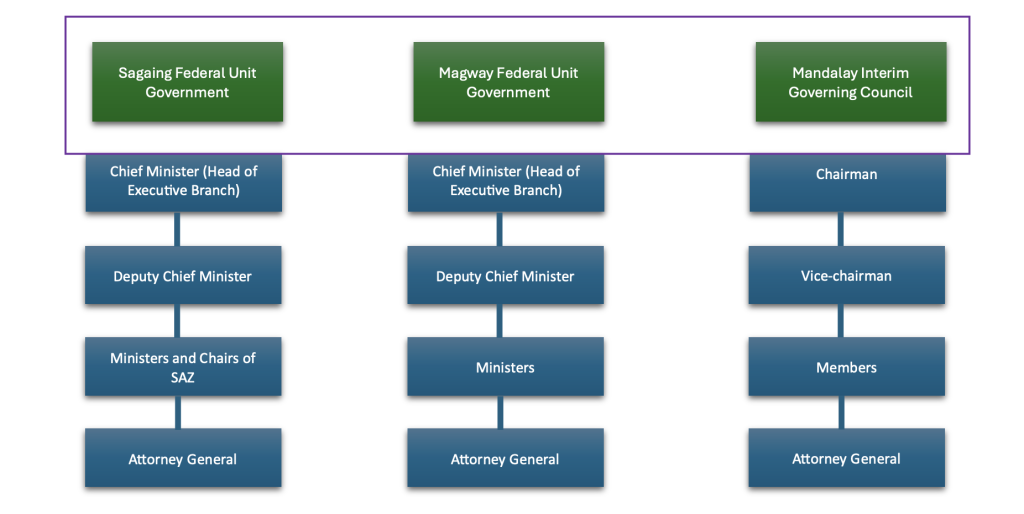
    Despite differences in terminology, the structure and functions of unit governments in central Burma are largely similar.

    Structure

    Who Forms the Cabinet?

    Sagaing

    Constituting the Sagaing Cabinet is based on selection, as defined in Chapter 5 of the constitution, rather than appointment. Section 67 requires the parliament (Sagaing Federal Unit Hluttaw) to form a Scrutiny and Selection Commission (SSC) for the Interim Sagaing Federal Unit Government. By structure, the SSC comprises representatives similar to those in the drafting commission (for the interim arrangement), together with representatives from the People’s Administration Team in Sagaing. The SSC plays a crucial role in selecting candidates for the position of Chief Minister, and the parliament elects the Chief Minister through a secret ballot system.

    Once the Chief Minister is confirmed and formally appointed by the parliament, the Chief Minister joins the SSC to select and nominate the remaining members of the cabinet for parliamentary approval.

    Magway

    The Magway Interim Cabinet is constituted through a selection-based system, rather than an appointment system. Under Section 61 of the interim arrangement, the Selection Commission is required to nominate candidates for the position of Chief Minister for approval by the parliament. Once the parliament confirms the Chief Minister, the CM, upon the agreement of the seven parties represented in the Interim Drafting Commission, may nominate the remaining members of the cabinet. These nominations must then be submitted to the parliament for final approval.

    Mandalay

    The Mandalay Region People’s Revolutionary Forces Coordination Platform serves as the key body responsible for forming the Selection Commission for members of the Mandalay Interim Governing Council (MIGC), in accordance with Section 67 of the interim arrangement. The Mandalay parliament is then required to approve the Commission’s selections and formally announce the formation of the MIGC.

    Political Leadership

    Defence and Security

    Sagaing

    Sagaing Federal Unit establishes a federalised, civilian-led, and NUG-coordinated security architecture. The constitution allows Sagaing to form two types of armed forces — the People’s Security Team and the People’s Defence Team (the “2-Ps”), excluding the People’s Defence Force. Although NUG may deploy the 2-Ps with the agreement of the Unit Government, these forces remain under the authority and control of the Unit Government. In accordance with Section 142, the Unit Government is required to establish a Defence and Security Council to oversee the security governance of the Unit.

    Magway

    Magway interim arrangement sets out a civilian-led, locally grounded, and revolutionary-aligned security architecture. Section 114 establishes that security and defence functions fall under the authority of the Magway Interim Government. To support this, the Magway Federal Unit Parliament is mandated to enact laws governing the Unit’s security and defence forces (Section 123). An additional provision is also included that the Unit’s Ministry of Defence must form a preparatory committee to organise the Unit’s security and defence force in coordination with the armed revolutionary actors operating within the region.

    Mandalay

    The interim arrangement does not contain any provisions on this matter.

    Terms of Government

    Photos: Internet


my_MMMyanmar