
Myanmar’s Spring Revolution: Paying the Price for What We Overlooked?
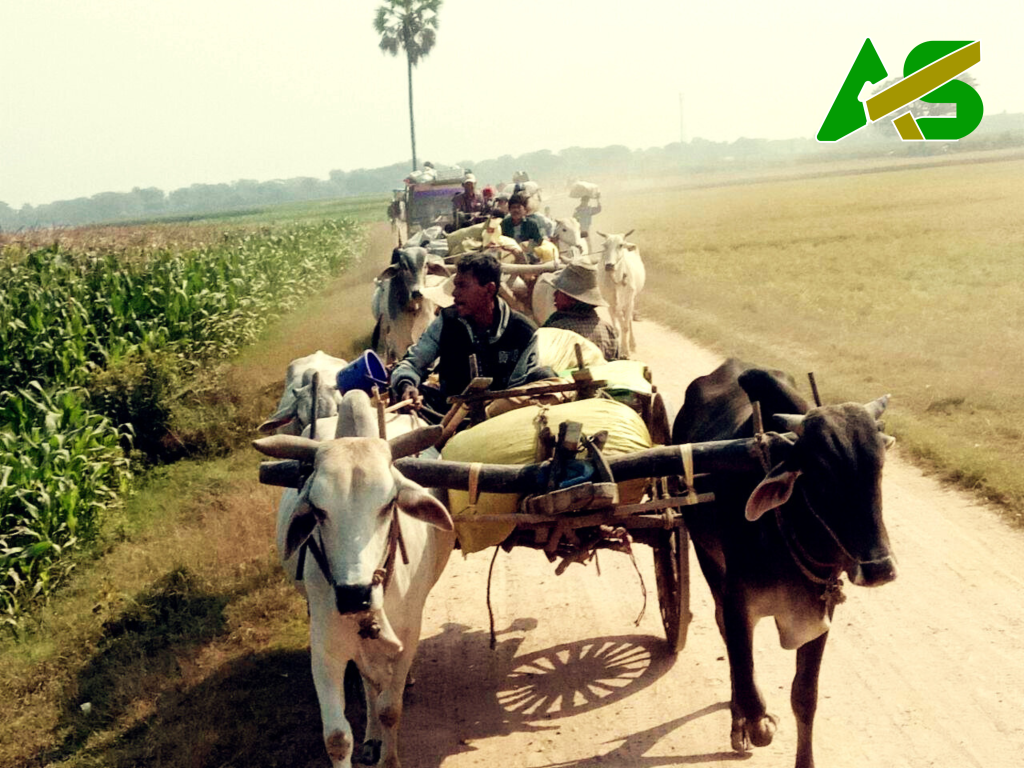
Photo: CAS
Spring Revolution approaches its fifth anniversary. It reminds the timeline that was initially pronounced by a prominent Kachin figure. He once said, “Revolution should not take longer than five years”. Are we approaching an end? Or what are we experiencing now?
The military regime is on its political pathway to transition, dictated by its repeated political playbook. The elections are coming, along with massive military operations across tactical spots connecting central Burma (locally known as Ah Nyar) and neighbouring ethnic states. They include operations in the Kalay-Kabaw area of Sagaing and Hakha of Chin state, Pauk, Kyauk-Htu of Magway and Mindat of Chin State and Madaya, Moegot of Mandalay and Shwe Bo of Sagaing. Tatmadaw is clearly cutting the supply chain from the eastern to the western corner of the country in preparation for its major operations. Looking back to the situation in late 2023 and 2024, it was a complete disaster for the junta. It cannot expect such huge military operations, even in central Burma, where its major weapon manufacturing factories exist. Having said that, why that turn? What has empowered the military junta for such operations? Several analytical reports have pointed out the conscription and China factors. What else could it be? I would argue that the National Unity Government and Ethnic Revolutionary Organisations mistook their strategic positions by overlooking Ah Nyar.
Why Ah Nyar?
Tatmadaw has regarded central Burma as its strategic heartland and a historic “white area” after its major operations in the 1960s. For the Tatmadaw, securing Ah Nyar is essential to protect the state and suppress communist and ethnic insurgencies. That said, the possibility that major armed resistance could emerge from its power centre after the 2021 coup d’état has been relatively underestimated. Two theories resonate that claim. Firstly, its structure and tactical preparations are primarily emphasised on fighting against its enemies in the mountains and positioning Ah Nyar as a test ground. Major weapon manufacturing factories are in Magway. Its regional bases are spread across peripheral states – backed by infantry battalions in the central regions. Secondly, Senior General Min Aung Hlaing’s rare confession in his Phoenix TV interview – “To be honest … I didn’t think it would go that far” — exposes the Tatmadaw’s strategic miscalculation. His remark underscores how deeply the military underestimated the potential for armed resistance in its heartland, where it has now lost major territorial control within five years of the coup.
In addition, Ah Nyar has become the spark of the Spring Revolution. The armed resistance in the Ah Nyar region now poses a direct threat to Naypyitaw. The Ah Nyar front marks a turning point in Myanmar’s liberation struggle. It represents the collapse of the Tatmadaw central authority in the heartland. Without the support of Ah Nyar and its people, the regime risks becoming a regime without backbone.
Politically speaking, the resistance movement in Ah Nyar is still led by local leadership grounded in different townships across the region. This stands in contrast to exile and ethnic politics, where leadership is largely dominated by foreign citizens or permanent residents of foreign countries. The military generals and their political wings have long experience manoeuvring around exile politicians and institutions, so such actors pose relatively little challenge to them. However, when Aung San Suu Kyi chose to remain inside the country and, more importantly, to remain a Burmese citizen, it became a major threat to them. That said, the emergence of domestic leadership in Ah Nyar is likely to become a political headache for the military generals. The revolution in Ah Nyar is a clear existential threat to Tatmadaw.
Different Priorities, Divergent Strategies
Over the last four years, NUG sought to build military cooperation and central command with Ethnic Revolutionary Organisations (ERO). Newly established revolutionary armies follow the same idea – building the armed institution first in ethnic-liberated areas, then moving to central and lower regions. Although strategic similarities were observed in the beginning, it has later become clear that the cooperation between NUG, EROs and newly established revolutionary armies is still functional. Divergent Strategies and different priorities were seen. EROs prioritised consolidating their own territories, focusing heavily on securing and expanding their influence rather than linking their regional strategies to the central regions. Likewise, certain opportunities were missed within NUG by over-emphasising EROs but paying relatively little attention to the movement in the centre. Clearly, the central command and cooperation with EROs still do not function as expected.
In Ah Nyar, however, the resistance movement evolved progressively—from homemade weapons and landmines to coordinated operations. Several tiny factions of resistance groups in central Burma have obtained major influence over rural territories and strategic roads. Despite being a part of Ah Nyar, NUG has failed to take a strategic leadership role – leaving a leadership vacuum. Yet, despite this territorial success, the movement struggled to unify its numerous, village-based resistance groups. Ah Nyar is facing obstacles to building a coherent command and coordination structure.
What Went Wrong?
The 3-Ps strategy of NUG (People Administration Team, People Defence Team, People Security Team) in Ah Nyar failed to account for the realities on the ground and the timing of the revolutionary movement. While territorial control remained uncertain amid a surge of armed resistance, NUG established bureaucratic mechanisms. This not only created operational complexities but also deepened divisions within the emerging local leadership across central Burma. In this way, inter-mechanism conflict arose within the revolutionary bureaucracy. Leaders within the NUG bureaucracy appeared more focused on creating structures that favoured themselves rather than on fighting the military junta.
NUG focused excessively on coordinating militarily with ethnic armed groups and on establishing a centralised command system, while failing to train, arm, or organise the Ah Nyar forces. In short, it failed to operate alongside Ah Nyar on the ground.
Resource allocation and management also failed to prioritise Ah Nyar. NUG’s fundraising relied heavily on diaspora communities and online, while it left Sagaing, Magway, and Mandalay out of strategic mobilisation. Resource distribution did not prioritise Ah Nyar either.
Most importantly, it failed to build trust with Ah Nyar and to stay present alongside them. In matters of foreign affairs and diplomatic relations, the Ah Nyar communities were sidelined. Coordination with new local leaders in Ah Nyar was also neglected.
Time to re-direct?
Tatmadaw can keep fighting wars on the periphery for another century — unless we finally learn from what we overlooked. It is not yet too late for the Spring Revolution to correct the failed experiment of neglecting Ah Nyar. The success of the Spring Revolution depends not only on external factors but also on how we bridge the two strategies — Ah Nyar and the ethnic revolution.
Share via:
 Myanmar
  English