
Rethinking Transitional Justice for Burma: No Way Out?
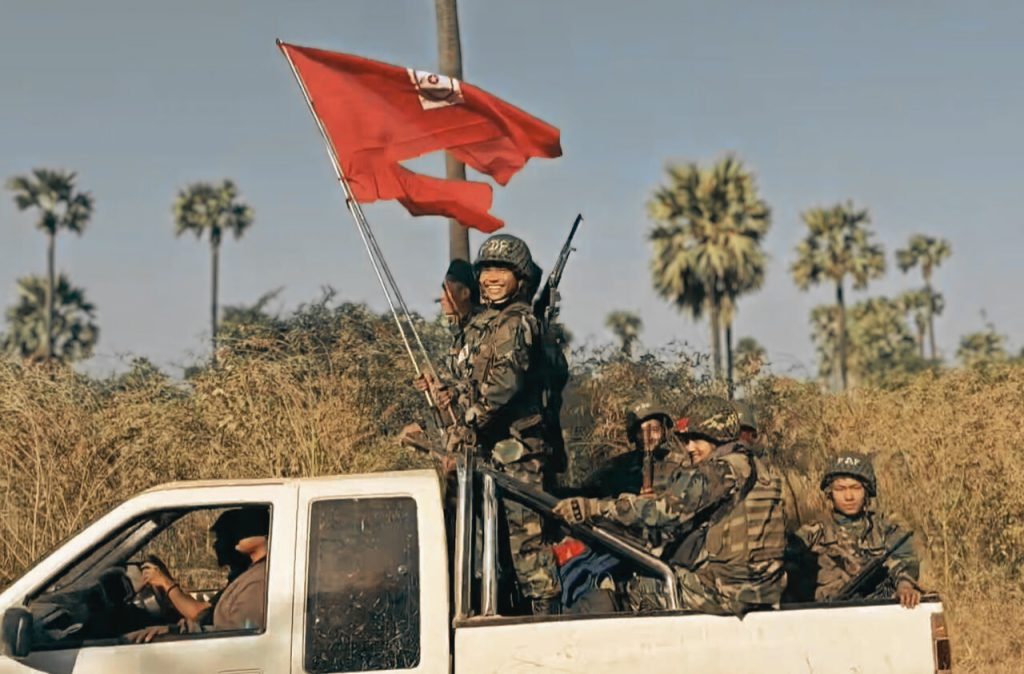
Photo: Internet
Burma has been embroiled in civil war and trapped in a recurring cycle of coups and regime changes. After independence in 1948, Burma experienced a decade of parliamentary democracy until 1958, which later ended in the first military coup in 1962. This announced military rule, later rebranded as the “Burmese Way to Socialism”. This failed experiment ended with another coup in 1988. The then junta promised a transition to multi-party democracy leading to another experiment of the so-called “disciplined democracy”. It lasted from 2010 to 2020. That system, too, collapsed with the recent military coup in 2021. I referred that situation to an endless loop of coups and political reconfigurations. Amid this endless loop, opposition groups have fought for a transition to democracy and federalism. However, the 2010 transition, widely seen as nominal, lacked justice and ignored long-standing calls for transitional justice. Even looking solely at the post-2021 period, the extent of crimes and atrocities against civilians is nothing short of an unimaginable tragedy. Now again, the new junta announced general elections, perhaps to rebrand itself. Questions arise.
Is it practical to think about TJ without considering the geopolitical grounds of the SEA region? Can Burma be transitioned to democracy and federalism without TJ? Can the orthodox thinking of TJ be realistic in Burma?
SEA Illusion for Human Rights
In Asia, the treaty-based international human rights protection mechanism seems ineffective. Cambodia ranks second after the Philippines in ratifying international human rights treaties. It has even ratified the covenant on civil and political rights, which several countries relatively hesitated to endorse. Today, Cambodia’s civil and political rights landscape remains eerily quiet. I recently spoke with Cambodian journalists and activists who cautiously described their struggles. One whispered that “an opposition figure was assassinated in Bangkok earlier this year”.
ASEAN is often seen as an emerging regional bloc. Its human rights mechanism includes an intergovernmental commission and several thematic bodies. In Burma’s case, however, a clear crack exists between member states which directly challenges ASEAN centrality. Nevertheless, the failed 5-PC underscores ASEAN’s rights diplomacy as a toothless tiger. Like it or not, such SEA realities pose significant pressure for TJ advocates in Burma. Meanwhile, Burma needs democracy and federalism. Can both be without TJ? I doubt it.
Beyond Orthodox Theory
Countless victims and survivors in Burma, including those who suffered from gang-rapes in Ah Nyar (central Burma), are still helpless without even protection for their right to life. Meanwhile, Myanmar military continues its lawless aerial attacks. Synchronously, it has begun trumpeting political transition alongside its planned elections, especially to the countries it believes will support it. Of course, ASEAN or some of its member states cannot be excluded. Once again, it is the said political transition without accountability. Meanwhile, resistance groups remain in control of large territories and have deployed troops across central Burma. They continue seeking common ground between groups of Ah Nyar and periphery ethnic states on political transition. They speak about TJ.
TJ means how we respond to the legacies of gross violations of human rights. The orthodox TJ theory remains largely focused on the four-pillar approach: truth, justice, reparation and guarantee of non-recurrence. However, this approach has three significant weaknesses: overdependence on typical political transitions, over-reliance on international law, and failure to incorporate modern digital realities. TJ is not only about securing accountability during political transitions; it is also about how traumatised societies heal and rebuild their social fabric after conflict. Major political actors and civil society continue to place excessive reliance on orthodox theory, while overlooking their weaknesses and possible alternatives.
Justice Outside the Courtrooms
Are there any alternatives? Indeed, there are. I often explain Myanmar’s revolution using the “Elasticity Theory” from physics: even the most flexible reed breaks when pushed beyond its limit. Likewise, when oppression exceeds tolerance, revolution becomes inevitable. Revolution itself is a pathway to justice, especially in Burmese context, when all options are exhausted. Additionally, a community-based TJ model also exists. It shifts focus from state-led efforts to community-driven processes. Grassroots initiatives document experiences, share stories, and foster healing through local practices. This grassroots model empowers survivors and families to hold perpetrators accountable, decide forgiveness, and shape local justice processes. It can also be crafted to complement formal justice mechanisms.
Conclusion
It is time to question whether our work remains confined to the orthodox model. Geopolitics, digital realities, and the rapid rise of AI are reshaping TJ. Authoritarian regimes may become more powerful than pro-democracy actors in shaping narratives and manipulating the truth. We should never underestimate this risk.
Share via:
 Myanmar
  English