
The Price of Passage: Checkpoints Taxation and Everyday Survival in Sagaing
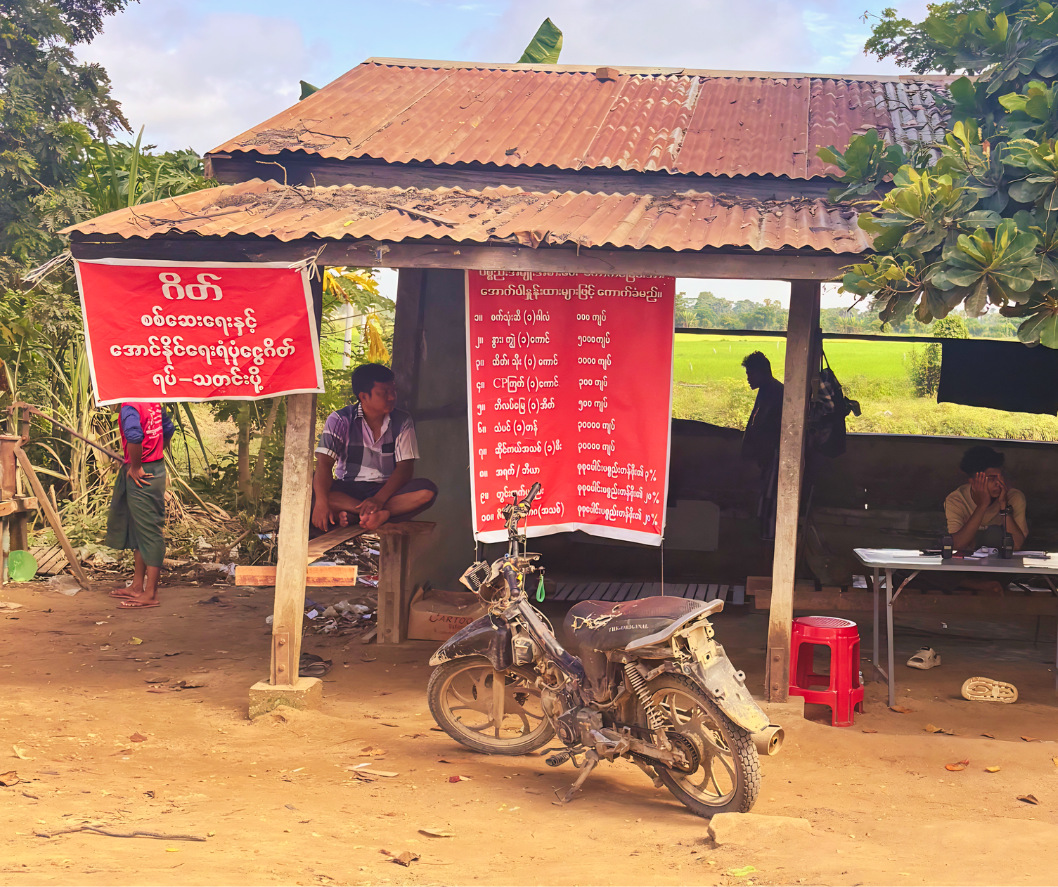
Across conflict-affected Sagaing, the cost of movement is shaped not only by distance and fuel, but by checkpoints, competing authorities and emerging systems of taxation. The central question is not simply who controls the road, but whether the power exercised there is predictable, respectful and publicly accountable.
The road as an institution
In wartime Sagaing, governance is often encountered on the road before it is encountered in an office or policy document. It appears through vehicle inspections, questions about destinations, demands for payment, municipal levies and the different treatment of private cars, passenger vehicles and commercial trucks. Some payments follow recognisable rates. Others depend on the person standing at the gate and the balance of power between checkpoint personnel and travellers.
Checkpoints are therefore more than security installations. They are places where territorial authority, public revenue, informal extraction and everyday negotiation meet. Their costs also travel beyond the gate. A payment initially made by a driver or trader may later reappear in passenger fares, transport charges and the prices of rice, medicine, fuel and agricultural inputs.
Local accounts indicate that private vehicles travelling between rural townships and Monywa may encounter several SAC [military junta] checkpoints in a single journey. A commonly reported charge is 2,000 MMK [ approximately 0.5 USD] per checkpoint for an ordinary private vehicle, with an additional municipal wheel tax when entering Monywa. On a route with four checkpoints, the direct cost can reach 9,000 MMK [approximately 2 USD] one way and 18,000 MMK [approximately 4.5 USD] for a return journey. Passenger express vehicles and commercial trucks may face different charges according to their use and the goods carried.
Drivers describe the 2,000 MMK payment at SAC checkpoints as a routine understood by both sides. What is not predictable is the treatment that accompanies it. Local accounts suggest that encounters can depend on the mood and behaviour of individual soldiers, including whether they have been drinking. The amount may therefore be standardised through repetition while the exercise of authority remains personalised and potentially coercive.
Written policy and uneven practice
Collections by pro-democracy authorities require a different but equally careful analysis. The National Unity Government has established revenue and taxation arrangements for areas under its administration, including township-level collection through People’s Administration Teams, commonly known as Pa Ah Pha. In Sagaing, an announced schedule identifies ten commodity categories and applies rates according to the type, quantity or stated value of goods transported.
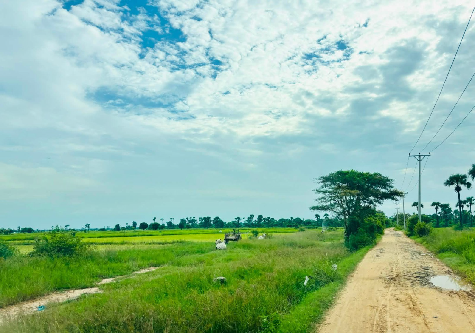
Rural road connecting villages in Wetlet township, Sagaing [Photo: Let Pan Ni]
This commodity schedule is directed mainly at vehicles transporting goods for commercial purposes. It is separate from the 2,000 MMK checkpoint payment reported for an ordinary private vehicle. Receipts are mandatory under the announced arrangement. No general exemption has been identified, although formal authorization from the relevant authorities may exempt a particular consignment.
|
Commodity |
Taxable unit or basis |
Rate |
|
Fuel |
Per gallon |
100 MMK |
|
Cow or buffalo |
Per animal |
5,000 MMK |
|
Goat or sheep |
Per animal |
1,000 MMK |
|
CP chicken |
Per bird |
300 MMK |
|
Cement |
Per bag |
500 MMK |
|
Rebar |
Per ton |
30,000 MMK |
|
Alcohol or beer |
Total value |
3 percent |
|
Motorcycle |
Per motorcycle |
30,000 MMK |
|
Mineral |
Load carried |
20 per cent |
|
Furniture |
Load carried |
20 per cent |
The schedule provides an institutional basis for collection, but a written policy does not guarantee consistent practice. For mineral and furniture loads, for example, the stated 20 per cent rate requires a clear and publicly understood method for determining taxable value. Consistency also depends on whether rates are displayed, receipts are issued, collectors can be identify,ed and the same goods are protected from repeated assessment across administrative areas.
Local residents often distinguish between the legitimacy of contributing and the conduct of the person collecting. Many people on the ground express support for NUG and Pa Ah Pha taxation because they believe their payments help sustain the revolution. At the same time, that support is weakened when toll-gate personnel communicate poorly or address travellers in an unnecessarily authoritative manner. Public willingness to contribute is not unconditional acceptance of how authority is exercised.
This is why respectful explanation, visible rates and mandatory receipts are not minor administrative details. They influence whether taxation is experienced as participation in a shared political project or simply as another roadside order. Pro-democracy institutions should not be judged only against the arbitrary conduct of SAC checkpoints. They should be judged against the democratic and accountable governance they seek to establish.
Fuel prices are set along the road
The checkpoint economy cannot be separated from fuel. Motorcycles, small vehicles and trucks are essential to everyday life across Ah Nyar. They connect farmers to fields, patients to treatment, traders to markets and volunteers to emergency response. During fighting, they also enable evacuation, movement along safer routes and the delivery of food and medicine.
Local market reports from late August and early September 2026 placed fuel at approximately 8,000 MMK per litre in Kantbalu and 7,000 MMK in Depayin. Informal prices in Monywa and Mandalay ranged from 6,000 to 7,000 MMK, compared with an official dealer price of about 4,300 MMK per litre. At the highest reported price, consumers were paying almost 86 per cent more than the official rate.
The difference in cost/price cannot be attributed to checkpoint payments alone. It reflects restricted official distribution, transport risk, road conditions, scarcity, storage costs, conflict disruption and trader margins. Yet these factors share one feature: they accumulate through movement. Fuel must be purchased, loaded, transported, inspected and moved through areas where authority and security conditions change. Its price is therefore produced along the road, not only at the point of sale.
Scarcity also redistributes economic power. Traders with capital, storage and transport connections can purchase fuel while routes remain open and sell when supplies become scarce. This may create profitable activity without producing broad-based prosperity. An active fuel market can reconcile with declining household welfare, especially when ordinary families and small farmers must pay higher prices without similar opportunities to profit.
Paddy machinery and the wider conflict economy
If fuel is a strategic commodity in northern Sagaing, paddy and rice are central to the political economy of Shwebo District. Paddy must move between fields, villages, mills, storage sites, towns and markets. Checkpoint charges, commodity taxes, fuel prices and route closures influence the farm-gate price received by producers, the operating costs of millers and transporters, and the final price paid by consumers.
Agricultural machinery and energy services remain essential even during war. Farmers need harvesters, tractors, pumps, engines, spare parts and repair services. Communities without reliable electricity increasingly rely on solar systems for homes, water pumping, tube wells, rice mills and small businesses. Transport and risk costs can make these productive assets unaffordable even when they are available elsewhere in the country.
Conflict also expands markets for goods that are not equally beneficial to community welfare. Local accounts and secondary reporting describe increased trade in weapons, ammunition, drugs and other conflict-related materials. Markets for four-wheel-drive and heavy-engine vehicles have grown partly because armed actors need mobility on damaged roads and difficult terrain. The same vehicles and engines may also support farming, emergency response and civilian transport, making the civilian and conflict economies increasingly difficult to separate.
Taxation must carry public responsibility
The need for revenue in resistance-controlled areas is real. Township administrations require resources to provide services, respond to emergencies and maintain institutions under extreme pressure. The question is not whether local authorities may collect revenue, but how collection can become legitimate, coordinated and publicly accountable.
A credible system should identify the collecting authority, display the applicable rates, issue standard receipts and record how revenue is used. Coordination is necessary so that the same consignment is not repeatedly taxed during one journey. Special attention is also required for food, medicine, agricultural inputs and emergency supplies. If costs rise at every territorial boundary, revenue collection may unintentionally weaken food security, health access and local businesses.
The SAC and the pro-democracy movement do not occupy identical political or moral positions. SAC checkpoints are part of a coercive military system that seized state power, while pro-democracy institutions claim authority through resistance and democratic aspiration. That difference makes accountability more important, not less. A movement seeking to construct a different state must demonstrate that public authority can be exercised differently.
For most people in Sagaing, governance is not first experienced through national announcements. It is experienced when they move a sick relative, carry paddy to a mill, bring fuel into a village or travel to market. The conduct of checkpoint personnel, the predictability of a charge and the availability of a receipt may shape public trust more directly than a policy document.
A more accountable revenue system would not remove the costs of war. It could, however, prevent public taxation from becoming another unpredictable burden within it. The road is already helping to finance emerging authorities. The challenge is to ensure that this authority becomes transparent, coordinated and answerable to the communities whose movement and survival sustain it.
Sources and evidence
This commentary draws on anonymised local accounts and market observations from central Sagaing during late August to early September 2026, together with official NUG policy documents. Prices and checkpoint charges are time-specific and may vary with security, availability and local practice.
- National Unity Government Ministry of Planning, Finance and Investment. Announcement 4/2022 on tax voucher forms. Official announcement
- National Unity Government Ministry of Planning, Finance and Investment. Enacted laws, including the Union Taxation Law 2021. Official enacted laws page
Let Pan Ni is an independent researcher specialising in the social dynamics of Myanmar’s central dry zone (Ah Nyar). Her research focuses on bridging the gap between realities on the ground and international policy frameworks. The views and analyses presented in this commentary are solely those of the author and do not necessarily reflect the positions of the Centre for Ah Nyar Studies.
 Myanmar
  English