
Magway’s Defence Force Law and the Security Scenarios Ahead
Briefing Paper on Federal Unit Politics of Central Burma (Part 4). This analysis is the fourth part of the briefing paper on federal unit politics in central Burma. Part 1 examined the structural formation of federal units, Part 2 analysed their internal power structures, and Part 3 focused on the human rights frameworks embedded in the interim constitutional arrangements of three federal units in Ah Nyar.
Enacted on 25 September 2026 as Law No. 7 by the 12th Assembly of the Magway Federal Unit Parliament, the Magway Defence Force Law establishes a legal framework for organising and governing the resistance forces. It comprises nine chapters and 66 Articles and was enacted pursuant to Section 123 of the Interim Political Arrangement Law of the Magway Federal Unit. Section 114 of the Interim Political Arrangement Law provides for two distinct forces at the federal-unit level:
- Magway Federal Unit Defence Force and
- Magway Federal Unit Security Force or police force.
The Defence Force Law gives effect to the former by setting out its structure, command arrangements and operational framework. It also establishes a Joint Military Operation Commission to facilitate cooperation with Union-level defence forces, ethnic armed organisations in neighbouring states and other resistance forces operating within Magway. The law therefore marks an important step in formalising Magway’s defence governance. It also raises questions about how the unit’s new structures will coordinate with the NUG and neighbouring forces, how local People’s Defence Teams will transition into the framework, and whether the system can balance responsive unit-level command with coherent federal security coordination.
The origin
Magway Federal Unit Defence Force Law grew out of a wider political shift in central Burma, better known as Ah Nyar. In Sagaing, Magway and Mandalay, regional actors have developed constitutional frameworks to establish federal unit governments in coordination with the NUG. These arrangements offer a critical political window to build new governing institutions while the country remains in conflict. Constitutionally, Magway’s Interim Political Arrangement Law laid part of the groundwork for this process. Article169 (c) authorises Magway Federal Unit to form and administer its own defence and security forces. This gives the unit a clear role in organising its security institutions. At the same time, the Interim Arrangement Law provides both the NUG and the Magway Federal Unit concurrent legislative competence over the mobilisation and deployment of federal-unit defence and security forces. The laws therefore establish a division of responsibility, but essentially, the overlap also makes coordination between the two layers critical.
Chapter 9 of the Interim Political Arrangement Law sets out the unit’s approach to defence and security across 13 provisions, including the principle that security forces remain under civilian authority. Separately, section 119 states that “The Defence and Security Forces of the Magway Federal Unit shall be under the authority of the civilian government”. Article 63 of the Magway Federal Unit Defence Force Law reiterates this principle.
The Law’s Main Provisions
Magway Defence Force Law is organised into nine chapters and 66 Articles. Its central feature is a two-track security structure. Chapter 3 provides for Magway Federal Unit Defence Force, bringing smaller local defence forces together under the command of the Magway Federal Unit Defence Minister. Chapter 4 establishes a Joint Military Operation Commission (JMOC) to coordinate with ethnic or territory-based forces and conduct joint operations with Union-level defence forces, ethnic armed organisations and other resistance forces operating in Magway. These chapters create two possible routes for local forces to enter Magway’s security architecture: joining the unit’s Defence Force or operating through the Joint Military Command Commission (JMOC).
Magway Federal Unit Defence Force
Under Article 6, the Magway Federal Unit Defence Force is to be formed in coordination with the NUG and include resistance forces operating in Magway. Article 8 provides for the Defence Minister to invite ethnic and territory-based forces to join the force’s preparatory committee, which will establish its military code of conduct and chain of command. Article 10 (a) sets the committee’s initial term at two years. The force will be led by a Commander-in-Chief under the authority of the Defence Minister and will comprise two branches: the Active Force and the Reserve Force.
Joint Military Operation Commission (JMOC)
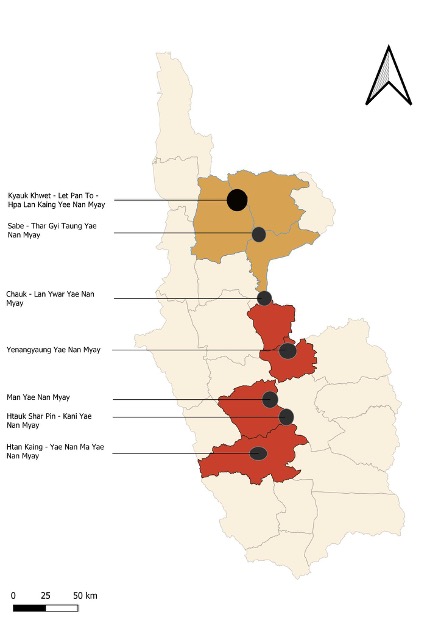
Ministry of Defence of the Unit is responsible for the JMOC’s administration and the Chief Minister heads the Commission. Its term is tied to the four-year term of the Magway Federal Unit Government. Under Article 32 (e), the JMOC is authorised to conduct joint operations with Union-level defence forces and ethnic armed organisations in neighbouring states, which means Chin and Arakan and other resistance forces operating within Magway. Article 32 (f) authorises the JMOC, in coordination with the unit’s Ministry of Defence, to issue the rules and instructions necessary to carry out its responsibilities. The JMOC will be funded by the Ministry of Defence under Article 35.
These altogether provide a legal basis for cooperation across organisational boundaries. At the same time, the law does not by itself settle how the commission’s authority relates to NUG security coordination or to the command of the Magway Federal Unit Defence Force. Without agreed procedures for planning, approving and reviewing joint operations, the two tracks could produce overlapping or competing command structures. The law establishes two pathways for organising forces but leaves their relative authority unclear. It does not specify who decides whether a force joins the Magway Federal Unit Defence Force or operates through the JMOC, or which command takes precedence during joint operations. The relationship between existing command structures and the two tracks also remains undefined, including their respective mandates, reporting lines and oversight arrangements.
Current Resistance Landscape and Four Pathways
Magway’s resistance movement is not yet a single, unified force. It comprises People’s Defence Forces (PDFs), People’s Defence Teams (PDTs), People’s Security Teams (PSTs), Local People’s Defence Forces (LPDFs), military columns and other territory-based formations, as well as forces linked to ethnic armed organisations in neighbouring areas. PDFs, PDTs and PSTs operate under NUG command. LPDFs maintain separate command structures, but often coordinate with other forces in their areas of operation. PSTs operate alongside the NUG’s People’s Administrative Teams on the ground and primarily perform policing functions rather than engage in frontline combat. PDFs remain the NUG’s regular fighting force in Magway, operating under Regional Command 1 – a joint military command between the NUG and the Kachin Independence Organisation (KIO) covering central Burma. This leaves two other categories of forces to consider in the Magway Federal Unit’s new security arrangements: LPDFs and PDTs.
Now they are central to the evolving landscape. Centre for Ah Nyar Studies’ internal records list 93 LPDFs and 25 PDTs as formed in all 25 townships of Magway. These figures indicate that the groups have been established or documented, but do not confirm that every unit is currently active in military operations on the ground. Our monthly security monitoring indicates that this presence is uneven across Magway’s five districts. Resistance forces have a comparatively stronger presence and greater control in parts of Pakokku and Gangaw districts. In the other three districts, the security situation appears more fluid, with intermittent armed clashes and ambushes rather than the same level of sustained resistance control.
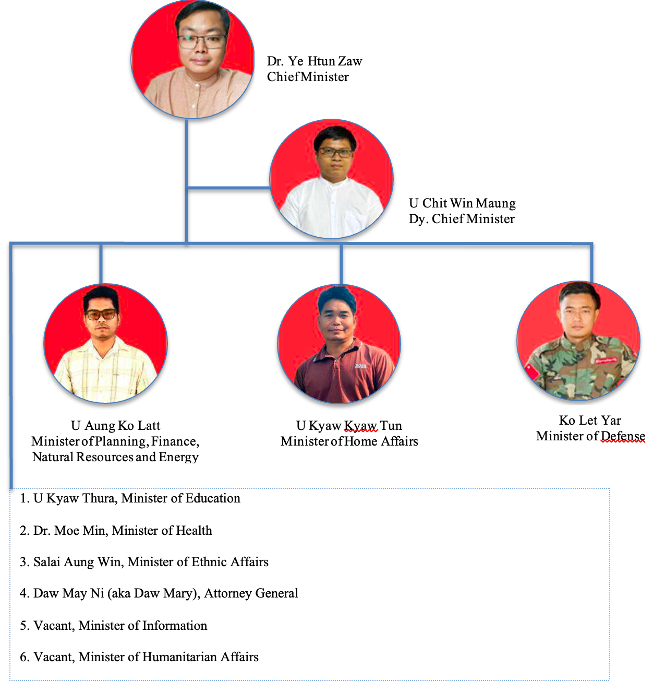
Magway’s Chief Minister has said the unit government will negotiate with the NUG Ministry of Defence on transitioning 25 PDTs to the federal-unit government. PDTs have a comparatively widespread presence, operating as people’s militias from village to township level. Many are also reported to be well trained in military command and formal combat. Under the new law, they may join the Magway Federal Unit Defence Force or operate through the JMOC. The two routes offer different ways to organise forces: one within the unit’s own defence structure, and the other through a mechanism for joint operations with Union-level forces, ethnic armed organisations and other resistance groups. Or PDTs themselves may choose to remain under the NUG command.
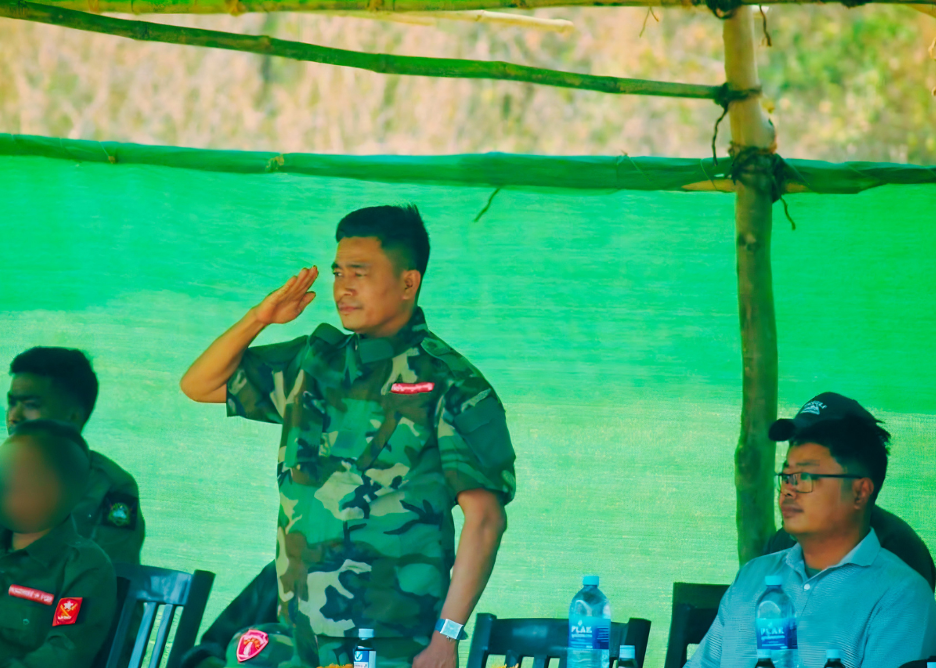
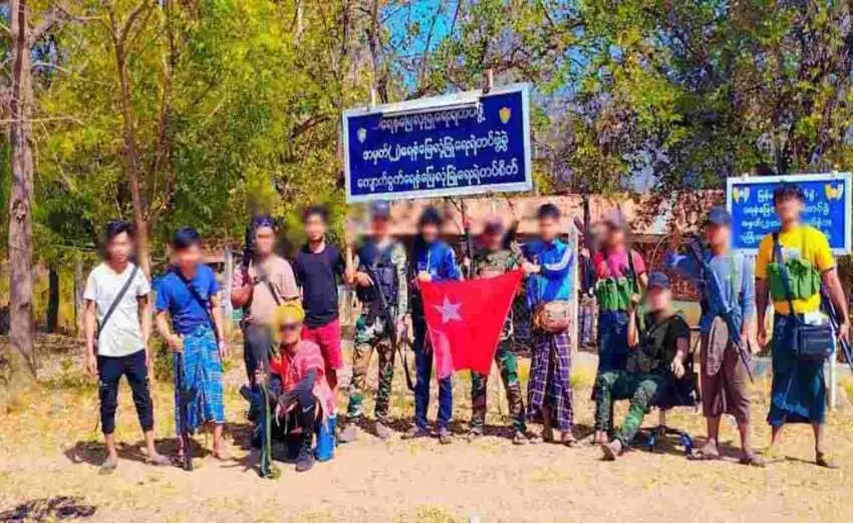
On 93 LPDFs, our internal records indicate that Magway’s Defence Minister, Bo Let Yar, has brought together at least 31 LPDFs and reorganised them into 13 military columns under the unit’s command. These are relatively small groups operating across all five districts. Many are reported to have close ties to Bo Let Yar. Some LPDFs in the Yaw region, including the Yaw Army and Yaw Defence Force, have described themselves as emerging ethnic armed organisations. Two groups associated with the Asho Chin community – the Asho Chin People’s Defence Force and the People’s Defence Force–Asho have claimed self-administration. The ethnic-associated groups mentioned here are reported to have close ties with the Arakan Army (AA). It remains unclear which pathway these groups will choose under the new security framework. Ethnic-associated LPDFs, as well as territory-based groups such as the People’s Revolutionary Alliance (Magway) and the United States of Burma Army (USBA), could join the Magway Federal Unit Defence Force, operate through the Joint Military Operations Commission, or remain unchanged.
SRA as a fourth pathway
Initially a 19-member bloc, the Spring Revolution Alliance is a coalition of armed groups created in November 2025. It operates through three regional commands, one of which extends into Magway. Magway-based groups such as the Yaw Army, Yaw Defence Force and Magway People’s Defence Force are among its members. Some may choose to join the Magway Federal Unit Defence Force, although this appears less likely. Likewise, current or prospective SRA members in Magway may seek to engage with Magway’s JMOC collectively through the alliance, rather than joining individually. Whether they choose this route may depend on their immediate security and organisational interests, as well as their longer-term political and ethnic ambitions. At its second conference on 28-30th September 2026, the SRA described itself as both a military bloc and a political coalition. This broader role may influence how its members engage with Magway’s emerging security arrangements.
Four security scenarios
The law creates several possible pathways for Magway’s security arrangements. These scenarios are not mutually exclusive and elements of more than one could emerge at the same time. The available data also records forces as formed, but does not confirm that every group remains active in military operations.
- Negotiated federal integration
Magway and the NUG agree on how their respective powers apply to force formation, mobilisation and deployment. PDTs and LPDFs enter the Magway Federal Unit Defence Force or the JMOC through a negotiated process, while PDFs remain under NUG command and coordinate through Regional Command 1. In this scenario, the JMOC becomes a practical link between unit-level forces, Union-level forces and neighbouring groups. Clear command, oversight and supply arrangements help preserve local responsiveness within a wider federal framework.
- Uneven dual-track coexistence
The two pathways operate side by side, but without a comprehensive agreement on their boundaries. Some LPDFs and PDTs join the unit’s Defence Force, others work through the JMOC and some remain under NUG command. Coordination continues where relationships and operational needs support it, but practices vary across groups and districts. Given the different levels of resistance presence across Magway, security governance may develop unevenly: more established in parts of Pakokku and Gangaw and more fluid elsewhere. This appears a plausible near-term scenario while negotiations and force transitions remain incomplete.
- NUG-centred continuity with limited unit-level transition
The NUG retains command of PDFs and some PDTs, while Magway consolidates selected LPDFs into its 13 military columns (or expand more) and builds the unit Defence Force. The JMOC provides a channel for cooperation, but functions mainly as a coordination mechanism rather than as a unified command. This scenario could preserve existing relationships and limit disruption during the transition. However, it would leave the division of authority between the NUG and Magway partly unsettled, particularly over mobilisation, joint operations and accountability.
- Fragmented, bloc-based security and confederal drift
If coordination with the NUG remains weak and the two tracks’ authority is not clarified, forces may develop parallel command and supply arrangements. Groups with close ties to the AA or membership in the SRA could engage with Magway collectively through the JMOC, rather than joining the unit force individually. This may give blocs greater bargaining power, but could also complicate common planning and oversight. Magway would remain able to respond to very localised threats, yet face limits in making or sustaining security commitments that involve Chin, Arakan or the wider national landscape. Over time, autonomous force structures and external security arrangements could push practice towards a confederal model.
The central issue across these scenarios is whether Magway and the NUG can turn overlapping legal authority into workable coordination. The clearest indicators will be the terms of PDT and LPDF transitions, the JMOC’s actual role in joint operations and whether the two governments establish shared procedures for command, oversight and military supplies.
 English
  Myanmar