Tag: Ah Nyar Studies

  • The Politics of Local Defence Forces in Magway

    The Politics of Local Defence Forces in Magway

    The Politics of Local Defence Forces in Magway

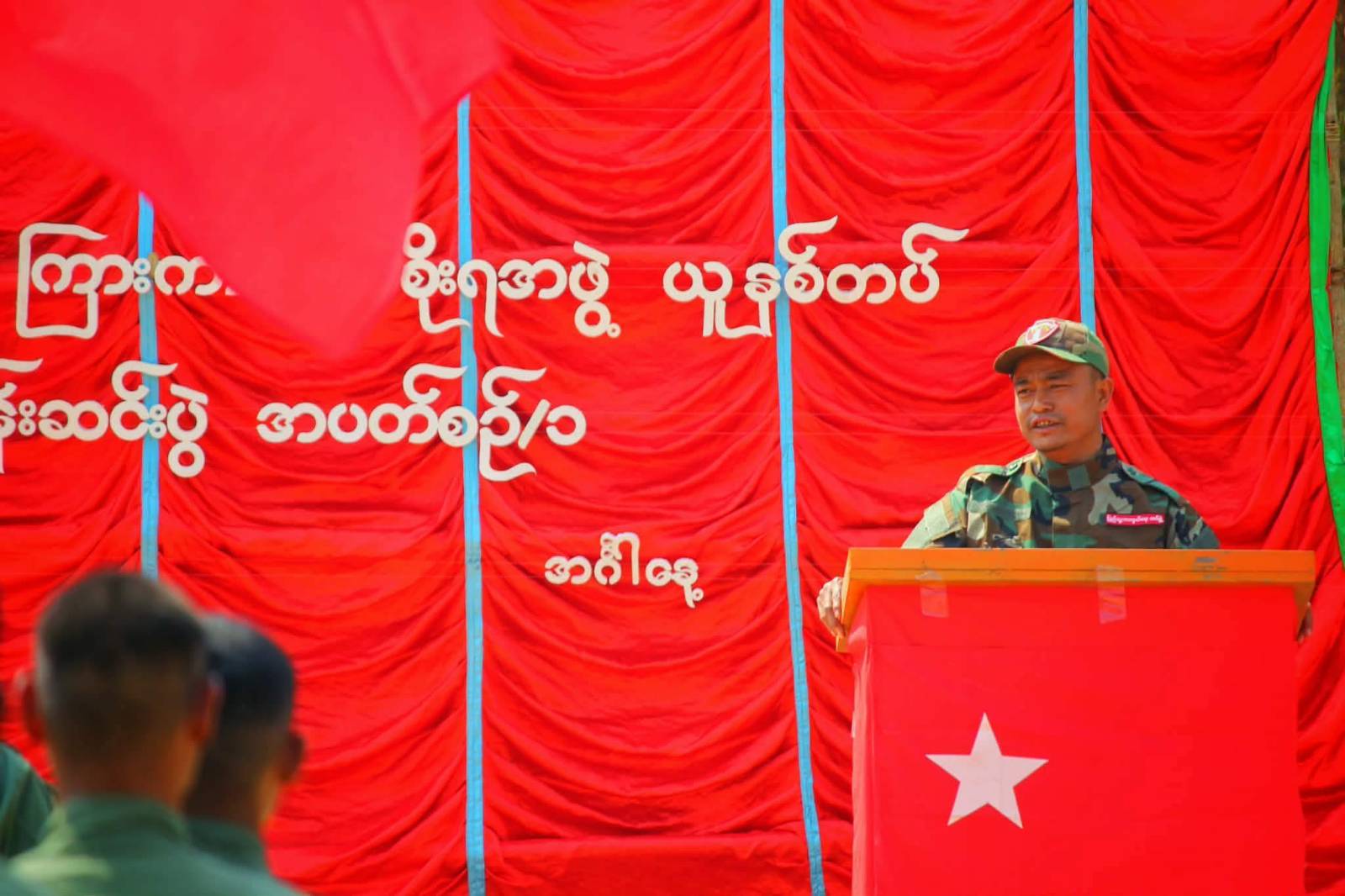
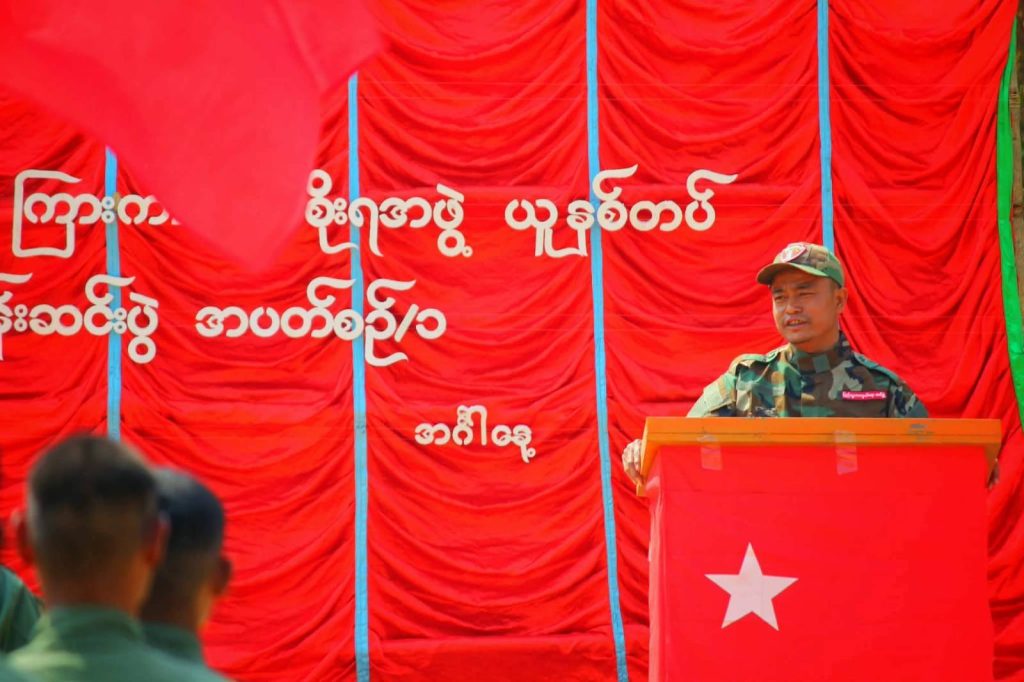
    Defence Minister Bo Let Yar, Magway Federal Unit (Photo: supplied)

    Briefing Papers on Federal Unit Politics of Central Burma | Part 6

    This analysis is the sixth part of a series of briefing papers on the federal unit politics of Central Burma. Part 1 examined the structural formation of federal units, Part 2 analysed their internal power structures, and Part 3 focused on the human rights frameworks embedded in the interim constitutional arrangements of three federal units in Ah Nyar. Part 4 analysed the Magway’s Defence Force Law and security scenarios and Part 5 presented the Local Administrative Mechanisms within the resistance movement in Central Burma.

    KEY TAKEAWAYS

    1. Magway’s resistance directly threatens the regime’s war machine. The region hosts 15 of Burma’s 25 Defence Industries factories, three military-use air bases and 32 ground units. Resistance forces control much of the countryside and key oil fields, prompting the regime’s heaviest air campaign in the country (at least 322 airstrikes in five months) and large-scale ground offensives in Pakokku and Gangaw districts.
    2. LDFs form an important pillar of the resistance, but they remain fragmented. Our records identify 93 active LDFs in Magway, 80% of them in Pakokku District. More than half (50 out of 93) operate under independent commands and a further 12 sit in two separate coalitions. LDFs cooperate in operation-based alliances but keep control over their own fighters, weapons and revenue.
    3. Magway Federal Unit has approached LDFs carefully and strategically since its interim political arrangement initiated, but its command remains geographically narrow. It brought LDFs into its political leadership and cabinet through the Chin, Yaw and Taung Thar and armed resistance blocs. Magway’s Defence Force Law offers LDFs flexible pathways into the unit’s security system. As a result, 31 of the 93 LDFs are now under the unit’s command led by Bo Let Yar. However, 30 of these 31 are in Pakokku District and the unit’s military reach barely extends to the south-western uplands or the Yaw area.
    4. LDFs in the Yaw and Asho Chin communities are gradually becoming ethnic identity-based armed organisations. Asho Chin Defence Force has become the Asho National Army, with its own political wing. Yaw Defence Force and Yaw Army plan to merge into a single Yaw force and three former NUG battalions have formed Yaw Liberation Army, which is likely to join them. These groups are consolidating around Yaw and Asho Chin identity rather than moving into the unit’s chain of command.
    5. Arakan Army is the decisive external actor in Magway’s western and northern zones. Five of the eight post-coup groups under AA control are active in Magway or on its border. AA engages LDFs bilaterally, through routes that bypass both the federal unit and the NUG–KIO command and it has not publicly welcomed the Magway Federal Unit Government. Whether AA accepts the consolidation of LDFs under the unit will shape whether Magway moves towards a single chain of command or a fragmented, bloc-based security landscape.

    Myanmar Military in Magway

    Magway is a central base of the Myanmar military (locally known as Tatmadaw). Fifteen of Burma’s 25 Defence Industries (DI or KaPaSa) factories are in Magway Region, which makes Magway the military’s main weapons-producing base. These factories produce mortars, multiple-launch rockets, aerial bombs, anti-aircraft guns, fuzes and small arms. Most sit on the western bank of the Ayeyarwady in Minhla, Sinbaungwe, Ngape and Sidoktaya, or in the uplands of Seikphyu, Pauk and Saw. Many of these areas are now contested. In addition, since the coup the military junta has used three active air bases in the region to run operations across the country’s western corner.
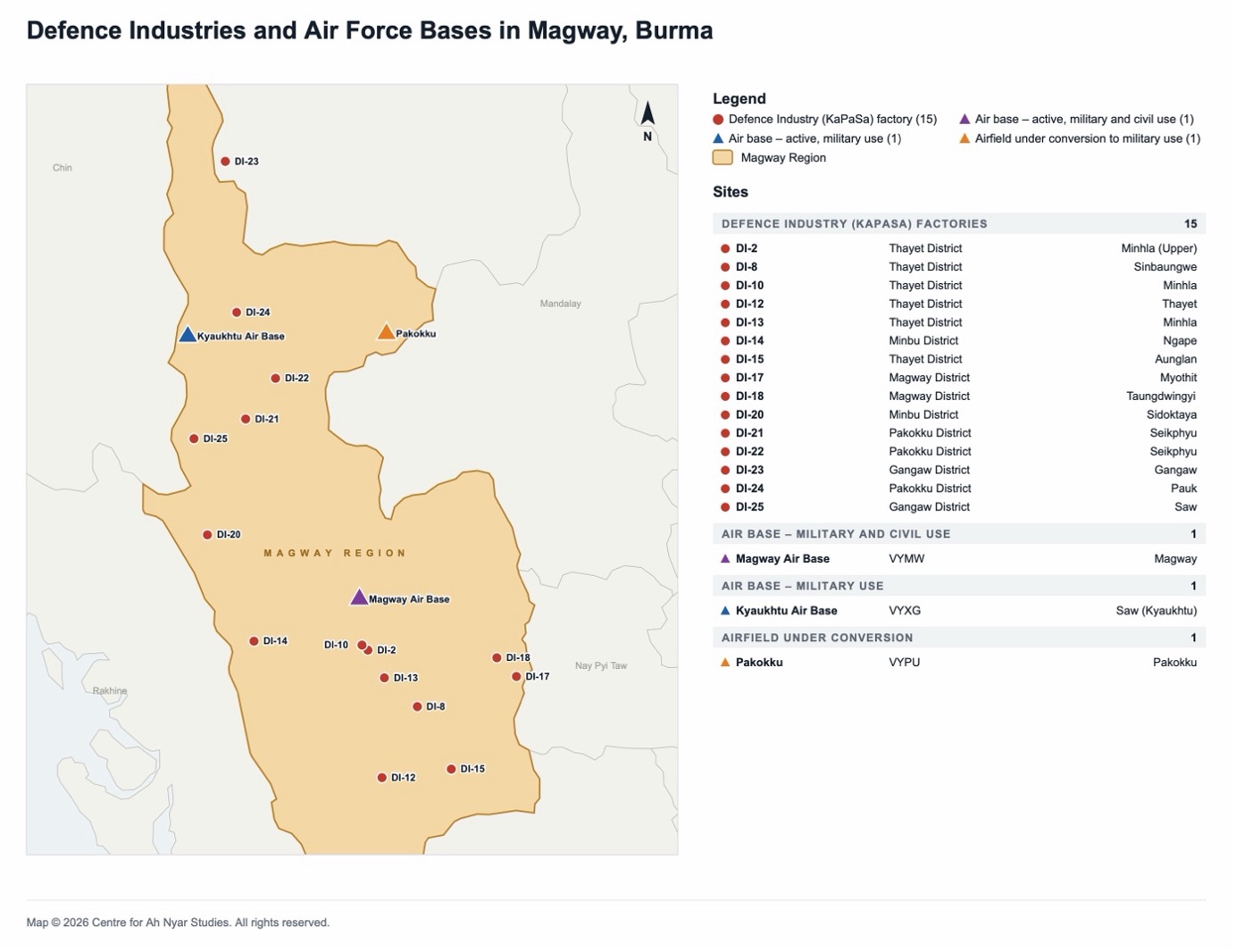
    Figure 1. DI and military-use air bases in Magway (Sources: Centre for Ah Nyar Studies, Myanmar Defence and Security Institute and Myanmar Now)

    Alongside this industrial base, Magway hosts a sizeable ground force. Centre for Ah Nyar Studies has identified 32 military units in the region. They include two Light Infantry Division headquarters (LID 88 in Magway and LID 101 in Pakokku) and two operations commands (AOC 905 and AROC-73). There are also 22 infantry and light infantry battalions, five artillery and tank battalions, and a basic military training depot (BMTD-7) in Taungdwingyi. Most units are positioned along the Ayeyarwady corridor. Magway District has the most (10), followed by Minbu and Pakokku (8 each), and Thayet and Gangaw (3 each). The largest concentrations are around Magway town, where LID 88 is based alongside two light infantry battalions and a tank battalion, and Pakokku, where LID 101 shares a base with four infantry battalions. Smaller clusters of three battalions each sit in Yesagyo and Salin. None of these units had been captured by resistance forces as of the time of this reporting.
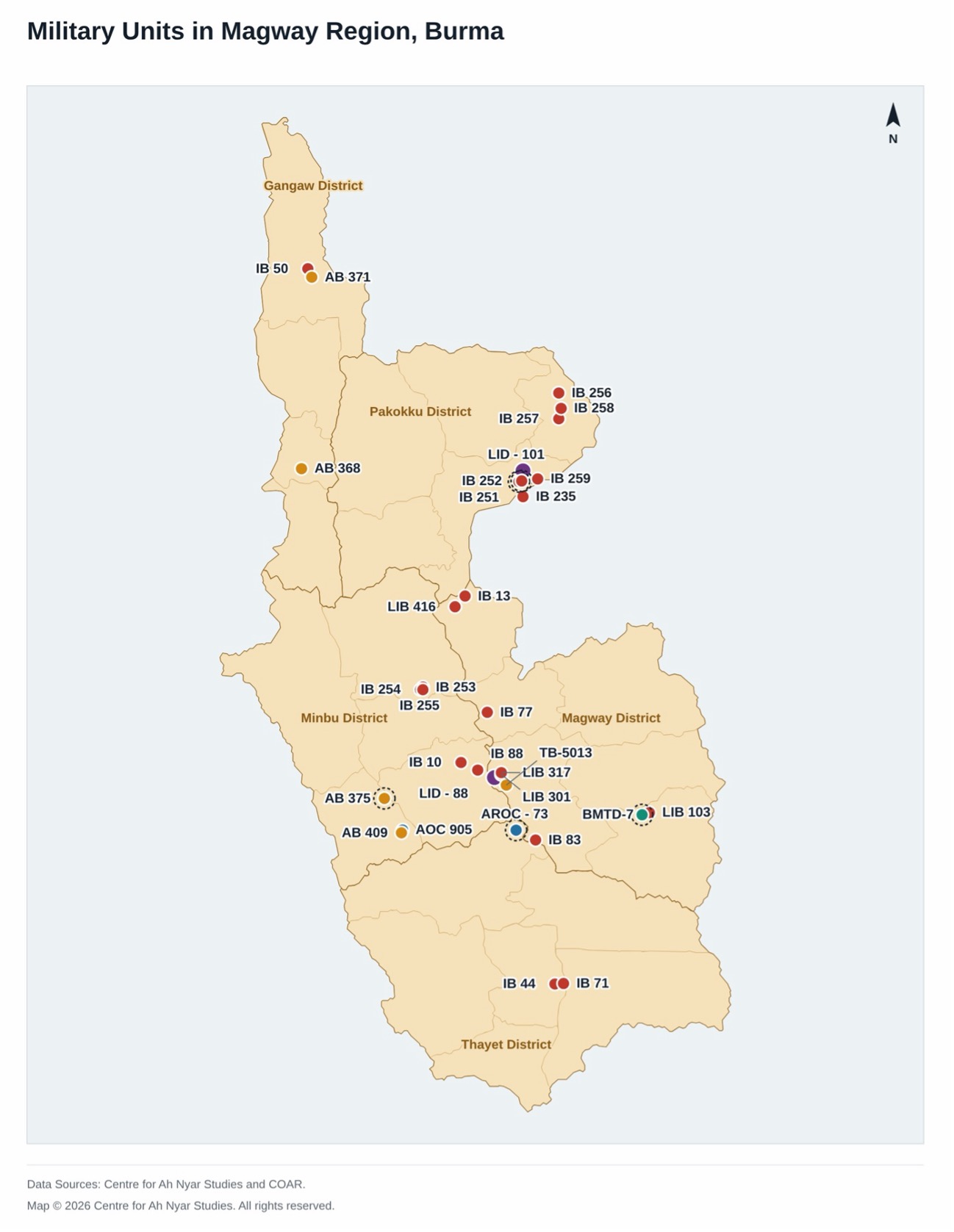
    Figure 2. Ground military units in Magway (Sources: Centre for Ah Nyar Studies and COAR)

    The Resistance Movement in Magway

    Magway emerged as a new resistance stronghold after the military coup in 2021. Before the coup, the region was one of the military’s most secure areas, and it hosts most of the Defence Industries, airbases and several infantry battalions across five districts. The resistance that grew after February 2021 has therefore been a direct threat to the regime’s supply base, not a peripheral insurgency.

    Armed resistance took hold within two months along with widespread resistance across Central Burma. The coup leader General Min Aung Hlaing then admitted that “To be honest… well, if I’m being honest, I didn’t expect it to be on this scale” (Centre for Ah Nyar Studies, 2024). In the Yaw area of Gangaw, Htilin and Saw, local defence forces merged into the Yaw Defence Force in 2021. By November that year, after about 80% of government employees there had resigned, local politicians and resistance fighters had formed their own People’s Administration Team (Myanmar Now, 2021). Nearly six years on, Magway’s resistance controls much of the countryside and the line between the two is fought over every month.

    Fighting has increasingly centred on the regime’s industrial base and oil fields across Pakokku, Gangaw and Minbu districts. From late April 2026, LID 101 moved troops along the roads linking Pakokku, Pauk, Myaing and Yesagyo, and in June it launched a counteroffensive to either retake or destroy the resistance-held Kyaukkwet oil field in Myaing. LID 99 also involved in this large-scale operation (Centre for Ah Nyar Studies, 2026a). Between 23 June and 8 August 2026, a column of about 1,000 troops from the two divisions raided at least 31 villages in Myaing and Pauk while artillery and aircraft struck others. At least 38 civilians were killed, at least 15 were injured, and at least 370 homes were burned, displacing thousands of people (Centre for Ah Nyar Studies, 2026b). Air power has been central to the campaign. Between 31 March and 31 August 2026, Magway recorded at least 322 airstrikes, more than any other state or region and over 20% of the 1,583 recorded nationwide (ISP-Myanmar, 2026).

    The human cost has been heavy. In July 2026, the UN reported that more than 100,000 people had recently been displaced across Myaing, Pakokku, Pauk and Saw townships, including more than 80,000 in Pakokku since mid-May (UN OCHA, 2026).

    Territorial Control

    Resistance controls majority of the rural villages, especially in three strategic areas below.

    • Pakokku uplands (Myaing, Pauk, Yesagyo and Seikphyu),
    • Yaw area (Gangaw, Htilin and Saw) and
    • South-western uplands (Ngape, Minbu, Salin, Sidoktaya, Mindon and Thayet).

    Pakokku uplands (Myaing, Pauk, Yesagyo and Seikphyu townships) are resistance stronghold and areas shaping Magway resistance landscape including emerging rebel governance structures within Magway Federal Unit arrangement. Resistance forces have held the Kyaukkwet oil field in Myaing since March 2024 and the larger Letpanto field in Pauk. The area’s oil revenue explains why the regime made it the main target of its 2026 counteroffensive. LID 101, backed by LID 99, moved troops along the main roads from Pakokku to Pauk, Myaing and Yesagyo to regain oil-producing areas and cut off resistance revenue (Centre for Ah Nyar Studies, 2026a).

    Yaw area organised early and largely on its own terms. Local defence forces in Saw and Kyaukhtu merged into the Yaw Defence Force in 2021 (Burma News International, 2021). By November that year, after about 80% of government employees had resigned, local politicians and resistance fighters had formed their own People’s Administration Team (Myanmar Now, 2021). The area borders Chin State, and the road between Saw and Kanpetlet is a supply corridor for Magway, Chin and Arakan forces. Centre for Ah Nyar Studies’ records indicate that the junta’s late-2026 offensive aims not only to cut off this route but also to establish a firm foothold along it. The junta wants to turn it into a key staging area from which it can send sufficient forces from Magway to Kanpetlet. A large military convoy reached the Laung She defence factory in Saw in September 2026, and clashes were reported in Htilin Township in early November (DVB, 2026).

    In the south-western uplands, local forces fight alongside the Arakan Army (AA) along the Ann–Padan road. The regime still holds the main towns, especially along the Irrawaddy River.

    Local Defence Forces

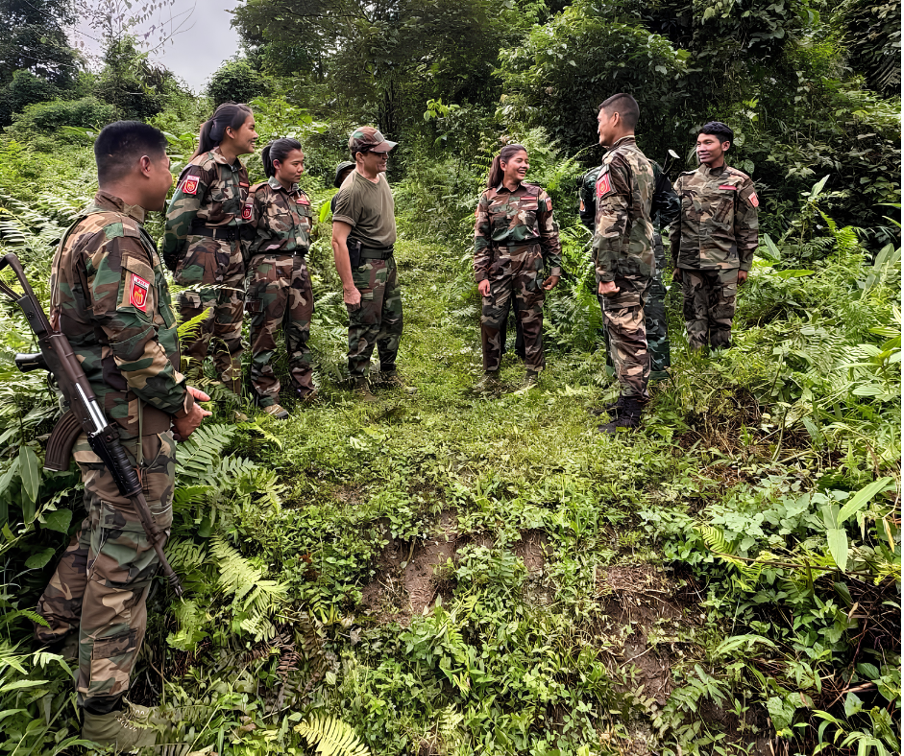
    Local Defence Forces (LDF) are a critical feature of the resistance landscape in central Burma. In Magway, they exist alongside the NUG resistance infrastructure: the People’s Defence Teams (PDT or PaKaPha), which are organised by township and village, and the district-based People’s Defence Force (PDF) battalions under the NUG Ministry of Defence. LDFs emerged from the same 2021 uprising, but they grew from the village up. Most were formed by local youth, community leaders and former protest organisers to defend their own areas, and they still recruit, fund and fight mainly where they began. For this analysis, a LDF is an armed resistance group that sits outside the NUG’s Ministry of Defence chain of command, meaning that it is neither a PDF battalion nor a Pa Ka Pha unit. Beyond this core criterion, LDFs typically share three further characteristics, although not every group displays all of them. First, they are formed by and recruit mainly from, a bounded constituency, whether territorial (a village, village tract or township), ethnic or tribal, social (such as students) or ideological (such as communist or social democratic). Second, they operate mainly within a defined area, usually where they were formed. Third, they were active during the period covered by our records. These characteristics are therefore used as indicators rather than strict requirements and borderline cases are classified on the balance of available evidence. Later affiliation with the Magway Federal Unit Government or a coalition does not change a group’s classification. The definition excludes armed organisations typically based outside Magway that operate in the region, such as the Arakan Army or Chin Brotherhood members, as well as regime-aligned militias.

    Two types of LDF are broadly classified within Magway Federal Unit Defence Force Law: Territory-based and Ethnic or tribal-based forces (Centre for Ah Nyar Studies, 2026c).

    Territory-based LDFs are rooted in a village tract or township and are defined by geography rather than identity. They make up most of the groups in our records and are concentrated in the Pakokku uplands (Myaing, Pauk, Yesagyo and Seikphyu). Examples named in public reporting include the Earthquake PDF, Myaing Solidarity Alliance and Southern Yesagyo PDF. Ethnic or tribal-based LDFs organise around a shared community identity and defend that community’s areas. The clearest examples are the Yaw Defence Force in Gangaw, Htilin and Saw and the Chin Defence Force-Asho (CDF-Asho) and Asho Chin Defence Force (ACDF), which represents Asho Chin communities in Minbu and Thayet districts and along the Arakan Yoma. For the purposes of this analysis, “ethnic or tribal group” is defined according to Section 12(d) of the Interim Political Arrangement Law of the Magway Federal Unit. Section 12(d)(4) expressly recognises the Yaw and the Taung Thar as ethnic groups (Interim Political Arrangement Law of the Magway Federal Unit, 2025). 

    Our records identify 93 active LDF groups in Magway, and 74 of them (80%) are in Pakokku District. The remainder are spread across Minbu (8), Gangaw (5), Magway (4) and Thayet (2). The size of these LDFs vary from a handful of troops to some hundreds.
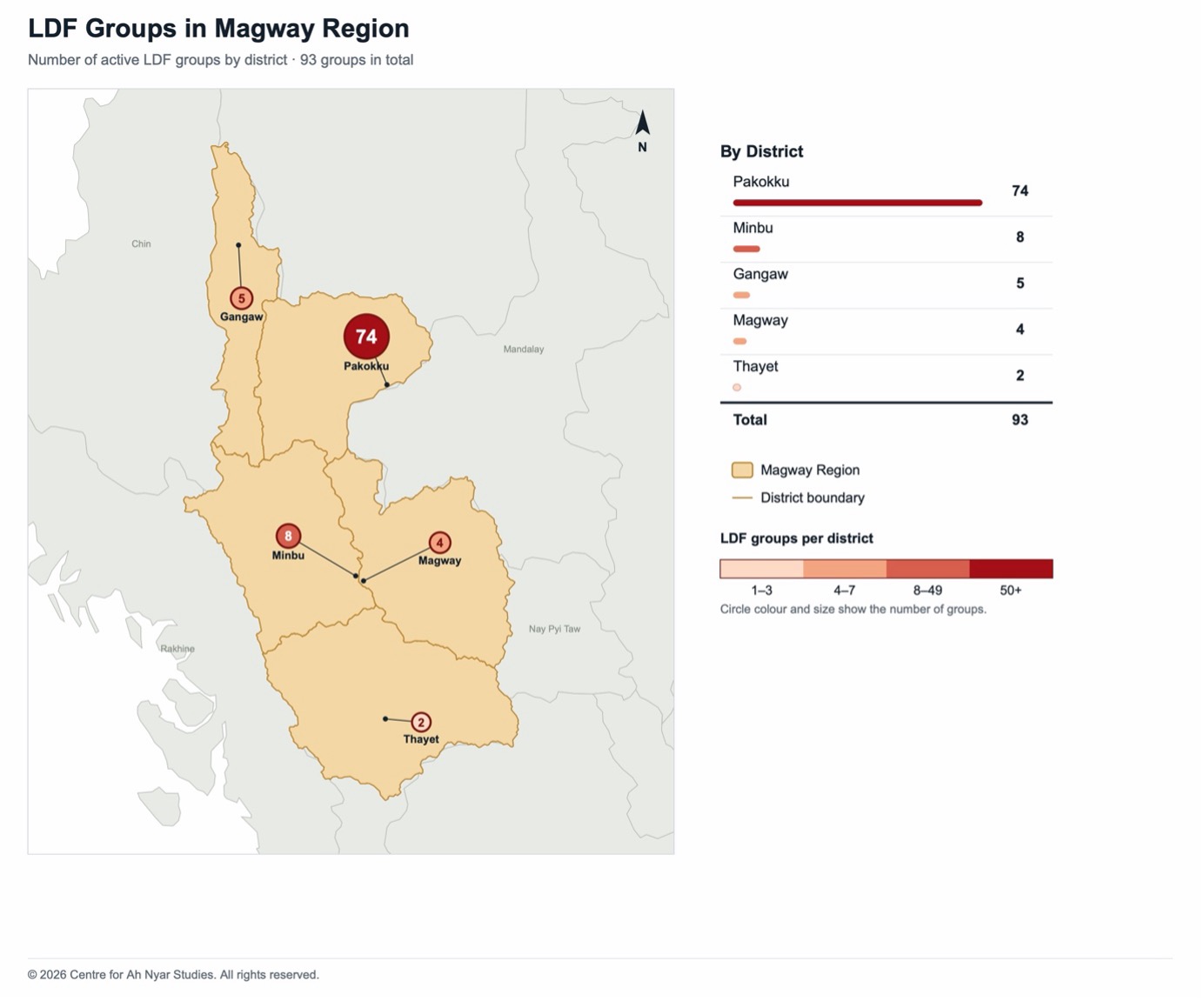
    Figure 3. Active LDF groups by district (Source: Centre for Ah Nyar Studies)

    Chain of Command

    LDFs are structurally outside the NUG’s command, but they cooperate with NUG forces in the wider resistance across the region. This cooperation is usually project-based: groups join specific operations rather than a standing command, contributing fighters, weapons and local knowledge for a defined objective and then returning to their own areas. The Ah Nyar Tamar Operation is one example. In this way, LDFs give the resistance depth and local legitimacy that the NUG’s formal structures cannot provide alone, while keeping control over their own fighters, weapons and revenue. 

    More than half (50 out of 93) operate under independent or separate commands. Another 31 are under the Magway Federal Unit Government, while 7 belong to the Ah Nyar Myay Coalition and 5 to the People’s Liberation Coalition. Every structured command is concentrated in Pakokku District, which accounts for 30 of the 31 groups linked to the Federal Unit Government and all 12 coalition members (Ah Nyar Myay Coalition and People’s Liberation Coalition). Outside Pakokku, command integration is almost absent. Of the 19 LDFs in Minbu, Magway, Thayet and Gangaw districts, 18 operate independently, and only one, in Minbu, is linked to the Federal Unit Government. The Federal Unit Government’s military reach therefore rests largely on the Pakokku district rather than on a region-wide base, even though it claims authority over all of Magway.

    Even within Pakokku, command is plural rather than unified. Of the district’s 74 groups, 32 remain independent and 12 sit within two coalitions that are distinct from the Federal Unit Government. The district with the densest resistance network is thus also the one with the most competing centres of command. This reflects the local origins of these groups: most were formed to defend particular villages or communities, and they retain control over their own fighters, weapons and resources. For many, joining a wider structure is a conditional choice rather than a given. They weigh access to arms, funding and legitimacy against the loss of autonomy. Independent status does not mean isolation. As noted above, LDFs routinely cooperate with NUG forces and with one another in operation-based alliances.
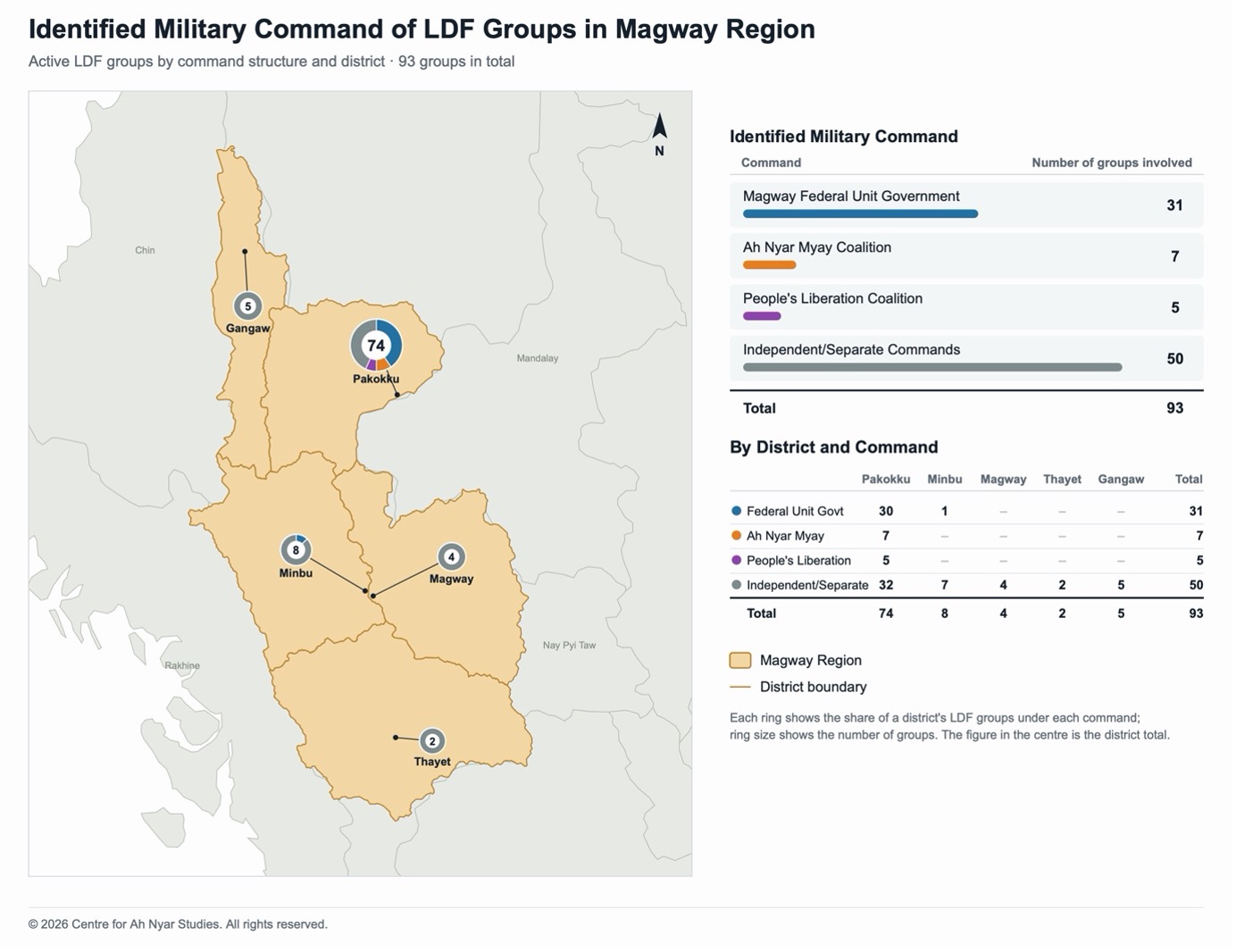
    Figure 4. Identified Military Commands of LDF Groups in Magway (Source: Centre for Ah Nyar Studies)

    The Politics of Ethnic Minority in Gangaw and Minbu Districts

    Magway is commonly described as part of the Bamar heartland. According to the 2014 census, the region had 3.9 million people across five districts and 26 townships and sub-townships, 85% of them rural (Department of Population, Republic of the Union of Myanmar, 2015). Gangaw District (Gangaw, Htilin and Saw townships and Kyaukhtu sub-township), the core of the Yaw area, had 250,858 people in 2014, or 6.4% of the region’s population, and 89% of them were rural. The Taung Thar live mainly in villages in Htilin and Saw townships, with a few in Gangaw. The four south-western townships most associated with Asho Chin communities (Ngape, Saytottara, Mindon and Kamma) had a further 234,220 people, about 6% of the regional total. Not every resident of these areas belongs to a minority. However, they are remote, mostly rural, upland areas on the borders of Chin and Arakan states, and they have long been peripheral to the regional government in Magway town.

    Since the coup, these communities have turned their distinct identities into distinct armed and political organisations. In the Yaw area, local defence forces merged into the Yaw Defence Force in 2021. Yaw forces have since moved closer to the Arakan Army (AA) and the Chin Brotherhood, and several PDF-Gangaw battalions left the NUG’s command to join the Yaw Army. In the south-west, the Chin Defence Force-Asho has fought alongside the AA along the Ann–Padan road since October 2025. Its Commander-in-Chief was killed in a regime ambush in Ngape Township in August 2026 (DVB, 2026a).

    The Magway Federal Unit has begun to respond. Section 12(d)(4) of its Interim Political Arrangement Law expressly recognises the Yaw and the Taung Thar as ethnic groups. This acknowledgement goes beyond the state’s official classification, which treats the Yaw only as a sub-group of the Bamar and does not list the Taung Thar at all. The unit has also created a Ministry of Ethnic Affairs, headed by Salai Aung Win from Asho Chin representative bloc of Magway Federal Unit Government.

    LDFs with Ethnic Identifications in Gangaw and Minbu Districts

    Yaw Defence Force (YDF)

    Founded

    12 May 2021

    Base area

    Gangaw District

    Key ties

    PDFs, Arakan Army; planned merger with the Yaw Army, Spring Revolution Alliance

    YDF is a local armed resistance group founded on 12 May 2021, three months after the military coup. It is based in the Yaw area of Gangaw District, mainly Saw Township and Kyaukhtu Sub-township and was founded and led by local youth. Its stated aims are to resist regime forces and protect local communities and it has fought alongside PDFs and other resistance groups. In August 2022, its Patriot Mobile Rangers unit formed an alliance with the Daung Luth Linn LPDF. YDF has also built ties with ethnic armed organisations. When its deputy commander-in-chief, Phyo Wai Soe, a founding leader, was killed in a regime airstrike on 8 October 2022, the Arakan Army issued a condolence statement crediting him with building relations between the two groups. In 2023, YDF publicly endorsed the Myanmar National Democratic Alliance Army’s goals of federalism and self-determination. YDF is active in Gangaw district. Recently both YDF and YA released a joint statement on the plan for forming a single Yaw Armed Force.

    Yaw Army (YA)

    Founded

    2 January 2024 (origins in the YRPA, March 2021)

    Base area

    Mainly Saw Township

    Key ties

    Arakan Army, KIO, Spring Revolution Alliance, Chin Brotherhood

    Originated from the Yaw Regional People’s Defence Alliance (YRPA), a coalition of local defence groups formed in March 2021. YA was established on 2 January 2024 to build a stronger military and political organisation for the Yaw region. Its political aim is, at a minimum, a self-administered Yaw region, which it defines as six townships: Gangaw, Saw, Kyaw, Laungshe, Kyaukhtu and Htilin. Its external ties lie mainly with ethnic armed organisations. It credits the Arakan Army and the Kachin Independence Organisation with training and support, and it is a member of the Spring Revolution Alliance. It is close to the Chin Brotherhood. YA is mostly active in Saw township. Recently both YA and YDF released a joint statement on the plan for forming a single Yaw Armed Force.

    Yaw Liberation Army (YLA)

    Founded

    1 August 2026 (announced 5 September 2026)

    Base area

    Gangaw District; southern Chin State and Kyaukhtu area

    Origins

    Former NUG Gangaw District Battalions 1, 18 and 19

    YLA was formally established on 1 August 2026 and announced its founding on 5 September 2026. It grew out of Battalion No. 18 of the NUG Ministry of Defence’s Gangaw District Command. Its Facebook page, created in December 2022 as “Yaw National Revolution Force – Htilin”, was renamed the Yaw National Revolution Force in January 2026 and the YLA in August. The founding statement says its members come from Battalions 1, 18 and 19, which served under the NUG Ministry of Defence for five years. YLA says its aim is to decide Yaw affairs for itself, gain greater military freedom and build wider alliances. It insists that its separation reflects neither distrust of the NUG nor personal disputes and it pledges to keep fighting alongside NUG battalions in southern Chin State and the Kyaukhtu area.

    Asho National Army (ANA)

    Founded

    16 November 2021 as ACDF; renamed 12 October 2026

    Base area

    Ngape and Sidoktaya townships

    Key ties

    PRA-Magway, Myay Latt Bamar Defence Force, Galon People’s Defence Force, Arakan Army

    The army was founded on 16 November 2021 as the Asho Chin Defence Force (ACDF) and changed to its current name on 12 October 2026. It is now the armed wing of the Asho National Organisation (ANO). The new name was adopted at a congress held from 20 to 24 September 2026, and the group says it does not change its founding aims. These aims are to build an “Asho Land” with guaranteed self-determination, to establish a democratic federal union and to lead Asho national politics. The group claims to represent all Asho Chin areas. It has conducted joint operations with PRA-Magway, the Minbu District No. 2 Battalion, the New Society Army and the People Independence Army. It allied with PRA-Magway in November 2021 and with the Myay Latt Bamar Defence Force and Galon People’s Defence Force in August 2023. Notably, it has no alliance or recorded cooperation with CDF-Asho.

    ANA is active in Ngape and Sidoktaya townships.

    Chin Defence Force – Asho (CDF – Asho)

    Founded

    January 2023, Ngape and Padan area

    Base area

    Ngape and Sidoktaya townships

    Key ties

    Arakan Army, PRA-Magway

    CDF-Asho was formed on 21 January 2023 in the Ngape and Padan area. It is an Asho Chin force based mainly in Ngape and Sidoktaya townships. According to its position statement, its founders were Asho Chin youth together with soldiers, police, teachers, students and health workers who had joined the Civil Disobedience Movement, many of whom had received basic military training from ethnic armed organisations, local PDFs and NUG Ministry of Defence units. It presents as a protector not only of the Asho Chin but of all Chin peoples and oppressed communities. It commits the group to ending military dictatorship and securing freedom, justice, equality and self-determination for the Chin within a federal democratic union. It also pledges to work with the NUG Ministry of Defence, the Chin National Front and other Chin revolutionary groups and to follow the NUG’s military code of conduct. In practice, its closest ties are with the Arakan Army, for which it acts as an ally on the eastern front and with PRA-Magway and other local forces along the Ann–Padan road.

    Its Commander-in-Chief, Salai Yoe Chin, was killed in a regime ambush in Ngape Township on 14 August 2026.

    Magway Federal Unit Government and LDFs

    Formed as a coalition of seven representative blocs, it recognises the NUG as the union government and the central authority of the revolution, reserves foreign affairs to the NUG, and sets out power-sharing in Chapter 17 of the interim arrangement (Centre for Ah Nyar Studies, 2026a). Seven representative blocs are 

    1. Elected MPs of 2020 General Elections
    2. Political Parties3 Chin Ethnic Group
    3. Yaw and Taung Thar Ethnic Group
    4. Unions, Women, Youth and Strike Group
    5. CDM Civic Servants
    6. Armed Resistance Groups

    Since its sub-national political process began in late 2023, Magway has approached LDFs carefully and strategically, incorporating them through three of these blocs. The Chin, Yaw and Taung Thar and armed resistance group blocs have served as the main channels through which LDFs entered the emerging federal unit leadership. LDFs with ethnic identifications in Gangaw and Minbu districts took part both in drafting Magway’s interim arrangement and in forming the interim federal unit government. This representation is reflected in the cabinet. U Aung Ko Latt, Minister of Planning, Finance, Natural Resources and Energy, was appointed from the Yaw and Taung Thar bloc. Salai Aung Win, Minister of Ethnic Affairs, was appointed from the Chin bloc. Bo Let Yar, Minister of Defence, represents the armed resistance group bloc.

    Bo Let Yar is a resistance fighter who led the People’s Defence Team (Pa Ka Pha) in Myaing Township before becoming Minister of Defence of the Magway Federal Unit. Under his leadership, 21 LDFs in Magway welcomed the formation of the Magway Federal Unit Government and committed to joining its Ministry of Defence in order to establish a single chain of command for LDFs (Earthquake People’s Defence Force, 2026). Bo Let Yar has since coordinated and incorporated 31 LDFs into the federal unit’s command.

    The enactment of the Magway Defence Force Law could further consolidate this arrangement. The law creates two main command structures:

    • the Magway Federal Unit Defence Force; and
    • the Joint Military Operation Commission (JMOC).

    This arrangement gives LDFs flexible pathways. They can either join the Defence Force and be incorporated into its military columns under Bo Let Yar’s command, or work through the JMOC, which is chaired by Dr Ye Htun Zaw, the current Chief Minister of Magway (Centre for Ah Nyar Studies, 2026d). The JMOC route could allow LDFs to retain control of their forces and their organisational identity while cooperating, on their own terms, with the wider resistance, including the Magway Federal Unit Defence Force and the Arakan Army. 

    A closer look at where the 31 LDFs under Bo Let Yar’s command operate shows a highly uneven geography. Thirty of them are concentrated in Pakokku District and the unit’s command barely reaches the two other contested zones in Magway: the south-western uplands (Ngape, Minbu, Salin, Sidoktaya, Mindon and Thayet) and the Yaw area (Gangaw, Htilin and Saw). Only one group outside Pakokku, the Daung Sit Aung Local PDF in Minbu District, is currently under Bo Let Yar’s command, while several others in these zones remain outside the unit’s command structure.

    This gap should be read alongside three recent developments within the Asho Chin and Yaw communities, which make up much of the armed landscape in these two zones. First, CDF-Asho lost its founding commander, Salai Yoe Chin, who was killed in a regime ambush in Ngape Township on 14 August 2026 (DVB, 2026a). As both a military leader and an influential figure within the Asho Chin community, his death could significantly affect the group’s internal cohesion and the social networks that link it to Magway’s wider security system. Second, the Asho Chin Defence Force (ACDF) repositioned itself as an ethnic armed organisation, renaming itself the Asho National Organisation/Asho National Army (ANO/ANA) on 12 October 2026 (Asho National Organisation/Asho National Army, 2026). The new name drops both “Chin” and “Defence”, a term that became the hallmark of the resistance forces formed after the 2021 coup. With a separate political and armed wing, the group now resembles the established ethnic armed organisations in Burma rather than a local defence force.

    Third, in the Yaw area, YDF and YA recently issued a joint statement announcing plans to merge the two regional forces (Yaw Defence Force, 2026). Given the Yaw ethno-political agenda shared by both groups, this merger could lead to an arrangement similar to the one emerging in the Asho Chin community: a single, identity-based Yaw armed organisation rather than a set of local defence forces. Meanwhile, three Gangaw District battalions formerly under the NUG Ministry of Defence formed the Yaw Liberation Army (YLA) on 1 August 2026, outside both the NUG’s and the unit’s command (Yaw Liberation Army, 2026). It is likely that the YLA will eventually join the merged YDF–YA structure, which would consolidate most of the Yaw area’s armed actors into one organisation outside the NUG or unit’s chain of command.

    Arakan Army’s Interests and Magway’s LDFs

    Arakan Army’s (AA) engagement with Magway’s LDFs follows from a set of immediate and long-term interests that are rooted first in territory. Pakokku and Gangaw districts form a territorial route that connects the AA’s areas in Arakan and Chin State with Sagaing and Mandalay and, beyond it, with northern Shan State, where its Brotherhood Alliance partners operate. Minbu and Thayet districts provide a second connecting route across the Arakan Yoma along the Ann–Padan road. The AA’s interest in this route became visible when it and allied forces captured the Nat Yae Kan air defence base on the road in October 2025 (BNI, 2025), and later held villages inside Ngape Township (DVB, 2025). The regime’s late-2026 offensive on the Saw–Kanpetlet corridor, aimed explicitly at cutting supply routes between central Burma and areas held by Chin and Arakan forces (DVB, 2026b), shows that these routes now matter to both sides.

    These routes serve two of the AA’s interests. The immediate interest is manpower. The AA’s town-capture operations in Arakan require a steady supply of fighters and allied channels in Magway offer a way to meet part of that need. Magway-based forces have already fought beyond their home areas; YA, for example, reports fighters killed in Arakan and Chin State (Yaw Army, 2026). The longer-term interest is logistics. Maintaining military and political allies along the supply pipeline that runs from central Burma into Arakan secures both short- and long-term access and Magway’s oil economy already feeds this pipeline (Centre for Ah Nyar Studies, 2026b).

    LDFs are the most practical partners for pursuing these interests. A military alliance with LDFs does not require the AA to negotiate with the broader political agendas of the Magway Federal Unit, the NUG or the KIO/KIA. LDFs can be engaged quickly and are more likely to act on the AA’s direction. In return, the AA may have to guarantee weapons, food and shelter, and possibly to shield its partners from military or political action by the NUG or the unit. An ISP-Myanmar study lists eight post-coup groups operating under the AA’s military command, five of which are active in Magway or on its border: PRA-Magway, the ACDF (now the Asho National Army), CDF-Asho, the Student Armed Force and the PIO/PIA (DMG, 2025). PRA-Magway reported receiving AA weapons as early as 2022 (DVB, 2022), and CDF-Asho has fought alongside the AA on the Ann–Padan corridor since October 2025 (DVB, 2026a).

    Command structures sharpen this logic. The NUG’s district-based PDF battalions in Magway fall under Regional Command 1 of the NUG, which operates under the chain of command of the KIO/KIA (Centre for Ah Nyar Studies, 2026d). This makes it difficult for the AA to draw on these battalions directly. LDFs and People’s Defence Teams (Pa Ka Pha), by contrast, sit outside Regional Command 1, which makes them the forces with which the AA can engage strategically on its own terms.

    The emergence of ethnic-based armed organisations along the Magway–Arakan–Chin border and across the wider region, adds a political dimension to these interests. The ACDF’s transformation into the Asho National Army and the planned merger of the YDF and the YA point towards identity-based organisations with their own political wings. Several of these organisations already have ties to the AA (Arakan Army, 2022; Yaw Army, 2026). If this trend continues, the AA will enter the future political and military landscape of central Burma with an established set of allies.

    The AA’s public stance towards the federal unit reinforces this reading. Neither the AA nor any of the established ethnic armed organisations issued a letter welcoming the formation of the Magway Federal Unit Government, nor did they publicly state a position on it (Centre for Ah Nyar Studies, 2026a). This silence contrasts sharply with the AA’s open recognition of individual LDFs, such as its public praise for PRA-Magway’s leadership (DMG, 2023) and its condolences on the death of a founding YDF commander (Arakan Army, 2022). The evidence suggests that the AA prefers bilateral relationships with LDFs to formal engagement with the unit’s emerging authority.

    The most important question is therefore whether the AA would welcome the consolidation of Magway’s LDFs under the Magway Federal Unit. An organised, single command for LDFs could shift the balance of the AA’s short- and long-term interests. On one hand, it would give the AA one counterpart and the Defence Force Law already allows the unit’s Joint Military Operation Commission to conduct joint operations with neighbouring ethnic armed organisations (Centre for Ah Nyar Studies, 2026d). On the other hand, it would limit the direct, bilateral relationships with LDFs on which the AA’s access to Magway currently rests. How the AA weighs these considerations is likely to influence whether LDFs in Minbu, Thayet and Gangaw move towards the unit’s chain of command or remain outside it.

    Conclusion

    Magway’s revolution poses a direct threat to the junta’s war machine. Fifteen of the DI’s 25 factories sit in the region and that is why the regime has fought so hard to retake its oil fields and supply routes. Local defence forces carry much of this resistance. Our records identify 93 active LDFs, most of them in Pakokku District. Their local roots let them hold large parts of the countryside, but those same roots make them hard to command from outside. More than half of the groups (50 of 93) remain under independent or separate commands. Only 31 operate under the Magway Federal Unit.

    The Federal Unit has approached LDFs carefully and strategically. It has offered them flexible routes into its command instead of demanding immediate integration. This has brought a third of the groups under its structure without open confrontation. It has also left the harder questions unresolved: command, revenue sharing and discipline. The Myaing dispute showed how quickly unresolved control over resources can turn allies into rivals.

    LDFs with ethnic identifications in Gangaw and Minbu districts add a further layer. Yaw and Asho Chin forces have organised around their own identities and look more to the Arakan, Kachin and Chin allies than to the Federal Unit or the NUG. The Arakan Army’s interests sharpen these dynamics. Its advance into Ngape and its ties to LDFs along the western and northern edges give some groups a patron outside Magway’s own structures. Neither the AA nor established ethnic armed organisations publicly welcomed the Federal Unit’s formation. Their public silence may conceal quiet channels of communication behind the scenes, but it shows that the Federal Unit has yet to win open recognition from its most powerful neighbours.

    Whether the Federal Unit can turn this fragmented landscape into a common security order will depend less on how many groups it absorbs than on whether it can set rules that independent LDFs, minority communities and allied armed actors accept.

    References

    Arakan Army. (2022, October 11). YDF ၏ ဒုတိယစစ်ဦးစီးချုပ် ဖြိုးဝေစိုး ကျဆုံးခြင်းအတွက် ပေးပို့သော ဝမ်းနည်းကြောင်းသဝဏ်လွှာ [Message of condolence on the death of YDF Deputy Commander-in-Chief Phyo Wai Soe] [Statement]. https://www.facebook.com/share/p/19wWdw5k5q/ 

    Asho National Organisation/Asho National Army. (2026, October 12). အဖွဲ့အစည်းအမည် ပြောင်းလဲသတ်မှတ်ခြင်းနှင့် အမှတ်တံဆိပ်ဟောင်းများ ပယ်ဖျက်ခြင်းဆိုင်ရာ အသိပေးထုတ်ပြန်ကြေညာခြင်း (စာအမှတ်။ အဖခ/ဗဟရ/တထ-၄/၂၀၂၆/၀၀၁) [Public announcement on the change of organisation name and the revocation of former insignia] [Statement]. https://www.facebook.com/share/p/1CdCkGVFPB/ 

    BNI. (2025, October 16). AA seizes strategically vital Natyaekan Base. https://www.bnionline.net/en/news/aa-seizes-strategically-vital-natyaekan-base

    Burma News International. (2021, September 29). Youths form the yaw regional defence force (YDF). Mizzima. https://www.bnionline.net/en/news/youths-form-yaw-regional-defence-force-ydf

    Centre for Ah Nyar Studies. (2024, December 25). အညာတော်လှန်ရေး၂၀၂၅ [Ah Nyar Revolution 2025]. Centre for Ah Nyar Studies. https://ah-nyarstudies.org/ahnyarrevolution2025/

    Centre for Ah Nyar Studies. (2026a, February 15). Ah nyar’s big questions in 2026: Where are we headed? – Centre for ah nyar studies. https://ah-nyarstudies.org/ah-nyars-big-questions-in-2026-where-are-we-headed/

    Centre for Ah Nyar Studies. (2026b, May 15). Petro-contestation and emerging governance orders in Magway. Centre for Ah Nyar Studies. https://ah-nyarstudies.org/petro-contestation-and-emerging-governance-orders-in-magway/

    Centre for Ah Nyar Studies. (2026c, August 14). At least 38 civilians killed, 15 injured and 370 homes burned: Evidence of ground and aerial attacks by LIDs 101 and 99 in myaing and pauk. Centre for Ah Nyar Studies. https://ah-nyarstudies.org/at-least-38-civilians-killed-15-injured-and-370-homes-burned-evidence-of-ground-and-aerial-attacks-by-lids-101-and-99-in-myaing-and-pauk/

    Centre for Ah Nyar Studies. (2026d, October 9). Magway’s defence force law and the security scenarios ahead. Centre for Ah Nyar Studies. https://ah-nyarstudies.org/magways-defence-force-law-and-the-security-scenarios-ahead/

    COAR Global. (2024, December 20). Actors and Control Tracker: Administrative and Military Control in Myanmar. COAR Global. https://www.coar-global.org/

    Department of Population, Republic of the Union of Myanmar. (2015, May). The 2014 Myanmar population and housing census: Magway Region (Census Report Volume 3–H) [Census Report].

    Development Media Group. (2023, March 29). Arakan Army lauds Magway Region-based anti-regime armed group. https://dmediag.com/news/aapram.html

    Development Media Group. (2025, July 10). AA provides military aid to at least 23 resistance groups: Report. Development Media Group. https://www.dmediag.com/news/apmat.html

    DVB. (2022, June 20). Magway defense force aided by Arakan Army plans to take entire region. https://english.dvb.no/magway-defense-force-aided-by-arakan-army-plans-to-take-entire-region/

    DVB. (2025, December 29). People’s defence force attacks military targets in magway region on election day. https://english.dvb.no/peoples-defence-force-launches-attacks-on-regime-targets-in-magway-region-as-elections-begin/

    DVB. (2026a, August 17). CDF-Asho commander-in-chief Salai Yoe Chin killed in military ambush in Magway Region. https://english.dvb.no/cdf-asho-commander-in-chief-salai-yoe-chin-killed-in-military-ambush-in-magway-region/

    DVB. (2026b, November 3). Military counteroffensive targets Magway-Chin corridor to choke off supply routes. DVB. https://english.dvb.no/military-counteroffensive-targets-magway-chin-corridor-to-choke-off-supply-routes/

    Earthquake People’s Defence Force. (2026, April 18). မကွေးတိုင်းဒေသတွင်းအခြေစိုက်(Local People’s Defense Force) တပ်ဖွဲ့များ၏သဘောထား ထုတ်ပြန်ကြေညာချက် [Statement of Position by Local People’s Defence Forces (LPDFs) Based in Magway Region] [Statement]. https://www.facebook.com/share/p/19oRdXeUPm/

    Interim Political Arrangement Law of the Magway Federal Unit, 12(d)(4) (2025).

    ISP-Myanmar. (2026, September 24). Magway recorded the most airstrikes under new military chief. ISP-Myanmar. https://ispmyanmar.com/2026cst-01/

    Myanmar Now. (2021, November 12). After hobbling junta’s ability to govern in yaw, anti-coup forces form people’s administration team. Myanmar Now. https://myanmar-now.org/en/news/after-hobbling-juntas-ability-to-govern-in-yaw-anti-coup-forces-form-peoples-administration-team/

    United Nations Office for the Coordination of Humanitarian Affairs (OCHA). (2026). Myanmar humanitarian update no. 52. https://myanmar.un.org/sites/default/files/2026-07/OCHA%20Myanmar%20-%20Humanitarian%20Update%20No.%2052_final.pdf

    Yaw Army. (2026, January 2). ယောတပ်တော် (Yaw Army) ဖွဲ့စည်းတည်ထောင်ခြင်း (၂) နှစ်ပြည့်အထိမ်းအမှတ် ထုတ်ပြန်ကြေညာချက် [Statement on the second anniversary of the founding of the Yaw Army] [Statement]. https://www.facebook.com/share/p/1PgF1VPgQV/

    Yaw Defence Force. (2026, November 5). တပ်ပေါင်းစည်းရေးထုတ်ပြန်ကြေငြာချက် [Joint statement on the merger of forces] [Statement]. https://www.facebook.com/share/p/1FCKoMxxii/

    Yaw Liberation Army. (2026, September 5). ယောလွတ်မြောက်ရေးတပ်တော် ဖွဲ့စည်းတည်ထောင်ကြောင်း ထုတ်ပြန်ကြေညာချက် [Statement announcing the formation of the Yaw Liberation Army] (Statement No. 1/2026) [Statement]. https://www.facebook.com/share/p/1PNbmZQkzG/
  • What is Happening in Ah Nyar? October, 2026 [Issue 10/2026]

    What is Happening in Ah Nyar? October, 2026 [Issue 10/2026]

    What is Happening in Ah Nyar? October, 2026 [Issue 10/2026]

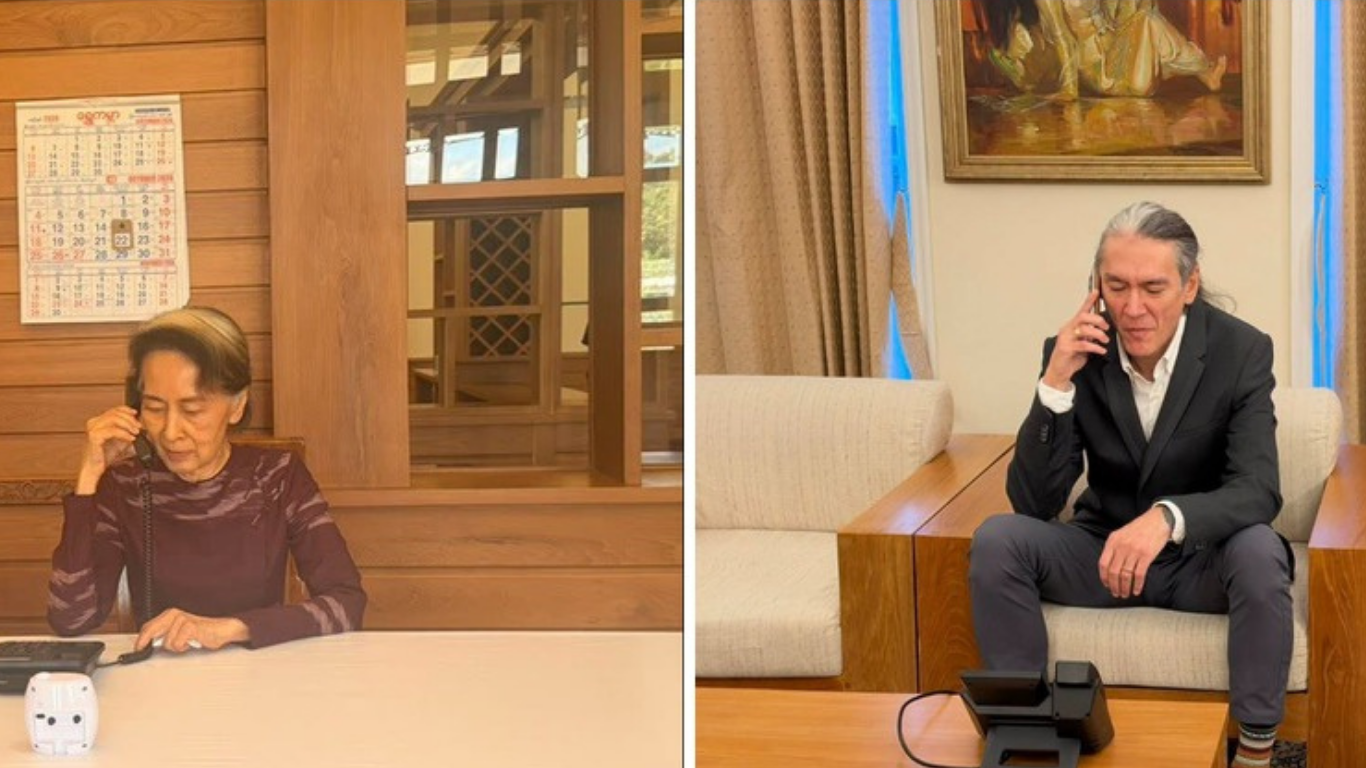
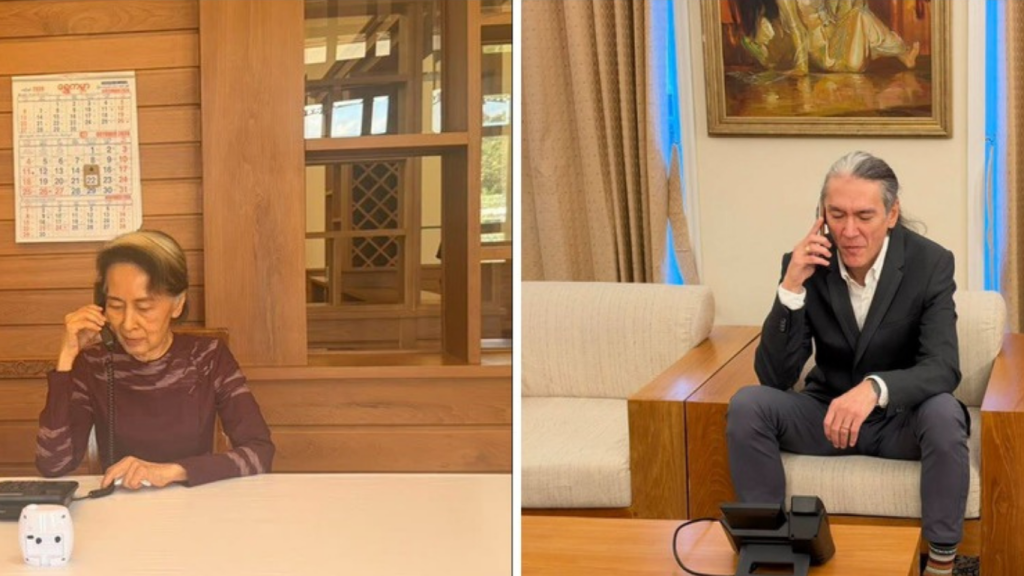
    Detained State Counsellor Daw Aung San Suu Kyi and her son, Kim Aris, speak by phone for the first time since the 2021 coup, 22 October 2026

    This Month in Ah Nyar: A Quick Overview

    • The military regime showed carefully staged gestures towards Daw Aung San Suu Kyi. They delivered two books sent by King Charles III together with a sealed diplomatic letter. She spoke with her son, Kim Aris, for about 20 minutes via the Myanmar Embassy in London.
    • Sub-national governments in Central Burma continued institution-building by the interim federal units. Meanwhile, the regime’s peace talks with a Naga armed group reopened a long-running territorial dispute in northern Sagaing. In Sagaing, the Human Rights Department held a three-day workshop and the NUG began investigating Mingin Township administrator and Pa Ka Pha leader over the alleged misuse of approx. 3.5 million USD. In Magway, the NUG handed administrative functions to the Interim Magway Federal Unit Government. In Mandalay, the NUG’s Central Committee for Interim Local People’s Administration held two meetings with the region’s People’s Administration Teams, and the Committee Representing the Mandalay Hluttaw met weekly.
    • The military junta concentrated its ground operations on trade corridors, notably the Mandalay–Shwebo–Monywa, Monywa–Kalewa and Kalay–Gangaw roads, and on recovering positions in Katha District. It increasingly relied on defectors as guides. It also prepared a two-pronged push on the Kalay–Gangaw road with Pyu Saw Htee militias from 12 villages. Raids and ambushes continued in Nyaung-U, Thabeikkyin and Myingyan.
    • KIA and PDF forces seized a strategic SNA base in Homalin Township on 23 October. Eagle Brothers resistance force captured Colonel Zaw Myo Tint near Sagaing on 18 October. Former BNRA fighters serving in a military column were captured on their way to Kanpetlet.
    • Airstrikes, paramotor and gyrocopter attacks killed civilians in Shwebo, Depayin, Butalin, Chaung-U, Kanbalu, Monywa and Indaw (Sagaing) and in Mindon (Magway). Among them was the 11 October bombing of the historic Maha Si Monastery in Shwebo. A mass grave of 12 men killed in 2023 was uncovered in Myaing Township. The gang rape of five girls by soldiers was reported in Natogyi Township.

    Politics

    The military regime announced that, between 10:40 and 10:50 a.m. on 19 October, its Ministry of Home Affairs officials met Daw Aung San Suu Kyi. They delivered two books sent by King Charles III, Soil to Table and Soil: The World at Our Feet, together with a sealed letter and a sealed diplomatic letter. Three days later, on 22 October, she spoke with her son, Kim Aris, for about 20 minutes via the Myanmar Embassy in London. The Ministry of Foreign Affairs framed the call as a humanitarian concession made under ICRC procedures and the coup leader’s special authority. Her remaining sentence was converted to detention at a “designated residence” on 30 April 2026. Some analysts have described the call as a political calculation by the regime.

    The SRA held its second conference from 28 to 30 September, with around 95 participants. Attendees included the NUG Acting President and the Arakan Army’s deputy commander-in-chief, while the NUG, AA, Women’s League of Burma, ABSDF and KNDF gave opening speeches. The conference established a Secretariat, adopted accountability policies including disciplinary action against members who commit war crimes, and reiterated that the coalition is “not only a military coalition but also a political alliance”. As the UN Credentials Committee prepares its decision, strike groups across Sagaing, including the Salingyi Township strike force, rallied under the slogan “Our Ambassador. Our Voice. Our Representative” in support of U Kyaw Moe Tun remaining Myanmar’s Permanent Representative.

    During Thadingyut, resistance units paid respects to the families of fallen comrades and lit candles at their graves.

    Sagaing

    Sagaing Federal Unit Interim Government continued to strengthen its administration and its ties with civil servants in October. On 1 October, Deputy Chief Minister Dr Aung Nay Win met members of the Sagaing CDM Civil Servants Council via Zoom. From 12 to 14 October, the interim government’s Human Rights Department held a three-day workshop with partner organisations to plan its internal development and future work. Sagaing NLD executive and central committee members also met the executive committee of the Sagaing CDM Civil Servants Council. Within resistance administration in Mingin, NUG formed an investigation committee into Mingin Township’s People’s Administration Team head, U Win Min Soe, and People’s Defence Team head, U Nyo Lwin. The investigation followed complaints that they had misused more than 15 billion kyat (approximately US$3.5 million).

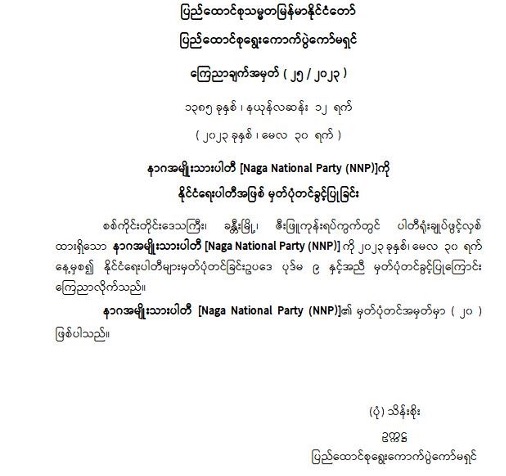
    In northern Sagaing, the regime’s National Solidarity and Peacemaking Negotiation Committee (NSPNC) held talks with the NSCN-K (AM), a newly created faction of the Khaplang’s NSCN led by Ang Mai. Both parties discussed proposing to the regime’s parliament, under the 2008 Constitution, that more townships be added to the Naga Self-Administered Zone and that villages be upgraded to towns. The NSCN-K (AM)’s representative Chin Maung subsequently told press that the group asked for Hkamti (Sagaing) and Shinbwiyang (Kachin) to be included. It also said five border trade routes had been permitted, mainly linking Lahe to India, Nanyun to the Pangsaung Pass, and the Leshi area. The Shanni community has objected, as it did in 2020 when similar demands for Hkamti and Homalin were raised under previous governments (Shanni Voice; The Irrawaddy).

    Separately, on 4 October, the NUG Ministry of Defence’s Lahe Township People’s Defence Team (Pa Ka Pha) opened its new base in Lahe Township.

    Magway

    The NUG and the Interim Magway Federal Unit Government held a ceremony to transfer administrative functions to the federal unit. It builds on September’s developments, when the Magway Federal Unit Parliament passed a Defence Force Law and the Chief Minister reported working with the NUG to bring local People’s Defence Forces under Federal Unit command. It is not yet clear whether the federal unit has the revenue, personnel and security capacity to govern effectively under sustained military pressure, particularly in Pakokku and Gangaw districts.

    Separately, the Asho Chin Defence Force (ACDF), formed on 16 November 2021, renamed itself the Asho National Organisation/Asho National Army (ANO/ANA). The decision was taken at its conference of 20 to 24 September. The group cited its goals of building an “Asho Land” with guaranteed self-determination, establishing a federal democratic union and eradicating all forms of dictatorship. The group’s move towards becoming a national political-military organisation signals an explicit identity-based agenda. It is significant because the group operates in western Magway, along the border with Rakhine (Arakan) State.

    The now ANO/ANA is one of two Asho ethnic resistance groups active in Ngape and Sidoktaya townships. It has no military or political alliance with the other, CDF-Asho, and our security records show no operational cooperation between them. Instead, the group has built alliances with other resistance forces in Magway (PRA-Magway, Triangle 3T PDF, Myay Latt Bamar Defence Force, Galon People’s Defence Force, Minbu District Battalion No. 2, New Society Army and People’s Independence Army). More broadly, it is aligned with the Arakan Army in its backyard.

    The new formation raises an unresolved question about how Asho Chin claims to self-determination will fit within the emerging Magway Federal Unit, whose territory overlaps with Asho Chin communities. How the federal unit and the ANO/ANA handle jurisdiction, representation and command could become an early test of whether the resistance’s federal vision can accommodate ethnic minorities within Bamar-majority regions.

    Mandalay

    Committee Representing the Mandalay Hluttaw (CRMH) held three weekly coordination meetings (36/2026 to 38/2026), on 3, 10 and 17 October, to review the Hluttaw’s ongoing work and the sectoral committees’ reports. The 17 October meeting also included a session with the Hluttaw Representatives Vetting Committee.

    The NUG’s Central Committee for Interim Local People’s Administration held two meetings (20/2026 and 22/2026) with Mandalay Region’s People’s Administration Teams along with Mandalay Interim Governing Council (MIGC). At each, township People’s Administration Teams raised questions about coordinating administrative work, and officials from the relevant ministries responded. Attendees included Council chair U Myint Aung Moe, vice-chair U Aung Myo Latt and Council members. The Central Committee was represented by its permanent secretaries, deputy secretaries and joint secretaries, along with departmental officials. Members of township People’s Administration Teams from Mandalay Region also attended. Separately, MIGC Education Department issued a recognition statement on nine online schools for basic education.

    Security

    Sagaing

    From 30 September, two military columns totalling more than 450 troops advanced in a pincer movement along the Mandalay–Shwebo–Monywa road, guided by former resistance members who had surrendered. By 21 October, the offensive towards the Monywa–Kalewa road had lasted 177 days and left some 7,500 people from ten villages displaced. The military was also reported to be preparing an offensive to control the Kalay–Gangaw road. The main road connects Central Burma towards hilly Chin state and India. Pyu Saw Htee militia leaders and members from 12 Pyi Saw Htee posts from northen Gangaw and southern Kalay townships met two times at Hanthawaddy village on 26 October and at Myauk Khin Yan village on 31 October. In addition, the military junta gathered troops from the Tamu area of Kalay Township at Supply and Transport Battalion 934 in Kalay.

    On 18 October, local defence force the Linyone Nyi Naung (Eagle Brothers) guerrilla force captured Colonel Zaw Myo Tint, deputy operations commander of the No. 72 Armoured Operations Command, near the Kantalu checkpoint in Sagaing Township. The next day, about 250 troops entered western Sagaing Township, backed by an Mi-35 helicopter. Following the recent surrender of its 38 members, the Sadaung Thunder Defense Force (a local defence force based in Sagaing Township) dissolved and handed its weapons to the NUG. In Katha District, the military mounted operations near Kyaukmaw village to extract trapped military families and heavy fighting broke out in Indaw Township, where around 500 troops were deployed. In the north, KIA and PDF forces seized a strategic military and SNA base at Taung Oo village, Homalin Township, on 22 October after about 20 days of fighting. The SNA also clashed with resistance forces in Banmauk.

    Magway

    In Yesagyo Township, resistance forces attacked the Pyu Saw Htee post in Gway Cho village. Separately, a major Pyu Saw Htee leader from the post in Zee Taw village was killed in a resistance ambush in the same township. In Laungshe of Saw township, a Light Infantry Division 77 column from Defence Products Industry No. 25 of the military regime entered the town and one soldier was reportedly found hanged on the Laungshe bridge. On the Pauk–Myaing border, military columns suffered losses in fighting over the oil fields. Pakokku-based LID 101 deployed more troops in the area by dispatching a reinforcement convoy. On 21 October, a resistance member and a guard reportedly freed 13 prisoners of war captured at the Myitchay police station and defected to the military with weapons. 13 of them were later re-captured by the local defence force authority. In Seikphyu township, two frontline posts of the NUG Battalion 19 in Htainkan and Tamarchaung villages were attacked and local leaders including Bo Ma Htar were killed.

    From 17 October, the NUG’s Gangaw District Battalion 6 closed the Popa-kaing–Lephyu–Wekku road in Saw Township to cars and trucks for security reasons. Former Burma National Revolutionary Army (BNRA) fighters, now serving in a military column (of military junta), were captured alive by the joint resistance force as the column passed through Magway on its way to Kanpetlet in Chin State. The BNRA was a resistance group led by Bo Nagar who surrendered to the military junta earlier this year.

    In Mindon, resistance forces from Magway alongside Arakan Army fought against the military column advancing towards western corner of Magway connecting Magway towards Rakhine. The Arakan Army fought a military column for two consecutive days on the Ann–Mindon road, capturing prisoners and weapons.

    In junta-controlled Magway town, the junta organised a cohort of basic military training for university students, with plans reportedly extending it to middle and high school students. The training was reportedly conducted at the LIB 301.

    Mandalay

    In Mandalay Region, resistance forces kept up raids and ambushes on military posts and columns in Nyaung-U, Thabeikkyin and Myingyan townships in October. Meanwhile, the NUG’s local commands moved to tighten control over arms, military activity and training in their areas.

    On 11 October, the Popa Guerrilla Force and allied PDFs raided a temporary military post on the Byatta Panset Road in Nyaung-U Township. On 24 October, resistance forces attacked military outposts between Tagaung and Tigyaing on the Mandalay–Tigyaing–Bhamo Road in Thabeikkyin Township. In Myingyan Township, the Taloke PDF ambushed two military columns north of Taloke town on 28 October, reportedly killing at least ten soldiers. The attack is a recent sign that resistance forces can still contest military movements in the area. Separately, the commander of the NUG Ministry of Defence’s Myingyan District Command banned arms trading in the district and warned of severe penalties. The ban points to concern over the unregulated circulation of weapons but details should be further monitored.

    In Madaya Township, PDF Pyin Oo Lwin District Battalion 1 announced that all military or other operations in the township must be notified to it in advance. In neighbouring Singu Township, the local PDF graduated its sixth basic military training batch on 11 October.

    Human Rights

    In October, the Tatmadaw continuously conducted airstrikes against civilians and property in townships of Central Burma, including Chaung U, Butalin, Kanbalu, Yesagyo, and Myaing townships, where local resistance forces are active. Among them, the massacre cases, involving six people’s deaths, are recorded in airstrikes on gold-mining rafts in the Thaphanseik Dam area, western Kyunhla township, Sagaing Region.

    The historical sites and religious buildings are damaged due to aerial attacks. For instance, on 11 October 2026, at approximately 12:00 p.m., the Myanmar military carried out an airstrike on the historic Maha Si Monastery in Seik Khun village, Shwebo township, Sagaing Region, while displaced civilians from western Shwebo were observing religious precepts on a Buddhist Sabbath Day (Uposatha Day). According to the Shwebo People’s Defence Team (Pa Ka Pha), two displaced civilians died while receiving medical treatment, and at least eight others were injured.  

    Those attacks involved paramotors, gyro-copters, and suicide drones used by the Tatmadaw in different townships of Sagaing. Forms of repeated aerial attacks were recorded in October, for instance, in Butalin township. The victims include the same family members in Depayin township due to a paramotor that flew from the North-western regional command on October 8, around 1:00 pm, according to local sources. A day later, in Nyaung Pa Hto village, a similar aerial attack resulted in two people, including a 24-year-old disabled man, being injured.

    In Magway, according to our monitoring information, civilians are targeted by aerial attacks in areas such as Myaing, Yesagyo, Mindon and Seikhypu. The daily attacks near the oil fields in the township of Myaing were frequent as part of Tatmadaw’s strategy to control the territory for the sake of political economic interests. In addition, after over three years, evidence of mass killings was uncovered on October 4 in Gway Kone village, Myaing township. The twelve men were extrajudicially killed after being arrested by LID 101 on June 9, 2023, after being taken hostage, according to local sources. The local aid group collected the personal belongings, the national identification card, as well as skeletal remains at the incident site.

    Moreover, Tatmadaw’s arbitrary cases, including porter and conscription, are reported in Salin township. The military authorities targeted young people and imposed a curfew within the territory on Sep 22.  Similar forms of arrests under conscription against youths were carried out by Thida Yu Mon paramilitary forces of the Tatmadaw in Myingyan township, Mandalay. Locals reported that families of the youth in Myingyan were forcibly asked to give money ranging from 30000 MMK to 100,000 MMK for the youth migrants, depending on the country they migrated to.

    Conflict-related sexual violence also happened in the village of Natogyi township, Mandalay. Five young girls were subjected to gang-rape by the column of Tatmadaw forces on October 5. Most of them are sisters within the family, according to our team’s investigation. The survivor girls are in critical need of mental support.

  • Local Administrative Mechanisms within the resistance movement in Central Burma

    Local Administrative Mechanisms within the resistance movement in Central Burma

    Local Administrative Mechanisms within the resistance movement in Central Burma

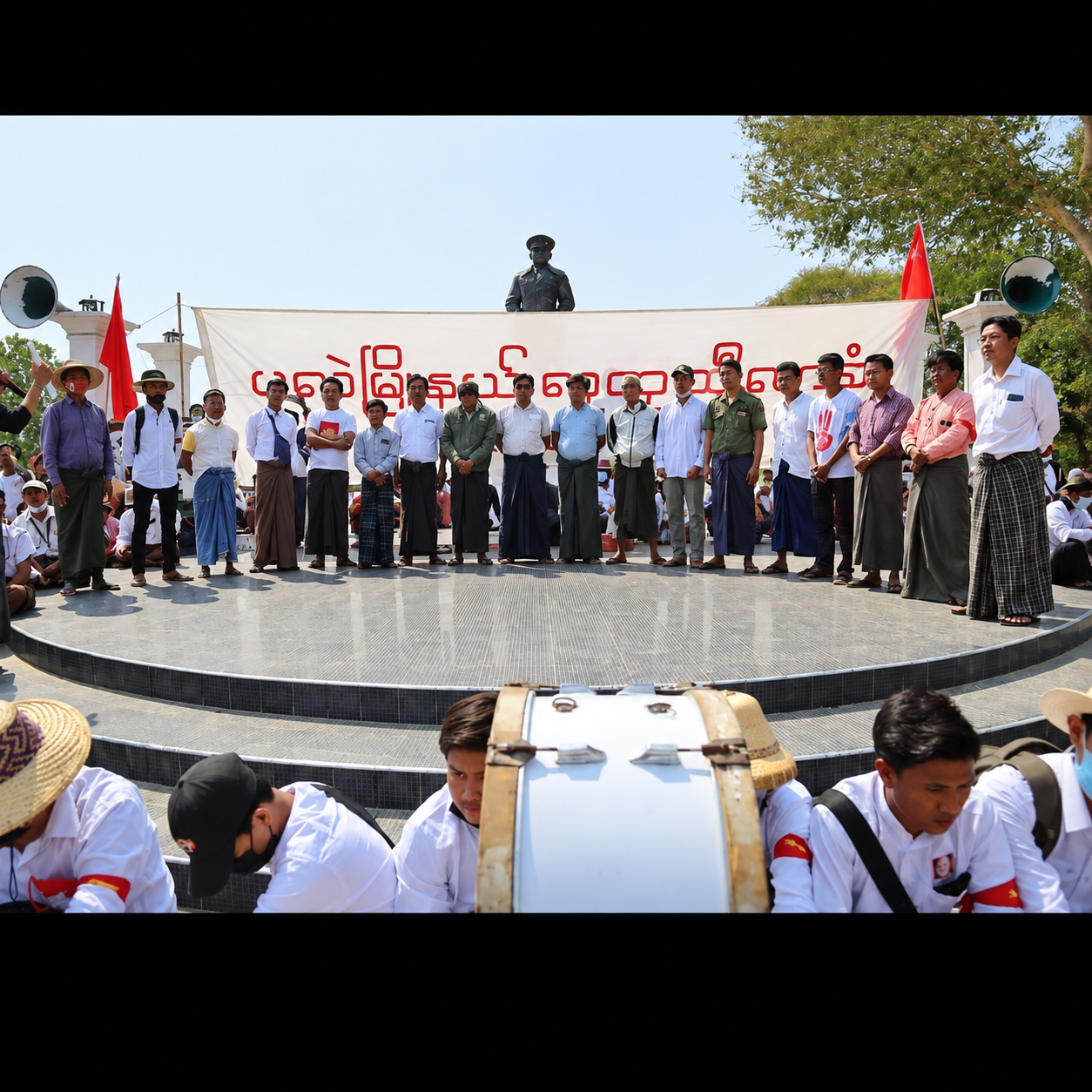
    People Assembly in Pale Township of Sagaing (Photo: PAT Pale)

    Briefing Papers on Federal Unit Politics of Central Burma | Part 5

    This paper is the Part (5) of the briefing paper on federal unit politics in central Burma. Part 1 examined the structural formation of federal units, Part 2 analysed their internal power structures, and Part 3 focused on the human rights frameworks embedded in the interim constitutional arrangements of three federal units in Ah Nyar and Part 4 discussed defence force law in Magway and security landscape. Download the full paper. 

    Background

    Coup de’ tat in 2021 triggered nationwide civil disobedience movement and intensified the existing civil war in Burma. The harsh military crackdowns during February and March of 2021 on the peaceful protesters later transformed the civil disobedience movement into armed resistance. Unexpectedly to the ruling elites and analysts, central Burma, the country’s heartland, rose up to lead the anti-coup resistance movement, which was later joined by several ethnic liberation groups. The National Unity Government of Myanmar (NUG) and resistance groups in Ah Nyar controlled vast majority of rural territories including some urban centres particularly in strategic areas between Sagaing and Kachin, Magway and Chin and Mandalay and northern Shan. The resistance landscape has significantly shifted, since late 2023, towards institutional establishments at sub-national layer. Notably, Ah Nyar has played a significant role in this development. These institutional developments have been driven largely by the sub-national parliaments in Sagaing, Magway, and Mandalay. The parliaments comprise members elected to the respective regional houses in the 2020 general elections. The regions established three branches power independently: legislative, executive and judiciary. The NUG’s support for this development, described by its Acting President as a means “to establish a better system of governance[1],” reflects an effort to accommodate emerging sub-national governing institutions.

    Current development

    Following the political formations of Federal Units in Sagaing, Magway and Mandalay[2], the administrative transition from the NUG to these sub-national governments is currently underway. The two layers (between the NUG and sub-national governments) are closely coordinating the transition of the respected administrative mechanisms including public welfare services, township and district administrations and taxation. The role of federal unit governments is more obvious than before. They are now central to sub-national level arrangements including humanitarian and development coordination. Sub-national parliaments in Sagaing, Magway and Mandalay are actively advancing law-making, particularly to establish local administrations that are accountable to both the legislative houses and the people. Meanwhile, the transfer of administrative functions at the regional and township levels from the NUG to the Federal Unit Governments is ongoing, with a significant proportion of responsibilities already devolved from the central authority to sub-national governments.

    The 3-Ps

    The 3-Ps refer to the

    • People’s Defence Teams (PDT),
    • People’s Security Teams (PST) and
    • People’s Administration Team (PAT)

    established by the Committee Representing Pyidaungsu Hluttaw (CRPH) and the NUG. They are central to anti-coup resistance movement and grassroots security and administrative establishments spreading across villages, townships and regions particularly in Ah Nyar. Each of the 3-P has different mandate. PDTs are local militias and trained combatants under the command of the Ministry of Defence of the NUG, while PSTs are also armed wings with only law enforcement functions. PSTs are technically the people police force managed by the Ministry of Home Affairs and Immigration (MoHAI) of the NUG. PATs are not armed wing; instead, they perform only administrative functions within the resistance movement, and they are managed by the MoHAI of the NUG. Despite their distinct responsibilities, the 3-Ps are closely inter-connected by functions and cooperative at the grassroots level.

    With the establishment of interim constitutional and governing arrangements in Sagaing, Magway, and Mandalay, the institutional relationship between the 3-Ps and the emerging Federal Unit Governments is evolving. This process involves the gradual transition of administrative, security, and law enforcement responsibilities from NUG-centred structures towards sub-national governance arrangements. How these functions are transferred, coordinated, and integrated into the emerging Federal Unit institutions will be important in determining the distribution of authority between the central and sub-national levels of governance in Ah Nyar.

    What is the People’s Administration Teams (PATs) mechanism?

    The Central Committee for Interim Local Public Administration of the NUG in which the cabinet members from all ministries at the central level directly supervise the PATs through strategic guidance and coordination[3]*. The idea is largely referred to the structure of an extant General Administration Department mechanism under the current Military regime. PATs primarily exist at the township and village/ward levels. And at the district and regional levels, the township’s PATs leaders represent and interact with associated decisionmakers. Therefore, the township and ward/village level PATs play a key role in local governance mechanisms.

    Who are the members of Township /village/ward PATs?

    Township Level People’s Administration Team

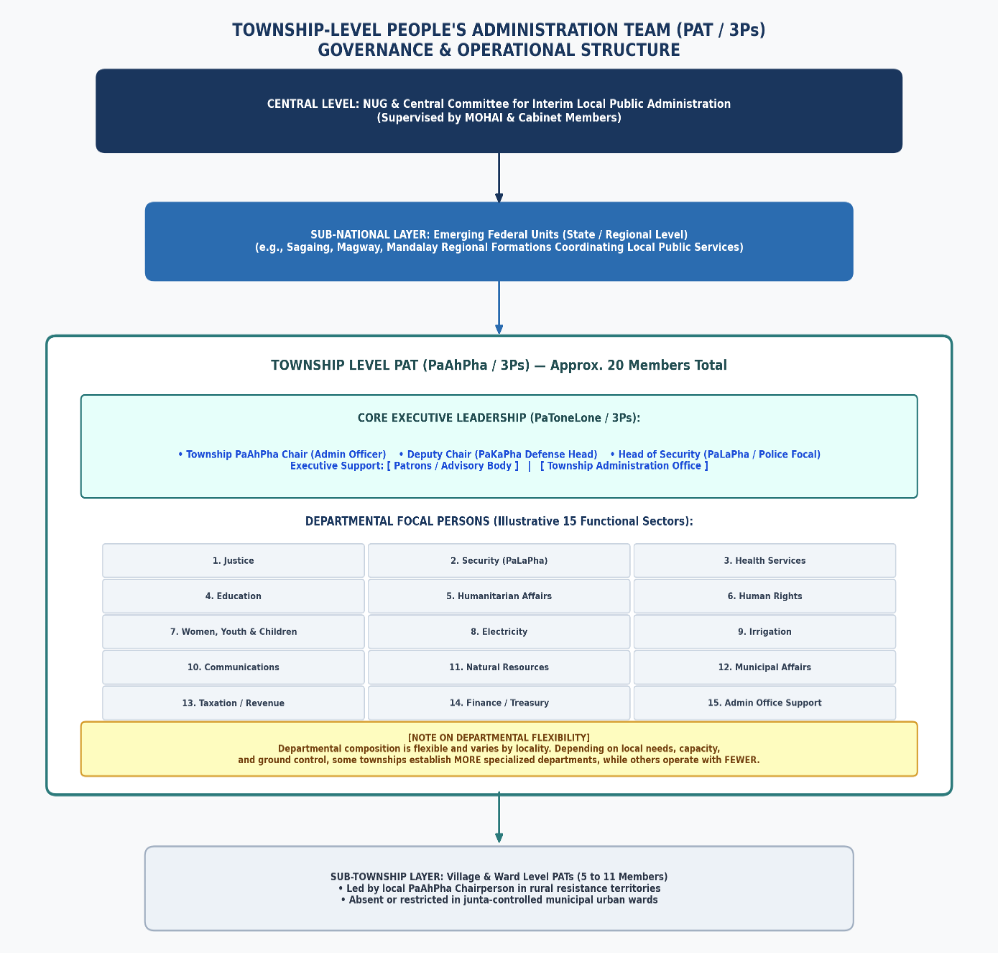
    Generally, in most of the townships controlled by the resistance forces, the township People’s administration team is typically composed of around 20 members, led by a Township People’s Administration Officer (Township PaAhPha leader/Chair).

    The structure is generally depicted as follow[4]:

    The leaders of PaAhPha (PAT), PaLaPha (PST), and PaKaPha (PDT) are core members of township-level PAT teams. This arrangement reflects the realities of governing in conflict-affected areas, where local administrations face persistent security threats, including military operations, raids, arson attacks, and clashes between armed groups. Under these conditions, the 3-Ps have become a widely used term to describe the closely interconnected administrative, security, and defence structures operating at the grassroots level.

    The number of departments within PATs varies across townships, depending on local needs, institutional capacity, and personnel availability. In some townships, limited capacity and staff shortages constrain the establishment and operation of departments. The size and composition of PAT teams therefore also vary which reflects differences in local conditions and the resources available to sustain administrative functions.

    Village/Ward Level People’s Administration Teams

    Despite the existence of township-level PATs, this does not necessarily mean that village- and ward-level PATs have been established in every village and ward within the township. In general, urban wards and certain villages remain under the influence of the military junta, while resistance forces control the vast majority of the township’s territory. Consequently, PATs are absent from some villages and wards. Moreover, even in areas under resistance control, the PAT mechanism has not been established in every village and ward.

    Village- and ward-level People’s Administration Teams typically consist of 5 to 11 members, led by a PaAhPha (PAT) leader. Unlike township-level PATs, where leaders of the PaAhPha (PAT), PaLaPha (PST), and PaKaPha (PDT) commonly form the core team, village- and ward-level structures tend to be more fluid, with the PaAhPha leader often serving as the principal member. Their composition depends largely on community participation and the availability of individuals willing and able to undertake administrative responsibilities.

    What kind of primary services do PATs deliver?

    While the PATs mechanism at the township and village/ward levels is mandated to provide public services and respond to community needs, the prevailing conflict environment has hindered its capacity to deliver many essential services. Therefore, the PATs leaders and members at the township and village/ward level prioritised their services delivery based on the emergency needs and scope of their outreach. The common basic public services being prioritised could be found in the sector of:

    • Healthcare
    • Education
    • Judicial/Security services
    • Emergency response/ Humanitarian Assistance

    Other services are provided depending on the department’s focal existence, availability of funding, and the security and stability conditions of the area. **[5]

    Endnotes 

    [1] Centre for Ah Nyar Studies. (2026, February 15). Ah Nyar’s Big Questions in 2026: Where Are We Headed? [Op-ed]. Centre for Ah Nyar Studies. https://ah-nyarstudies.org/ah-nyars-big-questions-in-2026-where-are-we-headed/

    [2] Centre for Ah Nyar Studies, Analysis of the Evolving Power Structure of Federal Units in Central Burma, 3 December 2025, https://ah-nyarstudies.org/power-structure-of-federal-units-in-central-burma/

    [3] *This is an updated structure before popular emerging federal units at sub-national level. As of 2026 Oct, NUG and federal units are still in transitional periods of handing over this administration structure, especially PATs mechanism. Hence, there have not seen significant changes in the structure yet.

    [4] Centre for Ah Nyar Studies, မြို့နယ် ဒေသန္တရအုပ်ချုပ်ရေး အစီရင်ခံစာ [Local Governance Analysis Report], unpublished; internal report, April 2026.

    [5] This document draws mainly on findings from the Township-Level Local Governance Analysis Reports (မြို့နယ်အဆင့် ဒေသန္တရအုပ်ချုပ်မှု အစီရင်ခံစာများ) April 2026. conducted in three townships of Sagaing and Magway Regions by Centre of Ah Nyar Studies.

  • Naga Analysis

    Naga Analysis

    Naga Analysis

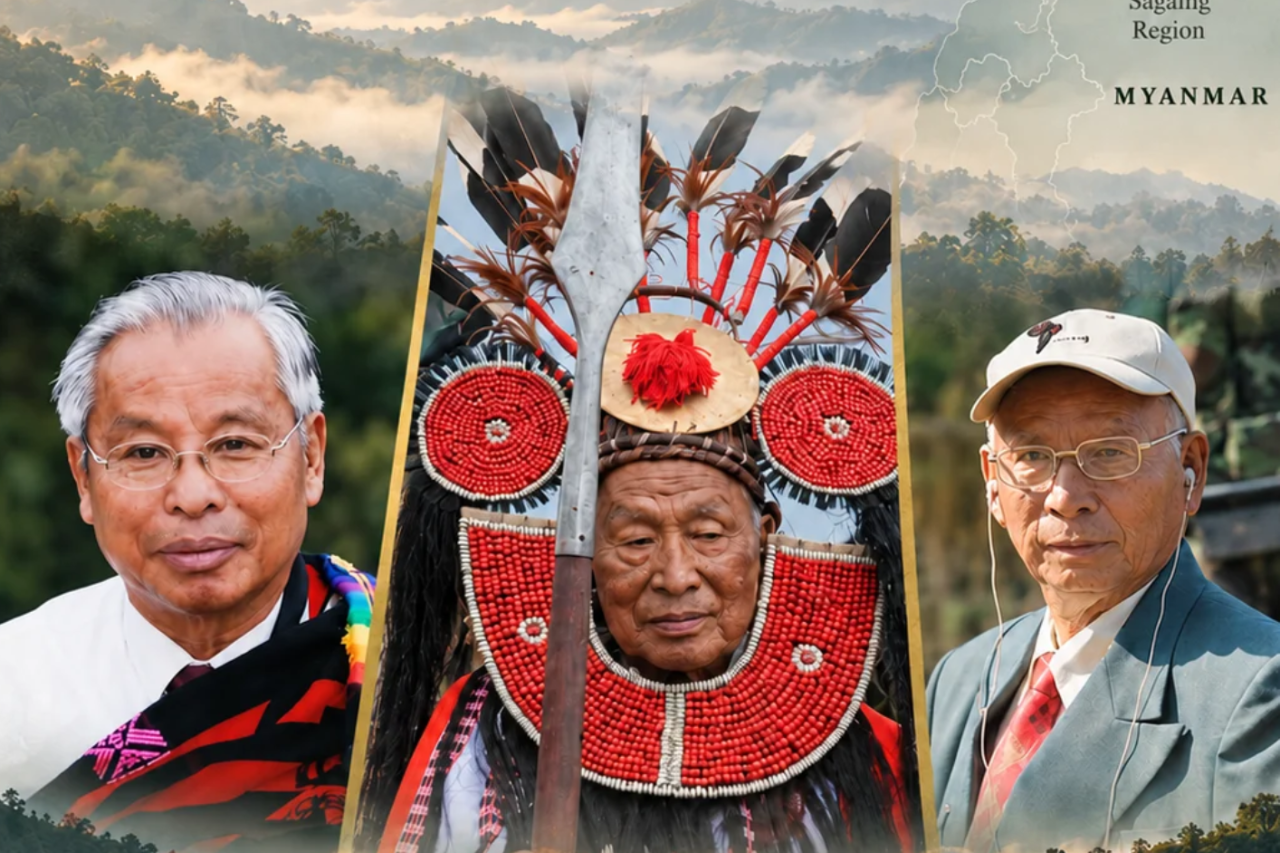
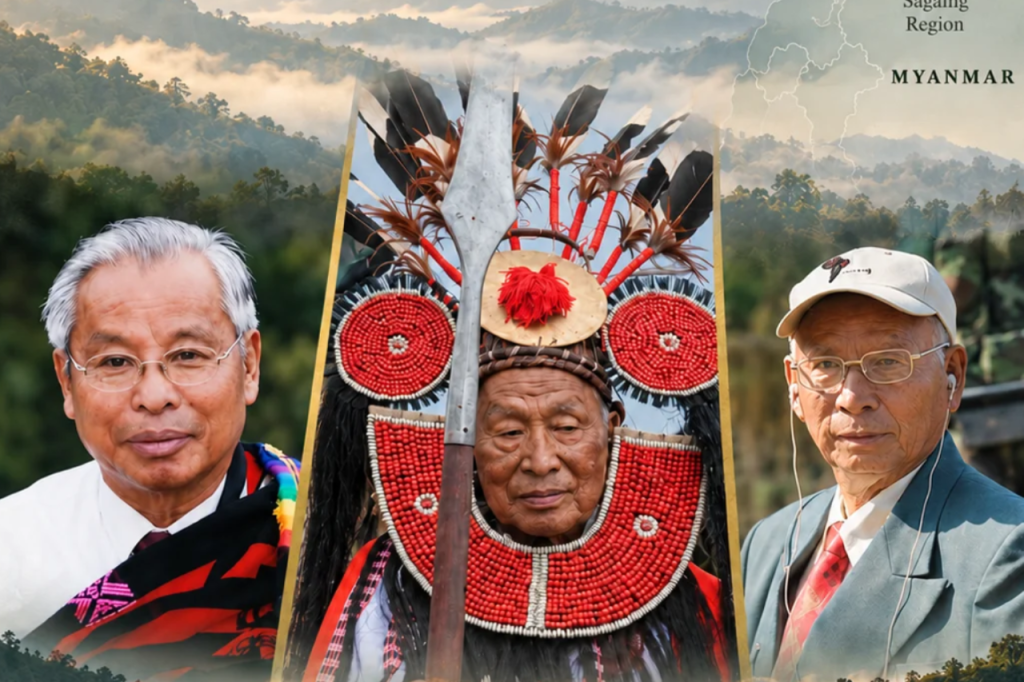
    Isak Chishi Swu (NSCN-IM), Thuingaleng Muivah (NSCN-IM) and Shangwang Shangyung Khaplang (NSCN-K) [from left to right]

    Executive Summary

    Myanmar’s Naga SAZ is shaped by three intersecting pressures: fragmented armed organisations, contested political authority and cross-border security and connectivity. The Naga SAZ – Lahe, Leshi and Nanyun is part of a wider Naga homeland of India and Myanmar. Isolation, conflict and disrupted supply routes heighten human-security concerns; cross-border access matters for livelihoods and essential goods. Six Naga organisations are reported active. They are NSCN-K-YA, NSCN-K-AM, NSCN-IM, its Eastern Flank, Naga PDF and ENNO/ENDA. Their relationships with Myanmar’s military diverge. NSCN-K-AM and NSCN-IM’s Eastern Flank have reportedly cooperated in operations, while Naga PDF and ENDA have fought alongside resistance forces against the military. NSCN-K-AM is pursuing ceasefire discussions with the military regime in Myanmar and India; NSCN-K-YA remains outside India’s ceasefire framework and has engaged in reported cross-border attacks. NSCN-IM’s central leadership continues negotiations with India under the 2015 Framework Agreement. KIO/KIA’s role can generally be understood as both a military partner and a political fault line. It has supported Naga PDF and ENDA with training, supplies and joint operations. Yet NSCN-K-AM has challenged KIA involvement in the SAZ. Disputes over personnel, territory and the proposed “Naga Unit” could sharpen disagreements over Naga autonomy, representation and Naga–Kachin relations. Sagaing Federal Unit’s 2025 constitution establishes a framework for shared powers, Naga self-administration, courts and a seven-member interim government in the region. Implementation remains uncertain: we observe that the SAZ administrative and judicial authorities have not been formed. ENNO/ENDA’s separate interim political arrangement and the unclear engagement of eight NLD MPs elected in the 2020 General Elections complicate institution-building; however, they hold decisive influence over the SAZ’s status within the Unit’s constitutional framework. India’s proposed border fencing and limits on the Free Movement Regime have drawn Naga opposition. India’s security cooperation with the military regime in Myanmar and interest in strategic resources may affect armed groups’ mobility, leverage and economic prospects.

    Download the report. 

    Who Are the Nagas?

    Naga communities in Myanmar have historically inhabited the mountainous borderlands between north-western Myanmar and north-eastern India, where village-based societies maintained distinct customary institutions and cultural traditions. During British colonial rule, imperial expansion gradually brought parts of these territories under administration, while colonial classifications and frontier policies shaped how Naga communities were governed. In 1940, the Naga Hills Tract in Burma was upgraded to a district, although some Naga-inhabited areas remained outside direct administration (Kakati, 2025). Following Burma’s independence in 1948, the international boundary increasingly separated Naga communities across Myanmar and India, while cross-border connections and negotiations with state authorities continued. With the military-drafted constitution in 2008, Myanmar established the Naga Self-Administered Zone (N-SAZ). However, the zone does not encompass all Naga communities in Myanmar, whose historical experiences and political relationships extend beyond its administrative boundaries.

    The N-SAZ is located in the northwestern part of Sagaing Region, Myanmar, bordering Nagaland State in India. The Naga people have historically inhabited a wider region known as Nagaland, which extends across north-eastern India and north-western Myanmar. Although the majority of the Naga population resides in India, substantial Naga communities also live in Myanmar. Scholars identify more than 40 Naga tribes across the two countries, while the Myanmar government recognises seven major Naga tribes: Tangshang, Tankung, Makury, Para, Konyak, Khiamniungan and Lainong. According to the Naga Literature and Culture Committee, approximately 400,000 people identify as Naga (Htar et al., 2020).

    The N-SAZ covers approximately 5168.206 square miles (Oo, 2023), with a total population residing within three main townships and five sub-townships as of 2014: 116,828 (2014 Census Reports). It comprises three main townships and five sub-townships, with Lahe serving as the administrative centre.

    Main Township

    Sub-Township

    Lahe Township

    Htanparkway

    Leshi Township

    Mobaingluk

    Sonemara

    Nanyun Township

    Donhee

    Pansaung

    Table showing the list of Townships and sub-townships in N-SAZ (Source: 2014 Census Report)

    Naga communities also reside in Hkamti, Homalin and Tamu of Sagaing, as well as in parts of Kachin State. The zone is home not only to Naga communities but also to smaller populations of Shan, Kachin and Bamar people. With its isolated nature, the region faces significant public health and environmental challenges. According to the World Food Programme, it is highly vulnerable to natural disasters and disease outbreaks. In 2016, a measles outbreak reportedly killed more than 40 children across the Naga SAZ (Nang & Paddock, 2016). The N-SAZ’s geographical position along the India–Myanmar border also has important implications for regional connectivity and human security. The zone borders Homalin Township in Sagaing and areas of Kachin. Amid ongoing conflict and political instability, communities across these areas have faced significant restrictions on movement and access to essential supplies, particularly in areas affected by military checkpoints and blockades. These constraints have disrupted the movement of food and other basic necessities, increasing the vulnerability of communities in remote areas. In response, some communities in Sagaing Region have relied on supplies entering through the Naga border from India. Cross-border connectivity therefore remains an important factor shaping local livelihoods, access to essential goods and human security in the Naga region.

    Armed Organisations

    The National Socialist Council of Nagalim (NSCN) emerged on 31 January 1980, when Isak Chisi Swu, Thuingaleng Muivah and S. S. Khaplang established the organisation in opposition to the 1975 Shillong Accord, which sections of the Naga National Council had signed with the Indian government (South Asia Terrorism Portal, n.d.-a). The NSCN pursued Naga self-determination and sought to unite Naga-inhabited territories in India and Burma with the vision of sovereign Nagalim or People’s Republic of Nagalim (Tajwar, 2026). According to Dahiya (2015), the NSCN split in 1988 when the Isak–Muivah faction broke away from the Khaplang-led faction amid deep mutual suspicions and a massacre in which approximately 140 Tangkhul and Sema cadres were reportedly killed by insurgents loyal to Khaplang, who were predominantly Konyaks. The resulting division gave rise to NSCN-IM, led by Isak Chisi Swu and Thuingaleng Muivah, and NSCN-K, led by S. S. Khaplang. The split also reflected regional and community-based divisions within the movement. The NSCN-K subsequently established a significant presence in Myanmar’s Naga-inhabited borderlands, which became an important base for its activities and its relations with other armed organisations operating in the region (South Asia Terrorism Portal, n.d.-c).

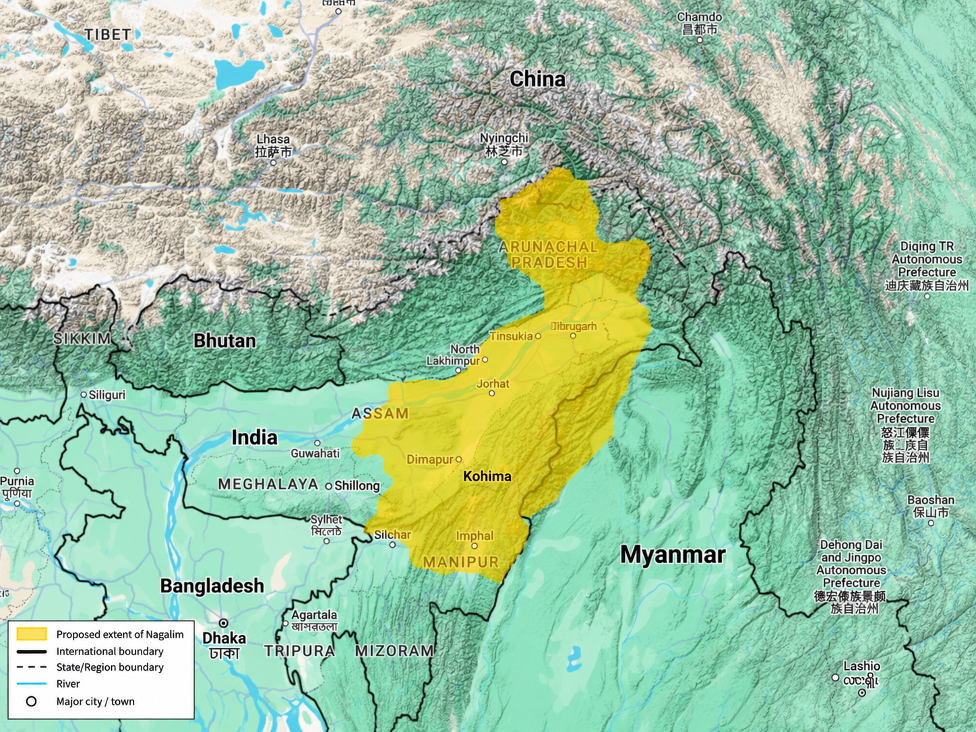
    Map of the Proposed Extent of Nagalim (Source: adapted from the Unrepresented Nations and Peoples Organization)

    Several Naga armed organisations are currently reported to be active in the Naga SAZ inside Myanmar, including

    1. NSCN-K-YA (Yung Aung)
    2. NSCN-K-AM (Ang Mai)
    3. NSCN-IM (Isak-Muivah)
    4. NSCN-IM (Eastern Flank)
    5. Naga People’s Defence Force (Naga PDF)
    6. Eastern Naga Defence Army (ENDA)

    In addition to Naga armed organisations, armed groups associated with Meitei and Assamese insurgent movements have reportedly maintained a presence in Myanmar’s Naga-inhabited borderlands, which have served as bases for several Indian insurgent groups (The Irrawaddy, 2024). The operational alignments of these organisations vary. NSCN-K-AM and NSCN-IM (Eastern Flank) have reportedly conducted coordinated operations alongside the Myanmar military, whereas the Naga PDF and ENDA have reportedly carried out offensive operations against it (International Institute for Strategic Studies, 2021; KaPhe’ (In Burmese, ‘ကဖေး’), 2025). Since the 2021 military coup, three clashes have reportedly occurred among NSCN factions, reflecting continuing divisions and competition within the Naga armed movement (Mizzima, 2026a).

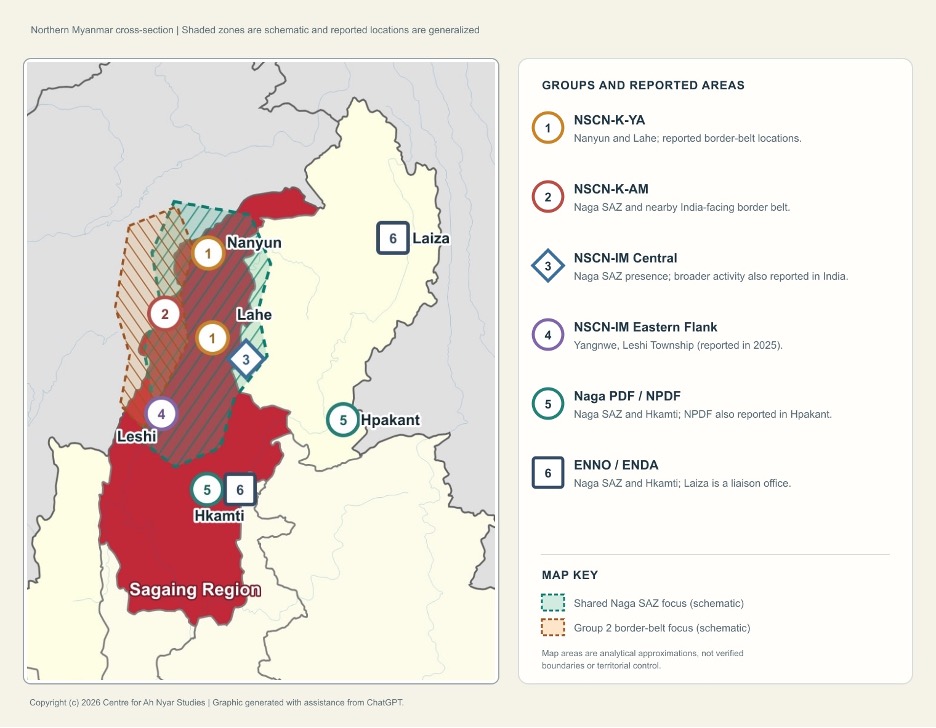
    Reported Activity Areas Map of Naga Armed Organisations (Source: Centre for Ah Nyar Studies)

    1. National Socialist Council of Nagaland–Khaplang (Yung Aung) [NSCN-K-YA]

    The group is a Naga armed organisation led by Yung Aung and primarily based in Myanmar’s Naga SAZ. Its reported areas of operation include the Naga SAZ and territories along the India–Myanmar border. Sources estimate that the faction had approximately 400–500 cadres, although its current strength remains unclear (Hasnat, 2024). The organisation has continued its armed campaign for Naga self-determination and does not participate in India’s ceasefire arrangements. It has also been reported to maintain links with other armed organisations in Northeast India, including the United Liberation Front of Asom–Independent (ULFA-I) and Manipur’s People’s Liberation Army (PLA) (Hasnat, 2024; Ministry of Home Affairs, Government of India, 2020).

    The faction has also reportedly been targeted in cross-border military operations. On 13 July 2025, the Indian military was accused of conducting drone strikes against armed-group camps in Nanyun and Lahe townships, Sagaing Region, targeting NSCN-K-YA and ULFA-I positions (The Irrawaddy, 2025). On 20 October 2025, another reported drone strike targeted an NSCN-K-YA base in Lahe Township. According to Myanmar Now (2025), the attack struck Karm Way Lawri village and killed two people, including the 27-year-old son of an NSCN-K leader and an eight-year-old child. These incidents have raised concerns about the effects of cross-border military operations on communities living in the Naga SAZ.

    2. National Socialist Council of Nagaland–Khaplang (Ang Mai) [NSCN-K-AM]

    In January 2019, the Myanmar military seized NSCN-K’s headquarters in Taga village, Nanyun Township, amid allegations that the group supported Assamese and Meitei armed organisations opposing the Indian government (EastMojo, 2019; The Irrawaddy, 2019). On 6 November 2019, 11 NSCN-K members, including Ang Mai, were reportedly sentenced to two years’ imprisonment under Section 17(1) of Myanmar’s Unlawful Associations Act (Southeast Asia Journal, 2019). Colonel Than Naing, spokesperson for the Myanmar military’s Northwest Regional Command (Radio Free Asia, 2019), stated that 

    “It is a violation of the terms of the preliminary peace agreement reached with the regional government. The main reason is that they have been engaged in military cooperation with Assamese and Meitei armed groups that oppose India. Since this constitutes a breach of those terms, action has been taken against them.”

    Reports stated that Myanmar authorities stated that instructed the group to dismantle its bases and continue negotiations within the framework of the Nationwide Ceasefire Agreement (Mizzima, 2019). These events preceded the formation of NSCN-K-AM in 2023. The NSCN-K-AM is a splinter faction of NSCN-K led by retired Major General Ang Mai. The group separated from the Yung Aung-led NSCN-K faction on 2 July 2023 (CNI, 2025c). It operates primarily in Myanmar’s Naga SAZ and neighbouring areas along the India –Myanmar border. Its reported strength remains uncertain, although analysts estimate that the faction had more than 100 fighters in 2024 (Hasnat, 2024).

    NSCN-K-AM has sought to strengthen its position in the Naga region while managing relations with other armed organisations and pursuing negotiations with authorities in Myanmar and India. In February 2025, the group reported that it had sent a letter to the Kachin Independence Army (KIA), asking it not to enter or interfere in the Naga SAZ. According to CNI News, the faction’s peace committee chairman, U Chin Aung, stated that the group was seeking to maintain regional peace and stability while engaging in discussions with both the Myanmar military and the Indian government (CNI, 2025b).

    The faction has also pursued parallel ceasefire initiatives. On 9 February 2025, The Morung Express reported that NSCN-K (Ang Mai) had entered what it described as a bilateral ceasefire process with the Government of India. According to a statement issued by the faction’s Ministry of Information and Publicity, the initiative aimed to create conditions for dialogue and advance the resolution of the Indo-Naga-Myanmar political issue (The Morung Express, 2025). Separately, CNI News reported that NSCN-K-AM had held meetings with Myanmar military representatives during 2024 and subsequently discussed a preliminary bilateral ceasefire agreement with the Sagaing Region government. The group indicated that it intended to retain its identity as a Naga armed organisation rather than transform into a militia or Border Guard Force. As of 5 May 2025, the proposed regional ceasefire had not been formally signed (CNI, 2025a).

    Engagement with Myanmar’s military authorities continued in 2026. Myanmar’s Ministry of Information reported that the National Solidarity and Peacemaking Negotiation Committee (NSPNC) met a delegation from NSCN-K-AM in Nay Pyi Taw to discuss regional stability, socioeconomic development and long-term peacebuilding in the Naga region. The meeting also addressed potential ceasefire arrangements, liaison offices, future high-level talks and coordination with government departments (Ministry of Information, Naypyitaw, 2026).

    3. National Socialist Council of Nagalim–Isak-Muivah (NSCN-IM)

    Founded after the split of the mother organisation NSCN in 1988, the NSCN-IM is one of the principal Naga armed and political organisations. Historically led by Isak Chishi Swu and Thuingaleng Muivah, the organisation pursues Naga self-determination and the establishment of Nagalim, combining Naga-inhabited territories. The group primarily operates in the NE region of India, especially in Nagaland. It also maintains a significant presence inside the Naga SAZ of Burma (Singh, 2020).

    The NSCN-IM maintains a hierarchical political and military structure under its central leadership, historically headed by Chairman Isak Chisi Swu and General Secretary Thuingaleng Muivah. Its political administration operates through the Government of the People’s Republic of Nagaland (GPRN), comprising nine ministries: four principal ministries responsible for defence, home affairs, finance and foreign affairs, and five others covering education, information and publicity, forests and minerals, law and justice, and religious affairs. Administratively, its areas of influence are divided into 11 regions, extending governance to town and village levels. Its military wing, the Naga Army, reportedly comprises one brigade and six battalions, with an estimated 4,500 personnel, alongside specialised mobile units and local commands (South Asia Terrorism Portal, n.d.-b).

    In June 2026, the NSCN-IM Joint Council reaffirmed its collective leadership under Chairman Q. Tuccu, Vice-Chairman Tongmeth Wangnao, General Secretary and Ato Kilonser Th. Muivah, and Deputy Ato Kilonser V. S. Atem (Morung Express, 2026b). However, in July 2026, the Eastern Flank declared a provisional government under Ikato I. Chishi Swu, indicating significant internal divisions over leadership and the organisation’s political direction (NE NOW NEWS, 2026). On 3 August 2015, the Government of India and the NSCN signed the Framework Agreement to establish a basis for further negotiations towards a political settlement (Press Information Bureau, Government of India, 2015a). NSCN-IM’s published version refers to sharing sovereign power through negotiated competencies and an “enduring inclusive new relationship of peaceful co-existence of the two entities” (Singh, 2020). The organisation has also demanded recognition of a separate Naga national flag and constitution.

    4. National Socialist Council of Nagalim–Isak-Muivah (Eastern Flank)

    The Western and Eastern Flanks of the Naga Army were split in September 2019 with the aim of strengthening its military capacity amid pressure from the Government of India (GoI) to conclude negotiations without a separate Naga flag and constitution. The Eastern Flank later criticised the NSCN-IM’s central leadership for failing to take necessary political action during this period. According to a 2025 report, the group is operating in Yangnwe Village in Leshi Township.

    Former leader Lt. Gen. (Retd.) H.S. Ramsan has had a complex relationship with India and other armed actors in Myanmar. A local news outlet covering the NE region of India claims that Ramsan was on a “most wanted list” by Indian authorities and to have operated in Myanmar after leaving India (Mirror Desk, 2026). In 2022, his faction reportedly cooperated with the Myanmar military in operations against resistance forces in Homalin and Tamu townships (KaPhe’ (In Burmese, ‘ကဖေး’), 2025). On 13 January 2025, a letter attributed to Lt. Gen. (Retd.) H. S. Ramsan, commander of the Eastern Flank, NSCN-IM Naga Army, expressed the faction’s willingness to cooperate with National Unity Government (NUG) Prime Minister Mahn Win Khaing Than and support the struggle against Myanmar’s military junta (Naga Voice – နာဂအသံ, 2025). However, the letter’s authenticity could not be independently verified, and no official NUG response was identified in the sources reviewed.

    In April 2025, Ikato I. Chishi Swu, son of the late NSCN-IM co-founder Isak Chishi Swu, reportedly broke with the organisation’s central leadership amid growing internal tensions (Manipur Update, 2025a). The split became more explicit in July 2026, when the Eastern Flank appointed Ikato as chairman of a nine-member team tasked with forming a provisional government following a meeting, which the group named the “Extraordinary Joint Emergency Meeting” at Mt. Horeb Camp in Myanmar’s Sagaing Region (Morung Express, 2026c). The meeting was chaired by Lt Gen (Retd) Hs Ramsan. The meeting formed the “Provisional Government” in the following structure.

    Organisational structure of the Provisional Government of NSCN-IM Eastern Flank (Source: Design created based on information from Morung Express)

    The faction declared that the spirit of the 1997 ceasefire agreement with the Government of India had “ceased to exist” and criticised the central leadership for allegedly compromising the Naga political position in negotiations (Eastern Mirror News, 2026; NE NOW NEWS, 2026). Both the NSCN-IM (Eastern Flank) and the NSCN-K-YA use the name Government of the People’s Republic of Nagalim (GPRN) for their administrative structures, although they use different logos to represent their respective organisations.

    Alongside these political developments, the security dynamics surrounding the Eastern Flank, particularly the reported attack on its Mt. Horeb Camp, provide important context for understanding the faction’s evolving position. On 7 October 2026, India and Myanmar held their third Defence Cooperation Meeting in Guwahati, reviewing existing defence initiatives and discussing further cooperation in training, capacity-building and mutual security (The Economic Times, 2026). Four days later, the Eastern Flank alleged that drones had dropped approximately 60 bombs on Mt. Horeb Camp, damaging parts of the site. Although the faction initially reported no casualties, subsequent reporting indicated that three cadres were injured. The perpetrators have not been independently confirmed (Ukhrul Times, 2026; Rural Post, 2026).

    5. Naga People’s Defence Force (Naga PDF) and PaKaPha

    Naga PDF was formed on 20 June 2021 by the young people of Naga in collaboration with Shan, Chin and Bamar communities in response to Myanmar’s military coup (NPDF, n.d.). It is reported to operate as the No. 1 Battalion of Naga District under the NUG Ministry of Defence. In a March 2024 interview with Kachin News Group, NPDF official Bo Lin Yone stated that the force was fighting for federalism, equality and individual rights and had maintained an alliance with the Kachin Independence Organisation/Army (KIO/KIA) since December 2022. The group also participated alongside the KIA in fighting around Selzin. More recently, CNI Myanmar reported the opening of basic military training in the Naga region. Naga PDF operates alongside Naga People Defence Organisations (locally known as PaKaPha) of the NUG. PaKaPha are also active across townships within Naga SAZ (The Voice of Spring, 2026). Naga PDF is reportedly active in Hkamti Township in Sagaing Region and Hpakant Township in Kachin State.

    6. Eastern Naga National Organisation (ENNO)/Eastern Naga Defence Army (ENDA)

    The ENDA is the armed wing of ENNO. According to its General Secretary Eno Jimi Naga, the group was established on 4 November 2021 in response to the military coup in 2021 (Kachin News Group, 2023). ISP Myanmar Peace Desk claims that ENDA is a rebranded entity resulting from a joint initiative between former NSCN-K officials and Naga legislators from the NLD (ISP Myanmar Peace Desk, 2024). However, individuals close to ENNO reportedly stated that most of the NLD legislators subsequently ceased participating in the organisation (CNI, 2025d). The organisation’s political and military structures are commonly referred to in its public statements as the ENNO/ENDA Government (Eastern Naga Defence Army, 2023b).

    The organisation was established under the leadership of R. S. Awng Sai, a former lieutenant colonel in the NSCN-K who was reportedly dismissed from that organisation. He was among the group of eleven NSCN-K officials who were imprisoned in 2019 under Section 17(1) of the Unlawful Association Act in Burma (Wai Mar Tun, 2019). Within ENDA, he is identified as a lieutenant general and serves as the force’s leader (Eastern Naga Defence Army, 2024). An ENDA statement dated 30 March 2023 reportedly confirmed that the organisation held a ceremony to arm its first batch of trained recruits in 2022 (Eastern Naga Defence Army, 2023a). The organisation is run by a central committee with departments operating under it. The reported officeholders include Eno Jimi Naga as General Secretary and San Waung Moses as the person responsible for media and information. The organisation has also established a central liaison office in Laiza, Kachin State, and reportedly receives weapons and ammunition support from the KIA. Its principal areas of operation include Hkamti Township and the Naga SAZ, where it has reportedly conducted operations against Myanmar’s military alongside the KIA and other resistance forces. Its current territorial reach and operational capacity, however, remain difficult to establish independently.

    Beyond its military activities, ENNO/ENDA has articulated a political programme centred on ending military dictatorship, protecting ethnic rights and establishing a federal union. In February 2025, the organisation announced that it had prepared, since December 2023, the Interim Political Arrangement of Nagaland, a proposed framework to guide interim political arrangements in the eastern Naga region (Eastern Naga Defence Army, 2025). The arrangement was prepared within a month of the parliaments of Sagaing, Magway and Mandalay federal units enacting laws to establish interim political arrangements in their respective territories in late November 2023. Nevertheless, the content of the proposed framework and the extent of its implementation remain unclear, as ENNO/ENDA has not yet publicly released the document.

    Border Dynamics and Naga Armed Groups

    India’s plan to fence its 1,643-kilometre border with Myanmar has raised concerns among Naga communities whose social, cultural and economic ties span the border (Choudhury, 2024; Mohta, 2025). The Indian government cites security concerns, including insurgency and drug trafficking, while restrictions on the Free Movement Regime (FMR) have prompted opposition from Naga organisations (Press Information Bureau, 2024; The New Indian Express, 2025). On 26 August 2025, eleven representatives of the United Naga Council (UNC), the Naga Women’s Union (NWU) and the All Naga Students’ Association Manipur (ANSAM) met Indian central government officials in New Delhi to discuss border fencing and the Free Movement Regime (FMR). The talks ended without agreement, as the Naga delegation called for the restoration of the FMR and a halt to border fencing (The New Indian Express, 2025; IANS, 2025). No information on the participation of Myanmar-based Naga groups was found. At the Pansaung–Nampong crossing, which connects Nanyun Township of Naga SAZ with Arunachal Pradesh of India, the border market reopened on 30 July 2026 after more than six years of closure due to the COVID-19 pandemic and the military coup. Cross-border movement, however, remains restricted, with only 30 people per day permitted to enter India for shopping and visits (Mizzima, 2026b). Border fencing has also prompted opposition from Myanmar-based Naga organisations, which argue that it threatens Indigenous land rights and divides communities (Mizzima, 2025).

    On 26 March 2026, the NSCN-K-YA claimed responsibility for an attack on a 10th Assam Rifles construction team reportedly engaged in border-fencing work along the Namgoi–Pansaung Road near Pansaung Pass, Arunachal Pradesh. The group claimed that three personnel were killed. However, Indian security officials disputed the reported fatalities, stating that one Assam Rifles personnel was injured and that no deaths had been confirmed (Ajum, 2026; B. Singh, 2026; Nagaland Post, 2026). The GoI signed the Framework Agreement with the NSCN-IM on 3 August 2015. In contrast, on 16 September 2015, the Indian government declared the NSCN-K an unlawful organisation for five years, citing its continued attacks on Indian security personnel from bases in Myanmar (Press Information Bureau, Government of India, 2015a, 2015b). Its faction – NSCN-K (AM), however, has reportedly pursued peace negotiations with both the Myanmar military regime and the GoI (CNI, 2026b; Kalita, 2026). By contrast, no comparable public reporting confirms that the NSCN-IM (Eastern Flank), the ENNO/ENDA, or the Naga PDF has participated in these formal peace talks. With that said, it should also be noted that India maintains security and defence cooperation with Myanmar’s military regime, particularly on border security and counterinsurgency. This cooperation could affect Myanmar-based Naga armed groups’ freedom of movement and cross-border operations, depending on its implementation.

    Beyond border security, access to critical minerals is another important dimension of India’s strategic interests and its relations with armed actors along the border. India seeks to diversify its rare-earth supply chains and reduce dependence on China, which dominates global rare-earth processing. In this context, Kachin State’s rare-earth deposits could offer potential opportunities for India, particularly as the KIO/KIA exercises greater control over key mining areas, including Chipwi and Pangwa. The KIO/KIA influence over mining operations, taxation and exports could therefore have implications for future regional trade and India’s access to these resources. However, Myanmar’s rare-earth exports remain heavily oriented towards China, while alternative routes to India face logistical and security challenges (Banerjee, 2026; ISP-Myanmar, 2025). Although potential trade with India could diversify the KIO/KIA’s export markets and strengthen its financial position, no confirmed supply agreement has been established. India’s interests in border security and critical minerals thus illustrate two distinct but potentially interconnected dimensions of its engagement with Myanmar, with possible implications for armed groups’ economic resources and regional influence.

    Political Parties in Naga SAZ

    In the 2020 general election, the principal parties competing in Naga SAZ were;

    • National League for Democracy (NLD),
    • Union Solidarity and Development Party (USDP) and
    • Naga National Party (NNP).

    The Union Betterment Party (UBP) also fielded candidates, which later dissolved itself by its founding chairman, U Shwe Man after the military coup in 2021. In the 2020 general election, each township of Naga SAZ (Lahe, Leshi and Nanyun) had one Pyithu Hluttaw (House of Representatives) constituency, for a total of three constituencies. In the Sagaing Region Hluttaw, each township was divided into two constituencies, for a total of six. It also includes Sagaing Region Constituency No. 12 for the Amyotha Hluttaw (House of Nationalities).

    The NLD won seven of the nine township-based constituencies examined in the Pyithu Hluttaw and Sagaing Region Hluttaw, while the USDP won two. In the Pyithu Hluttaw, the NLD won in Leshi and Nanyun, while the USDP won in Lahe. In the Sagaing Region Hluttaw, the NLD secured both seats in Leshi and Nanyun, as well as one seat in Lahe. The USDP won the remaining seat in Lahe Township. NLD won Sagaing Region Constituency No. 12 for the Amyotha Hluttaw. These results indicate that the NLD secured most of the seats across the township-based constituencies covered by the report, while the USDP retained representation in Lahe.

    The NNP contested constituencies across all three townships and both legislatures but did not win any of the nine township-based seats examined. Nevertheless, its candidates received notable shares of the vote. In the Pyithu Hluttaw, the NNP received between 18.55 and 22.62 per cent of the vote across the three townships. In the Sagaing Region Hluttaw, its candidates received between 14.80 and 24.63 per cent across the six constituencies. After the 2021 coup and military crackdown on political parties, the NNP re-registered and later contested the junta-orchestrated 2025 election.

    Junta-appointed Union Election Commission approved NNP registration on 30 May 2023 (Source: Ministry of Information, Naypyitaw, 2023)

    The table summarises the election results in 2020.

    Election Results in the 2020 General Elections (Source: Committee Representing Pyidaungsu Hluttaw, National Unity Government of Myanmar, 2024)

    Naga SAZ and KIO/KIA

    The historical relationship between the KIA and Naga armed movements has been influenced by the shifting strategic interests of China, India and Myanmar. From 1966, the KIA facilitated Naga fighters’ journeys to China, where they received military training and weapons, and later provided some Naga armed groups with bases, training and arms. However, between 1990 and 1992, India’s intelligence agency reportedly supplied weapons to the KIA in exchange for its commitment to cease providing bases, weapons and training to Naga and other northeastern Indian armed groups. Following the KIA’s ceasefire with Myanmar’s military government in 1994, its support for these groups reportedly declined further (Bhaumik, 2009). More recently, the KIA has supported Naga resistance forces operating in Kachin State and Sagaing Region. The NPDF, formed in 2021, has conducted military activities in alliance with the KIA since 2022 (Kachin News Group, 2023).

    Tensions over territorial authority became more explicit in February 2025, when the NSCN-K (AM) reportedly asked the KIA not to enter or interfere in the Naga SAZ. The faction argued that it was seeking to maintain regional stability while pursuing peace negotiations. These tensions were further highlighted in July 2025, when the Naga Students’ Organisation in Lahe demanded the release of 16 NSCN-K (YA) members reportedly captured by the KIA (Manipur Update, 2025b). In February 2026, the dispute intensified after KIA leader Lieutenant-General Gun Maw referred to a proposed “Naga Unit” as part of a wider strategy involving Kachin, Chin and other areas of Sagaing Region. The NSCN-K (AM) rejected the “Naga Unit” designation, arguing that the Naga struggle remains focused on achieving independence. It also expressed concerns about ethnocentrism and stressed that the Nagas and Kachins have historically lived together as brothers (CNI, 2026a). The proposed “Naga Unit” could therefore intensify disputes over territorial control and political representation by raising questions about who has the authority to govern Naga areas in Myanmar and represent Naga political aspirations. It could also deepen tensions between the NSCN-K (AM) and the KIO/KIA over political autonomy, ethnic identity and the future of Naga–Kachin relations.

    Naga SAZ and Sagaing Federal Unit

    Under the 2025 Constitution, the Sagaing Federal Unit Government was formed in late 2025, with legislative, executive and judicial powers established as separate branches of government (Section 6). Section 7 further provides for the sharing of powers among the Federal Unit Government, the Naga SAZ Government and local governments. However, the territorial boundaries of Sagaing remain unchanged from those in place at the time of the 2020 General Election, as defined under the 2008 Constitution of Myanmar (Section 44). Accordingly, the three townships comprising the Naga SAZ – Leshi, Lahe and Nanyun – retain their existing territorial boundaries (Section 46). In addition, Section 47 constitutionalises the right of indigenous peoples in Sagaing to self-determination, including through self-administered zones, subject to two conditions: territorial contiguity and conformity with future political agreements on state-building.

    The extent of the Naga SAZ’s autonomy is further defined by its relationship with the legislative institutions of Sagaing. Under Section 59(b), the SAZ may draft bills, but these must be submitted to the Sagaing Federal Unit Parliament for consideration and passage in accordance with the Parliament’s rules and procedures. This arrangement allows the Naga SAZ to initiate legislation while retaining the Federal Unit Parliament’s authority over its formal enactment. Legislative autonomy is therefore exercised within a broader institutional framework in which powers are shared between the SAZ and the Federal Unit.

    The Constitution also establishes a framework for forming the Naga SAZ’s Interim Government, linking its composition to both political representation and the 2020 electoral mandate. The government is to comprise seven members, including a Chief Administrator and a Deputy Chief Administrator (Section 86). Section 87 identifies six categories of eligible participants in its formation:

    1. Sagaing Federal Unit Hluttaw representatives elected in the 2020 multi-party general election who do not cooperate with the terrorist coup regime.
    2. Representatives of political parties.
    3. Representatives of ethnic groups.
    4. Civil servants participating in the Civil Disobedience Movement (CDM).
    5. Members of the Strike Forces.
    6. Other relevant individuals.

    Although this framework provides for participation by a range of political and social actors, Section 88 assigns a decisive role in selecting the seven-member government to eligible Hluttaw representatives elected in 2020 from the Naga SAZ who do not cooperate with the military junta. The arrangement thus combines broader participation in government formation with an electoral basis for executive selection. Regarding the judiciary, the Sagaing Federal Unit Constitution recognises the Naga SAZ’s authority to establish its own courts (Section 123(b)). It also permits the application of customary legal practices, provided that they do not contradict international human rights standards (Section 135).

    To our observation, the Sagaing Federal Unit has not established administrative or judicial authorities for the Naga SAZ since its formation in late 2025. One possible explanation is that Sagaing’s political leadership is adopting a cautious and conflict-sensitive approach to the Naga SAZ, particularly in light of the KIO’s position on the proposed Naga Federal Unit and the 3K area (Kantbalu, Kathar and Kawlin). The political position of the KIO-trained ENDA is another factor that may shape this relationship. ENDA has stated that it has established its own interim political arrangement (Eastern Naga Defence Army, 2025), alongside the interim constitutional framework of Sagaing Federal Unit. This raises questions about whether ENDA intends to operate within Sagaing’s emerging political structure or pursue a separate interim arrangement.

    The role of Naga elected Members of Parliament in shaping this relationship also remains unclear. Eight representatives from the NLD were elected in the Naga SAZ in the 2020 general election and secured seats in the Union and regional parliaments. Their engagement with the emerging institutions of Sagaing Federal Unit, however, has yet to be clarified. This is politically significant because, under the interim constitutional framework, they may hold substantial influence over decisions concerning the Naga SAZ’s institutional status and the exercise of its autonomy. Their participation, or lack thereof, could therefore affect the formation of the SAZ’s administrative and judicial authorities, as well as the broader relationship between Naga SAZ and Sagaing Federal Unit.

    Political Authority, Representation and the Future

    Competing sources of authority, political representation and different ambitions for self-determination shape the Naga SAZ’s political landscape today. Currently, elected representatives, established armed and political organisations, and emerging groups derive their political mandates through different pathways. However, they do not necessarily share a common vision of governance. The Naga SAZ, also commonly referred to as the eastern flank in Naga political discourse, represents only a small part of the broader Naga vision held by many armed and political groups. India, or New Delhi, remains a critical factor in understanding the Naga issue as a whole. In that sense, the Naga SAZ is a geopolitical nexus between the two countries – India and Burma (Myanmar). There is, however, no clearly established mechanism through which these actors can reconcile their political objectives and determine the future of the Naga people or the Naga SAZ.

    With the emergence of federal units, particularly Sagaing, new questions arise. Would the Sagaing Federal Unit offer a solution, or a political pathway towards a solution, to the existing complexities within the Naga SAZ? With this in mind, it is vitally important to understand that the current arrangements within the federal units in central Burma (better known locally as Ah Nyar) are temporary; they are not yet transitional. Although the interim constitutional (or political) arrangements may be complex in their language and interpretation, the immediate objective of these emerging federal units, including Sagaing, can generally be summarised as consolidating sub-national governance and political groupings. Constitutionally, the Sagaing Federal Unit is notably cautious in its approach to ethnic minority issues, including those concerning the Naga people or the Naga SAZ. It retains the existing territorial boundaries (as of 2020, before the military coup). At the same time, Sagaing is constitutionally committed to the right to self-determination, particularly for ethnic minorities. It is important to note here that successive governments of Burma (Myanmar) have been relatively cautious and silent on this particular right within the international legal framework, given the decades-long ethnic liberation movement. When the NLD administration ratified the United Nations’ International Covenant on Economic, Social and Cultural Rights, it reserved its position on Article (1) of the Covenant concerning the right to self-determination. This, however, was not unique to the NLD administration. This constitutional commitment marks a politically significant departure from the historical caution of successive governments towards the right to self-determination. However, this alone is not a remedy for the protracted identity conflicts and liberation struggles within the Naga community or the Naga SAZ. Therefore, how the Sagaing Federal Unit brings actors on the ground into its political process becomes important.

    The eight NLD representatives elected from Naga SAZ constituencies in the 2020 general election retain a potentially significant electoral mandate, although their current engagement in the evolving political landscape remains unclear. The Naga PDF and township-based PaKaPha (People’s Defence Teams) operate under the authority of the NUG Ministry of Defence through Regional Command 1. Their role in supporting the five representative blocs of the Sagaing Federal Unit to establish sub-national governance in the Naga SAZ remains an open question. This process is further complicated by the ongoing transition of NUG mechanisms, including healthcare, education and administration, to the emerging federal units in Sagaing and Magway. Moreover, Regional Command 1, led by a KIA-appointed regional commander, may have limited incentives to facilitate this process, particularly if it conflicts with the KIO/KIA’s political interests in the Naga region.

    Meanwhile, ENNO/ENDA’s interim political arrangement and the distinct political objectives of Naga armed organisations indicate that political institution-building is proceeding through multiple channels. This creates a potential divergence between electoral representation, armed influence and emerging institutional authority. Without mechanisms to connect these sources of legitimacy, competing political arrangements may reinforce fragmentation rather than produce a broadly accepted framework for self-governance.

    Regional relationships further complicate this process. The KIO/KIA’s proposed “Naga Unit” has exposed disagreements over territorial authority and the political future of Naga-inhabited areas. The NNP’s move towards participation in the junta-orchestrated 2025 elections adds another dimension to the existing complexities within the Naga SAZ. The NNP did not secure any seats in the Naga SAZ constituencies in the 2020 general election. Among the four parties in the Naga SAZ, the NLD and UBP abandoned their previous political pathways by moving away from the military junta, while the NNP chose a different course by participating in the junta-orchestrated elections.

    The future political trajectory of the Naga SAZ will therefore depend on whether its diverse actors can translate their respective sources of influence into an agreed framework for representation and governance. Without such an agreement, parallel institutional initiatives and competing claims to authority may persist, limiting political coordination and weakening the legitimacy of emerging governance structures.

    Conclusion

    The Naga political landscape constitutes a complex intersection of armed competition, political fragmentation and competing approaches to self-determination. Although six Naga armed organisations are identified in this analysis, their strategic alignments and relationships with the Myanmar military, resistance forces and the KIO/KIA differ significantly. Cooperation on the battlefield does not necessarily translate into political unity, as these organisations maintain distinct interests and positions regarding territorial authority and the future political status of the Naga region or the Naga SAZ. Similar divisions characterise Naga political parties and organisations. The NNP participation in the junta-orchestrated elections in 2025, alongside ENNO/ENDA’s pursuit of an interim political arrangement, illustrates divergent approaches to political engagement, representation and institution-building.

    These intra-Naga dynamics are further complicated by regional political differences, particularly over the relationship between the Naga SAZ, Sagaing Federal Unit and the KIO/KIA. Disagreements over territorial jurisdiction, political representation and the proposed Naga Unit introduce another dimension to an already fragmented political landscape.

    Geopolitically, the Naga SAZ occupies a distinctive position between India and Myanmar. Although it remains a peripheral territory that successive governments in Myanmar have historically given limited attention, it carries broader security and political significance for New Delhi and India’s northeastern states. Despite their differences, Naga armed and political actors share a recurring aspiration for a distinct political status, sometimes expressed through the vision of a Government of the People’s Republic of Nagalim, extending Naga-inhabited areas across northeastern India and Myanmar. The central question is whether this shared aspiration can bridge organisational divisions and competing regional or international interests to produce a coherent political project.

    References

    Ajum, B. (2026, March 27). Firing along Indo-Myanmar border in Changlang, NSCN-YA claims responsibility. Arunachal Times. https://www.arunachaltimes.in/article/firing-along-indo-myanmar-border-in-changlang-nscn-ya-claims-responsibility?

    Aung Naing. (2025, October 27). India launches cross-border drone strike on Myanmar village, killing child and separatist commander’s son. Myanmar Now. https://myanmar-now.org/en/news/india-launches-cross-border-drone-strike-on-myanmar-village-killing-child-and-separatist-commanders-son/

    Banerjee, S. (2026, June 4). Exploring Myanmar’s role in India’s rare-earth elements security. Observer Research Foundation ( ORF ). https://www.orfonline.org/research/exploring-myanmar-s-role-in-india-s-rare-earth-elements-security

    Bhaumik, S. (2009). Troubled Periphery: Crisis of India’s North East (pp. 174–177). SAGE Publications India Pvt Ltd.

    Centre for Ah Nyar Studies. (2026, June 30). What is happening in Ah Nyar? June, 2026 [issue 6/2026]. Centre for Ah Nyar Studies. https://ah-nyarstudies.org/what-is-happening-in-ah-nyar-june-2026-issue-6-2026/

    Choudhury, A. (2024, March). Walls in the era of bridges: The many costs of fencing the India-Myanmar border. Centre of Excellence for Himalayan Studies, Shiv Nadar University. https://snu.edu.in/centres/centre-of-excellence-for-himalayan-studies/research/walls-in-the-era-of-bridges-the-many-costs-of-fencing-the-india-myanmar-border/

    CNI. (2025a). NSCN-K says it plans to sign ceasefire. CNI Myanmar. https://cnimyanmar.com/index.php/english-edition/28858-nscn-k-says-it-plans-to-sign-ceasefire

    CNI. (2025b). NSCN-K/am says it has told KIA not to disturb naga region. CNI Myanmar. https://cnimyanmar.com/index.php/english-edition/27484-nscn-k-am-says-it-has-told-kia-not-to-disturb-naga-region

    CNI. (2025c). NSCN-K/am says to not conduct forced military recruitment in the naga region. CNI Myanmar. https://cnimyanmar.com/index.php/english-edition/27264-nscn-k-am-says-to-not-conduct-forced-military-recruitment-in-the-naga-region

    CNI. (2025d, August 4). ENNO says it recruits in Shin Bwe Yang Township. CNI Myanmar. https://cnimyanmar.com/index.php/english-edition/30616-enno-says-it-recruits-in-shin-bwe-yang-township

    CNI. (2026a, February 27). NSCN rejects KiA’s ‘naga unit,’ citing chauvinism. CNI Myanmar. https://cnimyanmar.com/index.php/english-edition/34784-nscn-rejects-kia-s-naga-unit-citing-chauvinism?

    CNI. (2026b, May 16). NSCN-K/AM expresses desire to discuss stability in naga region. CNI Myanmar. https://cnimyanmar.com/index.php/english-edition/36261-nscn-k-am-expresses-desire-to-discuss-stability-in-naga-region?

    Committee Representing Pyidaungsu Hluttaw, National Unity Government of Myanmar. (2024, November 27). History and formation – ပြည်ထောင်စုသမ္မတမြန်မာနိုင်ငံတော်. Committee Representing Pyidaungsu Hluttaw, National Unity Government of Myanmar. https://crphmyanmar.org/history-and-formation-of-crph/

    Constitution of the Republic of the Union of Myanmar (2008) (2008). https://www.burmalibrary.org/sites/burmalibrary.org/files/obl/docs5/Myanmar_Constitution-2008-en.pdf

    Dahiya, R. (2015). Ensuring peace in the northeast. Institute for Defence Studies and Analyses (IDSA). https://www.files.ethz.ch/isn/191563/PB_peaceinnortheast_rdahiya.pdf

    Eastern Mirror News. (2026, July 23). NSCN (IM) eastern flank forms ‘provisional government’, name. Eastern Mirror Nagaland. https://www.easternmirrornagaland.com/nscn-im-eastern-flank-forms-provisional-government-names-ikato-chishi-swu-chairman

    Updated on 31 August 2026.

    Eastern Naga Defence Army. (2023a, March 30). News Release from ENDA Official Media Outlet. Mobile 1 – ENDA. https://www.facebook.com/share/p/1NCVTusdw8/

    Eastern Naga Defence Army. (2023b, December 22). Statement regarding Naga Traditional New Year Celebration (Letter number 02/2023; dated on 21 December 2023). Mobile 1 – ENDA. https://www.facebook.com/share/p/18QoFQzkZy/

    Eastern Naga Defence Army. (2024, January 30). Official Statement (Letter number 1/2024; dated on 29 January 2024). Mobile 1 – ENDA. https://www.facebook.com/share/p/1KkFJf3rJt/

    Eastern Naga Defence Army. (2025, February 20). Press Release (Letter number 01/2025; dated on 20 February 2025). Mobile 1 – ENDA. https://www.facebook.com/share/p/19URSUT78b/

    EastMojo. (2019, February 4). Myanmarese Army launches offensive against ULFA-I in Sagaing. EastMojo News Bureau. https://eastmojo.com/news/2019/02/04/myanmarese-army-launches-offensive-against-ulfa-i-in-sagaing/

    Hasnat, K. (2024, October 14). ‘Uneasy peace’ between NSCN-K factions in Myanmar, Indian Naga leaders dismiss concerns. theprint. ThePrint. https://theprint.in/india/uneasy-peace-between-nscn-k-factions-in-myanmar-indian-naga-leaders-dismiss-concerns/2310112/

    Htar, L., Thitsar, M. T., & Kyed, H. M. (2020). Why is Customary Law so strong? Political recognition and justice practices in the Naga Self-Administered Zone [Research Report]. Danish Institute for International Studies. https://pure.diis.dk/ws/files/3689064/Kap_3_fra_Kyed_final_book.pdf

    IANS. (2025, August 26). Manipur Naga bodies meet MHA officials, oppose scrapping of old FMR, India-Myanmar border fencing. Nagaland Tribune. https://nagalandtribune.in/manipur-naga-bodies-meet-mha-officials-oppose-scrapping-of-old-fmr-india-myanmar-border-fencing/

    Interim Constitution of the Sagaing Federal Unit, Section 6,7,44,46,47,59(b),86,87,88,123(b),135 (2025).

    International Institute for Strategic Studies. (2021). Dashboard – IISS Myanmar conflict map. IISS Myanmar. https://myanmar.iiss.org/

    ISP Myanmar Peace Desk. (2024, April 11). Enda – ISP Myanmar Peace desk. ISP Myanmar Peace Desk. https://ispmyanmarpeacedesk.com/eao/enda/

    ISP-Myanmar. (2025, September 26). Rare earth export routes in Kachin state. ISP-Myanmar. https://ispmyanmar.com/mp-112/

    Kachin News Group. (2023, December 12). နာဂလူမျိုးနဲ့ နာဂပြည်နယ်ကို ကာကွယ်သွားမယ့် Enno/Enda. Kachin News Group (KNG). https://burmese.kachinnews.com/2023/12/12/zm1-137/

    Kakati, A. K. (2025). Evading and inviting states in ‘No-Man’s-Lands’: Headhunters in Zomia’s blank spaces (1944–1964). Modern Asian Studies, 59(2), 507–535. https://doi.org/10.1017/s0026749x25000137

    Kalita, P. (2026, October 6). After 29 years, naga peace process sees fresh unity bid across India-Myanmar border. The Times of India. https://timesofindia.indiatimes.com/city/guwahati/after-29-years-naga-peace-process-sees-fresh-unity-bid-across-india-myanmar-border/articleshow/134744932.cms

    KaPhe’ (In Burmese, ‘ကဖေး’). (2025, January 31). တမူးတိုက်ပွဲ၌ ကသည်းအဖွဲ့ Meitei PLနှင့် နာဂအဖွဲ့ NSCN-IM တို့ကစစ်တပ်ဘက်မှကူတိုက်ပေးနေ. People’s Spring. https://web.facebook.com/share/p/1HkqShvvps/

    Khaing, M. (2025, July 15). Indian Army accused of deadly strike on separatists in Myanmar. The Irrawaddy. https://www.irrawaddy.com/news/burma/indian-army-accused-of-deadly-strike-on-separatists-in-myanmar.html

    Manipur Update. (2025a, April). NSCN-IM faces internal rebellion as Ikato Swu announces split – Manipur Update. Manipur-Update.Com. https://manipur-update.com/nscn-im-faces-internal-rebellion-as-ikato-swu-announces-split/

    Manipur Update. (2025b, July 23). Naga student in Lahe demands release of Naga Army captured by KIA – Manipur Update. Manipur Update. https://manipur-update.com/naga-student-in-lahe-demands-release-of-naga-army-captured-by-kia/

    Ministry of Home Affairs, Government of India. (2020, August 18). Order concerning the National Democratic Front of Bodoland (NDFB). Ministry of Home Affairs. https://www.mha.gov.in/sites/default/files/NEDiv_NDFBFinalorder_18082020.pdf

    Ministry of Information, Naypyitaw. (2023, May 30). နာဂအမျိုးသားပါတီ [Naga National Party (NNP)] ကို နိုင်ငံရေးပါတီအဖြစ် မှတ်ပုံတင်ခွင့်ပြုခြင်း. Myanmar National Portal. https://myanmar.gov.mm/news-media/news/latest-news/-/asset_publisher/idasset354/content/%25E1%2580%2594%25E1%2580%25AC%25E1%2580%2582%25E1%2580%25A1%25E1%2580%2599%25E1%2580%25BB%25E1%2580%25AD%25E1%2580%25AF%25E1%2580%25B8%25E1%2580%259E%25E1%2580%25AC%25E1%2580%25B8%25E1%2580%2595%25E1%2580%25AB%25E1%2580%2590%25E1%2580%25AE-naga-

    Ministry of Information, Naypyitaw. (2026). NSPNC and NSCN-K (AM) meet to strengthen regional stability, development. Ministry of Information, Naypyitaw. http://moi.gov.mm/moi%3Aeng/index.php/news/21712

    Mirror Desk. (2026). Leaders of Naga armed groups in India’s ‘most wanted’ list. Eastern Mirror Nagaland. https://www.easternmirrornagaland.com/leaders-of-naga-armed-groups-in-indias-most-wanted-list

    Mizzima. (2019). Myanmar army detains NSCN-K leaders. Burma News International. https://www.bnionline.net/en/news/myanmar-army-detains-nscn-k-leaders

    Mizzima. (2025, December 8). Naga groups in Myanmar and India unite to oppose border fence. Mizzima News. https://eng.mizzima.com/2025/12/08/28924?

    Mizzima. (2026a, January 26). Three clashes in 16 days as Naga factions fight for territory and trade control in Sagaing. Mizzima News. https://eng.mizzima.com/2026/01/26/30638

    Mizzima. (2026b, August 6). Only border market reopened in Pansaung, not border gate, says ENWA. Mizzima News. https://eng.mizzima.com/2026/08/06/37132?

    Mohta, N. (2025, September 18). The India-Myanmar border: When deep cultural ties are tested and redrawn. The Indian Express. https://indianexpress.com/article/research/the-india-myanmar-border-when-deep-cultural-ties-are-tested-and-redrawn-10256865/

    Morung Express. (2026a). Engaging in ceasefire process with government of India: NSCN-K (Ang Mai). Morung Express. https://morungexpress.com/engaging-in-ceasefire-process-with-government-of-india-nscn-k-ang-mai

    Morung Express. (2026b). NSCN (IM) Joint Council reaffirms framework agreement, backs collective leadership. Morung Express. https://www.morungexpress.com/nscn-im-joint-council-reaffirms-framework-agreement-backs-collective-leadership

    Morung Express. (2026c, July 23). NSCN/GPRN eastern flank: Breakaway NSCN (IM) group declares ‘provisional government’. Morung Express. https://morungexpress.com/nscngprn-eastern-flank-breakaway-nscn-im-group-declares-provisional-government

    Naga Voice – နာဂအသံ. (2025, August 3). NUG ဝန်ကြီးချုပ် ဦးမန်းဝင်းခိုင်သန်းအား NUG နှင့် ပူးပေါင်းရန် ပေးပို့သည်စာ [Photo]. Facebook. https://www.facebook.com/share/1Fn7tUT8TB/

    Nagaland Post. (2026, March 27). NSCN-K (ya) claims attack on AR in Arunachal. Nagaland Post. https://nagalandpost.com/nscn-k-ya-claims-attack-on-ar-in-arunachal/

    Nang, S., & Paddock, R. C. (2016, August 6). Myanmar measles outbreak kills 40 in remote villages. The New York Times. https://www.nytimes.com/2016/08/07/world/asia/myanmar-measles-outbreak-kills-40-in-remote-villages.html

    NE NOW NEWS. (2026, July 24). NSCN-IM splits, eastern flank forms provisional government under Ikato Chishi Swu. NorthEast Now. https://nenow.in/top-news/nscn-im-splits-eastern-flank-forms-provisional-government-under-ikato-chishi-swu.html

    NPDF. (n.d.). Official Page of NPDF. NPDF – Battalion. Retrieved 12 October 2026, from https://web.facebook.com/profile.php?id=100090719661213

    Nyein Nyein. (2019, February 7). NSCN-K denies violating ceasefire. The Irrawaddy. https://www.irrawaddy.com/news/nscn-k-denies-violating-ceasefire.html

    Oo, T. M. M. (2023, February 27). နာဂကိုယ်ပိုင်အုပ်ချုပ်ခွင့်ရဒေသ ဖွံ့ဖြိုးတိုးတက်ရေး ကြိုးပမ်းဆောင်ရွက်မှုများ. MDN – Myanmar Digital News. https://mdn.gov.mm/my/naagkiuypiungaupkhupkhngrdes-phnphiuttiuttkre-kiupmcheaangrkmumaa

    Press Information Bureau, Government of India. (2015a, August 3). PM witnesses the signing of historic peace accord between Government of India and Nationalist Socialist Council of Nagaland (NSCN). Press Information Bureau. https://www.pib.gov.in/newsite/PrintRelease.aspx?lang=2&reg=48&relid=124221

    Press Information Bureau, Government of India. (2015b, September 16). Declaration of NSCN(K) as an unlawful organisation for a period of five years under the unlawful activities (prevention), act 1967. Press Information Bureau. https://www.pib.gov.in/newsite/PrintRelease.aspx?lang=2&reg=48&relid=126947

    Press Information Bureau, Government of India. (2024, February 6). Union Home Minister and Minister of Cooperation, Shri Amit Shah says Modi government is committed to building impenetrable borders. Press Information Bureau. https://www.pib.gov.in/www.pib.gov.in/Pressreleaseshare.aspx?PRID=2003199

    Radio Free Asia. (2019, March 28). နာဂ လက်နက်ကိုင်အဖွဲ့ခေါင်းဆောင် ၅ ဦးကိုဖမ်းဆီး. Radio Free Asia. https://www.rfa.org/burmese/news/army-arrest-nscn-k-leaders-03282019074418.html

    Rural Post. (2026, October 11). Mt. Horeb attacked with drones. Rural Post. https://ruralpost.in/mt-horeb-attacked-with-drones/

    Singh, B. (2026, March 27). Assam rifles Jawan injured in militant firing in Arunachal Pradesh. The Economic Times. https://m.economictimes.com/news/defence/assam-rifles-jawan-injured-in-militant-firing-in-arunachal-pradesh/articleshow/129852242.cms

    Singh, V. (2020, August 11). NSCN-IM releases details of 2015 naga framework agreement. The Hindu. https://www.thehindu.com/news/national/other-states/nscn-im-releases-details-of-2015-naga-framework-agreement/article32329304.ece

    South Asia Terrorism Portal. (n.d.-a). Nagaland Accord – The Shillong Agreement of November 11, 1975. South Asia Terrorism Portal. Retrieved 11 October 2026, from https://www.satp.org/satporgtp/countries/india/states/nagaland/documents/papers/nagaland_accord_the_shillong_nov_11_1975.htm

    South Asia Terrorism Portal. (n.d.-b). National Socialist Council of Nagaland – Isak-Muivah. South Asia Terrorism Portal. Retrieved 12 October 2026, from https://www.satp.org/satporgtp/countries/india/states/nagaland/terrorist_outfits/nscn_im.htm

    South Asia Terrorism Portal. (n.d.-c). National Socialist Council of Nagaland – Isak-Muivah (NSCN-IM) Terrorist Group, Pakistan. South Asia Terrorism Portal. Retrieved 11 October 2026, from https://satp.org/terrorist-profile/pakistan/national-socialist-council-of-nagaland-isak-muivah-nscn-im

    Southeast Asia Journal. (2019, November 9). 11 Persons of NSCN-K sentenced to 2 years’ imprisonment. Southeast Asia Journal. https://southeastasia-journal.com/archives/3724

    Tajwar, A. (2026, September 5). Understanding naga Nationalism: From the Shillong accord to the fragmentation of the NSCN. Bangladesh Defence Journal. https://defencejournalbd.com/geopolitics-security/south-asia/understanding-naga-nationalism-from-the-shillong-accord-to-the-fragmentation-of-the-nscn/

    The Economic Times. (2026, October 8). India, Myanmar discuss initiatives to strengthen defence cooperation. The Economic Times. https://m.economictimes.com/news/defence/india-myanmar-discuss-initiatives-to-strengthen-defence-cooperation/articleshow/134784357.cms

    The New Indian Express. (2025, August 26). Manipur Naga groups talks with centre on border fencing and FMR end inconclusively. The New Indian Express. https://www.newindianexpress.com/india/2025/Aug/26/manipur-naga-groups-talks-with-centre-on-border-fencing-and-fmr-end-inconclusively

    The Voice of Spring. (2026, October 7). နာဂဒေသ လဟယ်မြို့နယ်မှာ ပကဖ စခန်းဖွင့်လှစ်၊ စုဖွဲ့မှုများပြုလုပ်နိုင်ရေးဆွေးနွေး. The Voice of Spring. https://web.facebook.com/share/p/152d7B5s66i/

    Ukhrul Times. (2026, October 11). NSCN-EF claims drone attack on camp; says around 60 bombs exploded, denies casualties. Ukhrul Times. https://ukhrultimes.com/nscn-ef-claims-drone-attack-on-camp/

    Wai Mar Tun. (2019, November 6). NSCN-K ခေါင်းဆောင်တွေကို ထောင် နှစ်နှစ်စီ အမိန့်ချ. Radio Free Asia. https://www.rfa.org/burmese/program_2/nscn-k-leaders-are-sentenced-to-imprisonment-11062019044700.html

    Wouters, J. J. P. (2025). Colonialism and the Creation of Two Naga Hills Districts in Assam and Burma. Oxford Research Encyclopedia of Asian History. https://doi.org/10.1093/acrefore/9780190277727.013.920

    Download the report. 

  • Magway’s Defence Force Law and the Security Scenarios Ahead

    Magway’s Defence Force Law and the Security Scenarios Ahead

    Magway’s Defence Force Law and the Security Scenarios Ahead

    Resistance fighters in Ah Nyar – Tamar Operation of Magway (Photo: Magway PDF)

    Briefing Paper on Federal Unit Politics of Central Burma (Part 4). This analysis is the fourth part of the briefing paper on federal unit politics in central Burma. Part 1 examined the structural formation of federal units, Part 2 analysed their internal power structures, and Part 3 focused on the human rights frameworks embedded in the interim constitutional arrangements of three federal units in Ah Nyar.

    Enacted on 25 September 2026 as Law No. 7 by the 12th Assembly of the Magway Federal Unit Parliament, the Magway Defence Force Law establishes a legal framework for organising and governing the resistance forces. It comprises nine chapters and 66 Articles and was enacted pursuant to Section 123 of the Interim Political Arrangement Law of the Magway Federal Unit. Section 114 of the Interim Political Arrangement Law provides for two distinct forces at the federal-unit level:

    • Magway Federal Unit Defence Force and
    • Magway Federal Unit Security Force or police force.

    The Defence Force Law gives effect to the former by setting out its structure, command arrangements and operational framework. It also establishes a Joint Military Operation Commission to facilitate cooperation with Union-level defence forces, ethnic armed organisations in neighbouring states and other resistance forces operating within Magway. The law therefore marks an important step in formalising Magway’s defence governance. It also raises questions about how the unit’s new structures will coordinate with the NUG and neighbouring forces, how local People’s Defence Teams will transition into the framework, and whether the system can balance responsive unit-level command with coherent federal security coordination.

    The origin

    Magway Federal Unit Defence Force Law grew out of a wider political shift in central Burma, better known as Ah Nyar. In Sagaing, Magway and Mandalay, regional actors have developed constitutional frameworks to establish federal unit governments in coordination with the NUG. These arrangements offer a critical political window to build new governing institutions while the country remains in conflict. Constitutionally, Magway’s Interim Political Arrangement Law laid part of the groundwork for this process. Article169 (c) authorises Magway Federal Unit to form and administer its own defence and security forces. This gives the unit a clear role in organising its security institutions. At the same time, the Interim Arrangement Law provides both the NUG and the Magway Federal Unit concurrent legislative competence over the mobilisation and deployment of federal-unit defence and security forces. The laws therefore establish a division of responsibility, but essentially, the overlap also makes coordination between the two layers critical.

    Chapter 9 of the Interim Political Arrangement Law sets out the unit’s approach to defence and security across 13 provisions, including the principle that security forces remain under civilian authority. Separately, section 119 states that “The Defence and Security Forces of the Magway Federal Unit shall be under the authority of the civilian government”. Article 63 of the Magway Federal Unit Defence Force Law reiterates this principle.

    The Law’s Main Provisions

    Magway Defence Force Law is organised into nine chapters and 66 Articles. Its central feature is a two-track security structure. Chapter 3 provides for Magway Federal Unit Defence Force, bringing smaller local defence forces together under the command of the Magway Federal Unit Defence Minister. Chapter 4 establishes a Joint Military Operation Commission (JMOC) to coordinate with ethnic or territory-based forces and conduct joint operations with Union-level defence forces, ethnic armed organisations and other resistance forces operating in Magway. These chapters create two possible routes for local forces to enter Magway’s security architecture: joining the unit’s Defence Force or operating through the Joint Military Command Commission (JMOC).

    Magway Federal Unit Defence Force

    Under Article 6, the Magway Federal Unit Defence Force is to be formed in coordination with the NUG and include resistance forces operating in Magway. Article 8 provides for the Defence Minister to invite ethnic and territory-based forces to join the force’s preparatory committee, which will establish its military code of conduct and chain of command. Article 10 (a) sets the committee’s initial term at two years. The force will be led by a Commander-in-Chief under the authority of the Defence Minister and will comprise two branches: the Active Force and the Reserve Force.

    Joint Military Operation Commission (JMOC)

    Ministry of Defence of the Unit is responsible for the JMOC’s administration and the Chief Minister heads the Commission. Its term is tied to the four-year term of the Magway Federal Unit Government. Under Article 32 (e), the JMOC is authorised to conduct joint operations with Union-level defence forces and ethnic armed organisations in neighbouring states, which means Chin and Arakan and other resistance forces operating within Magway. Article 32 (f) authorises the JMOC, in coordination with the unit’s Ministry of Defence, to issue the rules and instructions necessary to carry out its responsibilities. The JMOC will be funded by the Ministry of Defence under Article 35.

    These altogether provide a legal basis for cooperation across organisational boundaries. At the same time, the law does not by itself settle how the commission’s authority relates to NUG security coordination or to the command of the Magway Federal Unit Defence Force. Without agreed procedures for planning, approving and reviewing joint operations, the two tracks could produce overlapping or competing command structures. The law establishes two pathways for organising forces but leaves their relative authority unclear. It does not specify who decides whether a force joins the Magway Federal Unit Defence Force or operates through the JMOC, or which command takes precedence during joint operations. The relationship between existing command structures and the two tracks also remains undefined, including their respective mandates, reporting lines and oversight arrangements.

    Current Resistance Landscape and Four Pathways

    Magway’s resistance movement is not yet a single, unified force. It comprises People’s Defence Forces (PDFs), People’s Defence Teams (PDTs), People’s Security Teams (PSTs), Local People’s Defence Forces (LPDFs), military columns and other territory-based formations, as well as forces linked to ethnic armed organisations in neighbouring areas. PDFs, PDTs and PSTs operate under NUG command. LPDFs maintain separate command structures, but often coordinate with other forces in their areas of operation. PSTs operate alongside the NUG’s People’s Administrative Teams on the ground and primarily perform policing functions rather than engage in frontline combat. PDFs remain the NUG’s regular fighting force in Magway, operating under Regional Command 1 – a joint military command between the NUG and the Kachin Independence Organisation (KIO) covering central Burma. This leaves two other categories of forces to consider in the Magway Federal Unit’s new security arrangements: LPDFs and PDTs.

    Now they are central to the evolving landscape. Centre for Ah Nyar Studies’ internal records list 93 LPDFs and 25 PDTs as formed in all 25 townships of Magway. These figures indicate that the groups have been established or documented, but do not confirm that every unit is currently active in military operations on the ground. Our monthly security monitoring indicates that this presence is uneven across Magway’s five districts. Resistance forces have a comparatively stronger presence and greater control in parts of Pakokku and Gangaw districts. In the other three districts, the security situation appears more fluid, with intermittent armed clashes and ambushes rather than the same level of sustained resistance control.

    Magway’s Chief Minister has said the unit government will negotiate with the NUG Ministry of Defence on transitioning 25 PDTs to the federal-unit government. PDTs have a comparatively widespread presence, operating as people’s militias from village to township level. Many are also reported to be well trained in military command and formal combat. Under the new law, they may join the Magway Federal Unit Defence Force or operate through the JMOC. The two routes offer different ways to organise forces: one within the unit’s own defence structure, and the other through a mechanism for joint operations with Union-level forces, ethnic armed organisations and other resistance groups. Or PDTs themselves may choose to remain under the NUG command.

    On 93 LPDFs, our internal records indicate that Magway’s Defence Minister, Bo Let Yar, has brought together at least 31 LPDFs and reorganised them into 13 military columns under the unit’s command. These are relatively small groups operating across all five districts. Many are reported to have close ties to Bo Let Yar. Some LPDFs in the Yaw region, including the Yaw Army and Yaw Defence Force, have described themselves as emerging ethnic armed organisations. Two groups associated with the Asho Chin community – the Asho Chin People’s Defence Force and the People’s Defence Force–Asho have claimed self-administration. The ethnic-associated groups mentioned here are reported to have close ties with the Arakan Army (AA). It remains unclear which pathway these groups will choose under the new security framework. Ethnic-associated LPDFs, as well as territory-based groups such as the People’s Revolutionary Alliance (Magway) and the United States of Burma Army (USBA), could join the Magway Federal Unit Defence Force, operate through the Joint Military Operations Commission, or remain unchanged.

    SRA as a fourth pathway

    Initially a 19-member bloc, the Spring Revolution Alliance is a coalition of armed groups created in November 2025. It operates through three regional commands, one of which extends into Magway. Magway-based groups such as the Yaw Army, Yaw Defence Force and Magway People’s Defence Force are among its members. Some may choose to join the Magway Federal Unit Defence Force, although this appears less likely. Likewise, current or prospective SRA members in Magway may seek to engage with Magway’s JMOC collectively through the alliance, rather than joining individually. Whether they choose this route may depend on their immediate security and organisational interests, as well as their longer-term political and ethnic ambitions. At its second conference on 28-30th September 2026, the SRA described itself as both a military bloc and a political coalition. This broader role may influence how its members engage with Magway’s emerging security arrangements.

    Four security scenarios

    The law creates several possible pathways for Magway’s security arrangements. These scenarios are not mutually exclusive and elements of more than one could emerge at the same time. The available data also records forces as formed, but does not confirm that every group remains active in military operations.

    1. Negotiated federal integration

    Magway and the NUG agree on how their respective powers apply to force formation, mobilisation and deployment. PDTs and LPDFs enter the Magway Federal Unit Defence Force or the JMOC through a negotiated process, while PDFs remain under NUG command and coordinate through Regional Command 1. In this scenario, the JMOC becomes a practical link between unit-level forces, Union-level forces and neighbouring groups. Clear command, oversight and supply arrangements help preserve local responsiveness within a wider federal framework.

    1. Uneven dual-track coexistence

    The two pathways operate side by side, but without a comprehensive agreement on their boundaries. Some LPDFs and PDTs join the unit’s Defence Force, others work through the JMOC and some remain under NUG command. Coordination continues where relationships and operational needs support it, but practices vary across groups and districts. Given the different levels of resistance presence across Magway, security governance may develop unevenly: more established in parts of Pakokku and Gangaw and more fluid elsewhere. This appears a plausible near-term scenario while negotiations and force transitions remain incomplete.

    1. NUG-centred continuity with limited unit-level transition

    The NUG retains command of PDFs and some PDTs, while Magway consolidates selected LPDFs into its 13 military columns (or expand more) and builds the unit Defence Force. The JMOC provides a channel for cooperation, but functions mainly as a coordination mechanism rather than as a unified command. This scenario could preserve existing relationships and limit disruption during the transition. However, it would leave the division of authority between the NUG and Magway partly unsettled, particularly over mobilisation, joint operations and accountability.

    1. Fragmented, bloc-based security and confederal drift

    If coordination with the NUG remains weak and the two tracks’ authority is not clarified, forces may develop parallel command and supply arrangements. Groups with close ties to the AA or membership in the SRA could engage with Magway collectively through the JMOC, rather than joining the unit force individually. This may give blocs greater bargaining power, but could also complicate common planning and oversight. Magway would remain able to respond to very localised threats, yet face limits in making or sustaining security commitments that involve Chin, Arakan or the wider national landscape. Over time, autonomous force structures and external security arrangements could push practice towards a confederal model.

    The central issue across these scenarios is whether Magway and the NUG can turn overlapping legal authority into workable coordination. The clearest indicators will be the terms of PDT and LPDF transitions, the JMOC’s actual role in joint operations and whether the two governments establish shared procedures for command, oversight and military supplies.

  • What is Happening in Ah Nyar? September, 2026 [Issue 9/2026]

    What is Happening in Ah Nyar? September, 2026 [Issue 9/2026]

    What is Happening in Ah Nyar? September, 2026 [Issue 9/2026]

    NUG Minister Dr. Zaw Wai Soe meets resistance fighters on the frontline. (Photo: Zaw Wai Soe/Facebook)

    This Month in Ah Nyar: A Quick Overview

    • Political developments featured parallel processes, including NSPNC–MNDAA talks on political participation, internal changes within the USDP and continued efforts by federal and opposition actors to strengthen alternative political arrangements. Sagaing, Mandalay and Magway were formally confirmed as members of SCEF.
    • Military activity remained concentrated around strategic road and river corridors in Sagaing. The military reportedly expanded positions along the Monywa–Ya Gyi–Kalewa and Kalay–Tamu roads, while fighting continued along the Irrawaddy River.
    • Major military operations continued around Pakokku and Gangaw, alongside intermittent guerrilla attacks elsewhere in Magway. Fighting intensified around the Myaing oil fields, while military columns also advanced from Laungshwe toward Kanpetlet of Yaw.
    • Drone attacks targeted Tada-U Air Base, with the NUG reporting damage to two YAK-130 aircraft in Mandalay. Military forces also reportedly redeployed troops around Madaya, while guerrilla attacks and resistance training continued in southern Mandalay.
    • Aerial attacks remained a major concern across Ah Nyar, with Magway and Sagaing recording high numbers of reported airstrikes. September also saw reported killings in several townships, including attacks affecting civilians, religious figures and local communities.

    Politics

    Political developments during the month reflected several parallel processes, including engagement around the military-led political process, internal developments within established political parties, and continued efforts by opposition and federal actors to develop alternative political arrangements.

    The NSPNC of the military junta held talks with the MNDAA in Naypyidaw, reportedly including discussions on the MNDAA forming a political party and participating in the election. The Central Working Committee of the NLD also called for meaningful political dialogue involving political and ethnic forces and other stakeholders, alongside reducing violence and releasing political prisoners including Daw Aung San Suu Kyi.

    On the USDP, the military-backed political party temporarily suspended its party conference amid reported internal disputes over the election of its executive leadership. The conference subsequently concluded with Khin Yi being re-elected as party chairman, while Min Aung Hlaing’s preferred candidates were reportedly not elected to the party’s top executive positions. The USDP also confirmed that Min Aung Hlaing had become a party member.

    Meanwhile, Sagaing Federal Unit, Mandalay Region and Magway Federal Unit were formally confirmed as members of SCEF under its State/Federal Unit/ERO representation pillar. The NUG also continued efforts to strengthen internal coordination, while the military-led parliament reportedly established the Myanmar Parliamentary Union (MPU).

    Sagaing

    In Sagaing, political and administrative developments focused primarily on strengthening interim governance capacity. The NUG Ministry of Home Affairs, Sagaing Federal Unit Ministry of Home Affairs, and the Mingin Township People’s Administration Team jointly organised a five-day refresher training on interim public administration, attended by more than 100 ward- and village-level administrative officials. The training covered interim administration and capacity building, conflict resolution, emergency security and disaster management, administrative procedures, and rule-of-law-related processes. Sagaing Federal Unit was also confirmed as a new member of the Federal Democratic Union Leading Council (SCEF), together with the Mandalay Region and Magway Federal Unit, under the council’s State/Federal Unit/ERO representation pillar.

    Magway

    In Magway, political developments centred on the institutional consolidation of the Interim Magway Federal Unit Government and its coordination with the NUG. Magway Federal Unit Parliament enacted a Defence and Security Law, which provides a legal basis for the Federal Unit to establish its own parallel security arrangements alongside the NUG. The Parliament also enacted the Magway Federal Unit Attorney General Law during its 12th regular session, further expanding the Federal Unit’s institutional and legal framework. The Interim Magway Federal Unit Government released its six-month activity report. Chief Minister Dr Ye Htun Zaw also reported ongoing coordination with the NUG to bring People’s Defence Forces (PaKaPha) operating within Magway under the command structure of the Federal Unit Government. The Magway Federal Unit was also confirmed as a new member of SCEF.

    Mandalay

    In Mandalay, the main political development was the formal inclusion of the Mandalay Region in SCEF. No further developments concerning the division of competencies between the NUG and the MIGC were reported this month, although human rights focal persons from Mandalay, formerly under the NUG Ministry of Human Rights, met with the MIGC. Separately, the Mandalay Regional Hluttaw met with the Mandalay Civil Disobedience Movement Organisation (MCDMO) to exchange updates on legislative work, CDM support, political prisoners, and assistance provided during the Sagaing floods.

    Security

    Sagaing

    Military activity in Sagaing remained concentrated around strategic transport routes and river corridors. Along the Monywa–Ya Gyi–Kalewa road, an important route connecting to India–Burma border trade, the military reportedly expanded checkpoints, with new checkpoints being established at intervals of approximately three miles (Mandalay Free Press). The road had reportedly remained under resistance control since late 2022, before the military began renewed operations to regain access following the Thingyan period and reportedly reached sections of the route in June. Military positions were also reportedly expanded along the Kalay–Tamu Road, another important India–Burma trade route.

    Military and resistance activity also continued along the Ayeyarwady River corridor. Reports indicated repeated KIA attacks on military vessels transporting supplies and equipment to Bhamaw. Several military and cargo vessels were reportedly damaged or sunk, while only one supply vessel was reported to have reached Bhamaw. As of 9 September, resistance groups destroyed 13 military and cargo vessels, according to a local media report.

    In Wetlet Township, a military column comprising LID 33 forces, Mingun-based Pyu Saw Htee forces, and Infantry Battalion 12 reportedly conducted operations along the eastern bank of the Irrawaddy River. At least 15 clashes were reported over a seven-month period. According to an announcement by Resistance Battalion 2 of Shwebo District, at least 100 military personnel were reportedly killed during the clashes, while resistance forces also claimed to have seized weapons and ammunition. Meanwhile, guerrilla attacks were also reported on the main road connecting Monywa and Sagaing.

    Magway

    Major military operations and resistance activities continued in the two major zones of Pakokku and Gangaw districts, while intermittent guerrilla attacks were widely reported across other districts on the eastern bank of the Irrawaddy River. In Myaing Township, military forces reportedly destroyed oil wells in the Kyauk Khwet oil field, with four wells reportedly burned or destroyed in early September. Local sources also reported further destruction of oil wells and other structures in the area during the month. The Naypyidaw regime claimed that at least 800 oil wells across Myaing and Pauk townships had been destroyed during its operations in the area.

    The Ah Nyar–Tamar resistance coalition is actively confronting Tatmadaw forces from LID 101 and LID 99 in the region, with major clashes reported across several villages surrounding the oil fields.

    In Gangaw district (locally known as Yaw), a combined military column of approximately 300 troops from KaPaSa 25 reportedly entered the area from Laungshwe in September. Six newly conscripted soldiers reportedly fled from the column between Laungshwe and Taungbo Gyi and remained at large.

    Later in the month, a military column of more than 500 troops led by a commander from LID77 reportedly entered Laungshwe on 23 September and began advancing toward Kanpetlet Township in southern Chin State from 26 September, with reported air support. Subsequent reporting indicated that resistance forces had intercepted the column as it advanced toward Kanpetlet.

    Other resistance operations were reported in Natmauk, Minbu, Taungdwingyi, and Sinbaungwe. These included attacks on military columns, security personnel, and military-linked vehicles. On 19 September, a resistance drone unit reportedly attacked a military convoy of 185 vehicles travelling along the Salin–Kanpya road.  

    Mandalay

    The Ministry of Defence of the NUG reported that its drone units carried out targeted attacks on areas where YAK-130 military aircraft were stationed at Tada-U Air Base, reportedly damaging two aircraft. During related ground clashes, the NUG MOD also claimed that five Tatmadaw personnel, including Colonel Myo Hlaing Oo from Air Defence Battalion No. 7, were killed. Three resistance fighters were also reported killed during the operation.

    No military movement was observed in upper Mandalay – areas where Operation 1027 controlled. In central Mandalay, military forces reportedly redeployed part of their troops from positions east of Madaya Township to Madaya town, following the reported reassertion of military control over the eastern part of the township. Local sources said that troops were withdrawn from positions around Satetaw Gyi, Kyauk Seik Lay, Ingyin Myaing, and Kin villages and concentrated in Madaya town, while substantial forces reportedly remained in those areas.

    In southern Mandalay, intermittent guerrilla attacks were reported in Myingyan District, alongside military training organised by the NUG Ministry of Defence for Resistance Battalions 4 and 10.

    Human Rights

    ISP Myanmar reported that, after General Ye Win Oo took charge as commander-in-chief, over 1580 aerial attacks were conducted nationwide. Among them, Magway recorded the highest number of aerial attacks between March and August 2026, with over 320 attacks, while over 240 aerial attacks occurred in Sagaing.

    Amid increasing militarisation and efforts to assert territorial control, Tatmadaw forces used drones not only for reconnaissance but also to carry out attacks targeting people, including through explosive-laden drones, in Magway, Sagaing, and Mandalay. Our investigation team recorded that one LGBT person, over 60 years old, was killed by Tatmadaw drone attacks against the football playing field in Taung Ywar Ma village, Seikphyu township, Magway. Another woman and three male villagers were injured. Most victims were odd-job and seasonal workers who had gone there to watch the football match.

    In addition, in September, massacre incidents involving the deaths of at least five people occurred in townships such as Mindon, Ye-U, Indaw and Ngazon. Local sources reported that Tatmadaw naval personnel involved in aerial attacks were rewarded for carrying out such deadly operations, which are often seen as an indicator of their ability to accurately hit targets. Monks, lay attendants (locally known as kappiya), and alms-givers have also been among those killed in attacks across Central Burma. One incident, among others, was that on September 6, five people, including a monk, were killed in airstrikes by the Tatmadaw in Min Gyoe village, Ngazon township, Mandalay.

    On-the-ground operations through raids were recorded in the villages located between Chaung U and Monywa townships in Sagaing, as well as the villages along the Seikphyu-Saw road from Magway. Patterns of human shields, shooting, extrajudicial killings and burning homes were committed by the column of the Tatmadaw raids, according to local sources.

  • What is Happening in Ah Nyar? August, 2026 [Issue 8/2026]

    What is Happening in Ah Nyar? August, 2026 [Issue 8/2026]

    What is Happening in Ah Nyar? August, 2026 [Issue 8/2026]

    ICRC visited State Counsellor Daw Aung San Suu Kyi (Photo: internet)

    This Month in Ah Nyar: A Quick Overview

    • Sagaing and Mandalay formally joined SCEF, while coordination among the three federal units and with national-level institutions continued.
    • ICRC Representative of Burma visited State Counsellor Daw Aung San Suu Kyi.
    • Resistance forces expanded military coordination, while junta forces continued offensives, reinforcements and airstrikes to regain strategic positions.
    • Airstrikes, village raids, arbitrary arrests, looting and arson continued across Ah Nyar, with civilians bearing the main burden of the conflict. The airstrike on a meditation centre in Myaung killed at least 16 people and injured more than 30, highlighting the continuing vulnerability of civilian spaces
    • Sagaing flood directly affected at least 177,700 people in at least 10 Sagaing townships, while restrictions on relief efforts compounded the crisis.

    Politics

    With the rise of discussions around the Steering Council for the Establishment of a Federal Democratic Union (SCEF), political debate appears to have become more prominent than institutional building, in contrast to the institution-building processes observed last month across the three units of central Burma. These political developments also coincided with the recent visit by the ICRC Burma representative to State Counsellor and NLD Chair Daw Aung San Suu Kyi, during which the ICRC stated that the visit “included the opportunity to speak with Daw Aung San Suu Kyi in private.”

    Following these discussions, Sagaing and Mandalay officially joined SCEF, a political and military alliance involving the NUG, KIO, KNU and their partners. Discussions with Magway remain ongoing.

    This month also saw increased horizontal coordination among the three federal units, alongside greater engagement with the Committee Representing the Pyidaungsu Hluttaw (CRPH). This can be understood as complementary to the ongoing discussions on the Division of Competencies (DoC) with the NUG, particularly regarding future administrative transitions. At the same time, the continued negotiations point to unresolved questions over representation, authority, and the relationship between federal-unit institutions and national-level actors.

    More consequential developments, however, may be emerging at the administrative level. In Magway and Sagaing, federal-unit governments continued coordinating with NUG structures and township administrations, while Mandalay openly discussed the division of competencies between the NUG and the region in higher education. These developments suggest that federalism is increasingly being negotiated through everyday governance and the exercise of administrative authority, rather than through constitutional and political declarations alone.

    Magway’s federal-unit government also announced the establishment of a public complaints mechanism and the creation of a human rights department under the Deputy Chief Minister’s Office.

    The central political question emerging from August is therefore not simply whether Ah Nyar is developing alternative institutions, but whether these increasingly numerous institutions can establish a coherent division of authority and a shared federal political framework without reproducing political and institutional fragmentation.

    Security

    The security landscape was characterised by persistent territorial contestation, increasing coordination among resistance forces, and continued military efforts to regain strategically important positions. The coordinated military column operating in Myaing and Pauk townships, led by LID 101 and LID 99, was reportedly reinforced by infantry troops from the 14th Military Operations Command based in Mong Hsat, eastern Shan State. The operation has been heavily supported by airpower, including aerial bombardment and fighter-jet strikes, as explored in our recent analysis of the situation. By 8 August 2026, the military column had reportedly raided at least 31 villages across Myaing and Pauk townships. More recently, reports indicated that a Tatmadaw column was approaching the Well No. 2 Oil Field near Kyauk Khwet village in Myaing Township, suggesting an ongoing effort to regain strategically important economic and territorial positions.

    In response, the resistance alliance’s “Ah Nyar Tamar Operation” has continued to confront military forces in areas under the command of the Magway Federal Unit’s Ministry of Defence. Fighting also continued in Minhla and Mindon townships, where reported military reinforcements point to the strategic importance of the routes connecting Magway and Rakhine. The United States of Burma Army, which is active in the area, also reported armed clashes beginning around 20 August. Beyond these frontline clashes, August also saw targeted killings of resistance-linked actors. A central committee member of the Chinland Defence Force (Kalay, Kabaw and Gangaw), along with two other individuals, was reportedly assassinated by gunmen who subsequently joined a Tatmadaw military base in Gangaw Township. Separately, the commander of the Chin Defence Force–Asho was reportedly killed in an ambush by junta forces in western Magway.

    Sagaing similarly experienced a mixture of resistance advances and increased military pressure. Resistance forces reportedly captured a strategically important military position between Indaw and Katha, while fighting and military restrictions continued in areas including Mingin, Yinmabin and Sagaing. The reported use of airstrikes during flooding, alongside arrests, forced recruitment and movement restrictions, further demonstrates how military pressure continues to extend beyond conventional frontline engagements. In Myaung Township, Sagaing Region, a junta field commander was reportedly assassinated inside the town, and resistance forces subsequently seized his mobile phone, potentially providing intelligence on the junta’s local operations and networks.

    In Mandalay, resistance forces continued to target military positions around Myittha, Meiktila, Myingyan and Kyaukpadaung, including the reported capture of a military outpost in Myingyan. At the same time, military and allied forces continued operations against civilian communities and resistance-held areas.

    On resistance coordination, four resistance groups, including the Rocket Fighter Column of the Magway Regional People’s Security Team under the NUG, formally announced the formation of a military alliance. At the local level, there were also signs of growing operational coordination, including joint operations among resistance groups in Mandalay and increased cooperation between different forces in Magway.

    The overall pattern suggests a protracted contest rather than a clear military turning point. Resistance forces appear increasingly capable of coordinating operations and contesting military positions, but the military continues to compensate for territorial vulnerabilities through reinforcement, airpower and coercive control of civilian movement.

    Human Rights

    The humanitarian situation in Central Burma has further deteriorated as flooding and ongoing military operations place a double burden on conflict-affected and displaced communities. According to our monitoring data regarding floods in Central Burma, over 177,700 people have been directly affected in at least ten townships of Sagaing, including Ye-U, Khin U, Taze, Myaung, and Wetlet townships. However, Tatmadaw authorities have also restricted emergency relief and rescue efforts in flood-affected areas. In Sagaing, for instance, local sources reported that people has been stopped and checked from carrying relief supplies at the Sagaing Bridge (Yadanarpon Bridge), locally known as Hna Pauk. 

    Amid such natural disasters, multiple aerial attacks of Tatmadaw continue against civilians. NUG has stated that, from 8 August to 23 August, over 240 airstrikes occurred nationwide, in which Magway and Sagaing were mostly targeted. In Sagaing, during August, attacks on civilians were recorded in Chaung U, Kani, Khin U and Myaung townships, among others. Among deadly aerial attacks, the massacre case was recorded in Myaung township. Tatmadaw conducted airstrikes twice around 9:00 am on 21 August, targeted at Buddhist meditation centre located in Hswe Lae O village, Myaung township.  Our investigation has recorded that the attack resulted in the deaths of 14 people at the scene, and over 30 were injured. Most are male elderly meditators, according to locals. Two people, including a 16-year-old boy, were dead with heavy injuries after the attacks. The attack may have been retaliatory following the killing of a Tatmadaw officer in Myaung on 17 August, although this connection requires further verification.

    In addition, since early August, Tatmadaw’s on-ground operations have continued to expand in Magway, Sagaing and Mandalay. Common patterns of arrests, torture to death, hostages, looting civilian properties, and burnings are widely seen as junta strategy in frontline battles. Such forms of violations were recorded in villages of Seikphyu,  Chauk and Myaing townships in Magway, the villages of Kani and Yinmarbin townships in Sagaing, as well as the villages of  Nyaung U and Taung Thar townships in Mandalay. 

    In urban areas controlled by the Tatmadaw, local sources reported arbitrary arrests under the pretext of conscription in Kalay, Monywa and Salin. These arrests were followed by extortion, with families asked to pay money for the release of those detained, according to local sources. In Salin township, for example, 16 young men aged 25–35 were arrested on August 16 by Light Infantry Battalion (LIB) 253, stationed in Salin. Local sources reported that the junta intensified conscription recruitment for batch 28 that will begin in September.  

  • What is happening in Ah Nyar? July 2026

    What is happening in Ah Nyar? July 2026

    What is Happening in Ah Nyar? July, 2026 [Issue 7/2026]


    Politics

    During July 2026, political developments in Central Burma were characterised by continued progress in resistance governance and institution-building, particularly in Sagaing and Magway. The Sagaing Federal Unit Parliament enacted the Interim Defence and Security Council Law, which subsequently drew criticism from the Civil Disobedience Movement Council, a representative bloc within the Sagaing Federal Unit Government. The CDM Council argued that the law was inconsistent with federal democratic principles and the interim constitutional framework. During the same period, the parliament confirmed the appointment of the Chief Justice and judges. This marked a further step in establishing the federal unit’s judicial institutions, while the division of authority between the Ministry of Justice of the NUG and the Sagaing Federal Unit Government is gaining momentum. NUG’s justice minister U Thein Oo held a meeting with key political stakeholders from Sagaing on the transition.

    The Deputy Chief Minister of the Sagaing Federal Unit Interim Government conducted a field visit to Khin-U Township, where he met with the Township People’s Administration Team, Township MP Dr Win Aung and sectoral administrative leaders. Although the government did not disclose details of the discussions, the meeting reflected ongoing coordination between the federal unit government and township-level governance structures. In addition, the National League for Democracy convened a working coordination meeting of executive committee members from its township and regional branches across the Sagaing Federal Unit.

    At the political dialogue level, both the Sagaing and Mandalay Federal Units endorsed the first draft of the Common Political Agreement (CPA) of the National Unity Consultative Council.

    In Magway, the interim government expanded its defence structures by establishing additional temporary military columns in response to intensified military offensives. During July, the Magway Federal Unit Government added five new military columns to its existing four. According to official statements, the sub-national government consolidated local defence forces across Magway into military columns under the leadership of former Pa Ka Pha (locally acronym for People’s Security Team of the NUG) leader Bo Let Yar of Myaing Township.

    Meanwhile, the NLD reiterated that Daw Aung San Suu Kyi’s participation remains indispensable to any political resolution in Burma. In a separate joint statement marking her 81st birthday, political stakeholders from Central Burma urged ASEAN and the international community not to legitimise or prematurely engage with the military junta, warning that such actions would prolong Myanmar’s political crisis and armed conflict. The statement also called for the unconditional release of Daw Aung San Suu Kyi and all political prisoners as a prerequisite for an inclusive and peaceful political settlement.

    Security

    This month, major battles were reported across north-western Magway (Myaing, Pauk, Saw and Tilin Townships), the Kalay–Kabaw area of Sagaing (Kalay and Tamu Townships) and upper Sagaing (Mingin, Kantbalu, Kawlin and Katha Townships). Meanwhile, frequent aerial bombardments by the Tatmadaw and guerrilla attacks by resistance forces were reported across southern Mandalay (Natogyi, Myingyan and Taungtha Townships), as well as several townships in Sagaing and Magway.

    In north-western Magway, the Tatmadaw infantry columns comprising LID 101 and LID 99, supported by Pyu-Saw-Htee (locally acronym for the paramilitary wing of the Myanmar military), intensified ground offensives in Myaing and Pauk Townships. Several media reports confirmed that at least 26 villagers were killed by the columns during their raids. At least 25 villages were displaced. Resistance forces claimed that a military column became encircled in western Myaing Township, prompting the Tatmadaw to launch more than 120 airstrikes within four days in an apparent effort to support its ground troops. Fighting also intensified around the Myaing oil fields, where resistance groups warned that the military was attempting to destroy oil infrastructure if it could not regain control of the area.

    The Yaw region (of western Magway) remained another major theatre of conflict. Resistance forces, including the Arakan Army, reportedly coordinated with local resistance groups to repel Tatmadaw offensives in Saw Township. The Magway Regional Military Command of the People’s Defence Force reported capturing nine Tatmadaw soldiers and seizing weapons during the fighting. At the same time, the Tatmadaw relied increasingly on aerial logistics, using transport aircraft to airdrop weapons, ammunition and supplies to forward-deployed troops in Saw and Tilin Townships while conducting aerial reconnaissance over strategic locations.

    In the Kalay–Kabaw corridor, clashes intensified along the Asian Highway linking Kalay and Tamu, prompting resistance authorities to warn civilians to relocate temporarily to safer areas. The Tatmadaw also announced that it had recaptured Kanan Village near Khampat. The contestation continued over strategically important transport routes along the India–Myanmar border.

    Elsewhere, resistance forces continued guerrilla operations targeting military bases, police stations, checkpoints and military convoys across Magway and Mandalay Regions. The attacks were reported in Natmauk township, Chauk township, Min-bu township, Sinbaungwe township, Magway township,  Aunglan township of Magway region and Mahlaing township, Madaya township, Nyaung-U township, Natogyi township of Mandalay region. Several attacks reportedly resulted in casualties among Tatmadaw personnel, the seizure of weapons and ammunition, and the temporary capture or destruction of military and police outposts. In southern Mandalay, resistance forces also targeted military facilities supporting air operations, while clashes continued around Madaya and Malaing Townships.

    Across Sagaing, the Tatmadaw maintained extensive aerial operations and artillery attacks against civilian-populated areas while continuing efforts to regain territory in upper Sagaing. Airstrikes in Sagaing Township, Wetlet Township and other areas reportedly killed civilians and damaged homes, schools and other civilian infrastructure. Simultaneously, the military claimed to have re-established control over several villages in Indaw Township, which reflected ongoing efforts to secure key transport corridors linking Sagaing with Kachin State.

    Human Rights

    The human rights situation in Central Burma has deteriorated further, while civilian casualties and displacement figures have increased due to repeated airstrikes by the Tatmadaw against single targets, in Pauk, Myaing townships among others. It was obvious after the political transition to a new military commander, Ye Win Oo, according to the ACELD report, on 27 July 2026. From mid-June to late July, the diversification strategy of Tatmadaw forces involved using multiple airstrikes and continuous raids in north-western villages of Myaing township resulting in massacres of civilians and torture to death, while five bodies were burnt alive in Baw Ton village.

    In addition to physical violence, military operations continued to rely on tactics intended to terrorise civilian populations, including burning homes, looting civilian properties, as well as destruction of historical religious sites. The attack is no longer confined to active frontlines but increasingly affects civilians in their homes, farms, and public spaces. That was reported in the incident where an elderly man was killed while herding cattle after artillery attacks struck Hta Naung Kaing Lay village, Khin U township, Sagaing, on 30 July.

    Alongside such conventional tools, Tatmadaw continued to expand its use of drones during military operations for aerial surveillance and reconnaissance to monitor the movements of resistance forces and support ground offensives before the forces entered villages. In July, military drone activity was reported in Singu, Chauk, and Saw townships, including drone-delivered attacks. The growing use of drones has increased the risk of civilian casualties, including the death of a three-year-old boy.

    Furthermore, in urban areas controlled by Tatmadaw forces, since 21 July, digital surveillance through the Person Scrutinisation and Monitoring System (PSMS) has been used to verify the identities of persons linked to the Civil Disobedience Movement (CDM), political activists, and those eligible for compulsory military service, thereby restricting freedom of movement. In some cases, local authorities under Tatmadaw engaged in extortion by manipulating conscription lists and demanding payments at checkpoints in Magway further increasing the financial burden of civilians.


en_GBEnglish